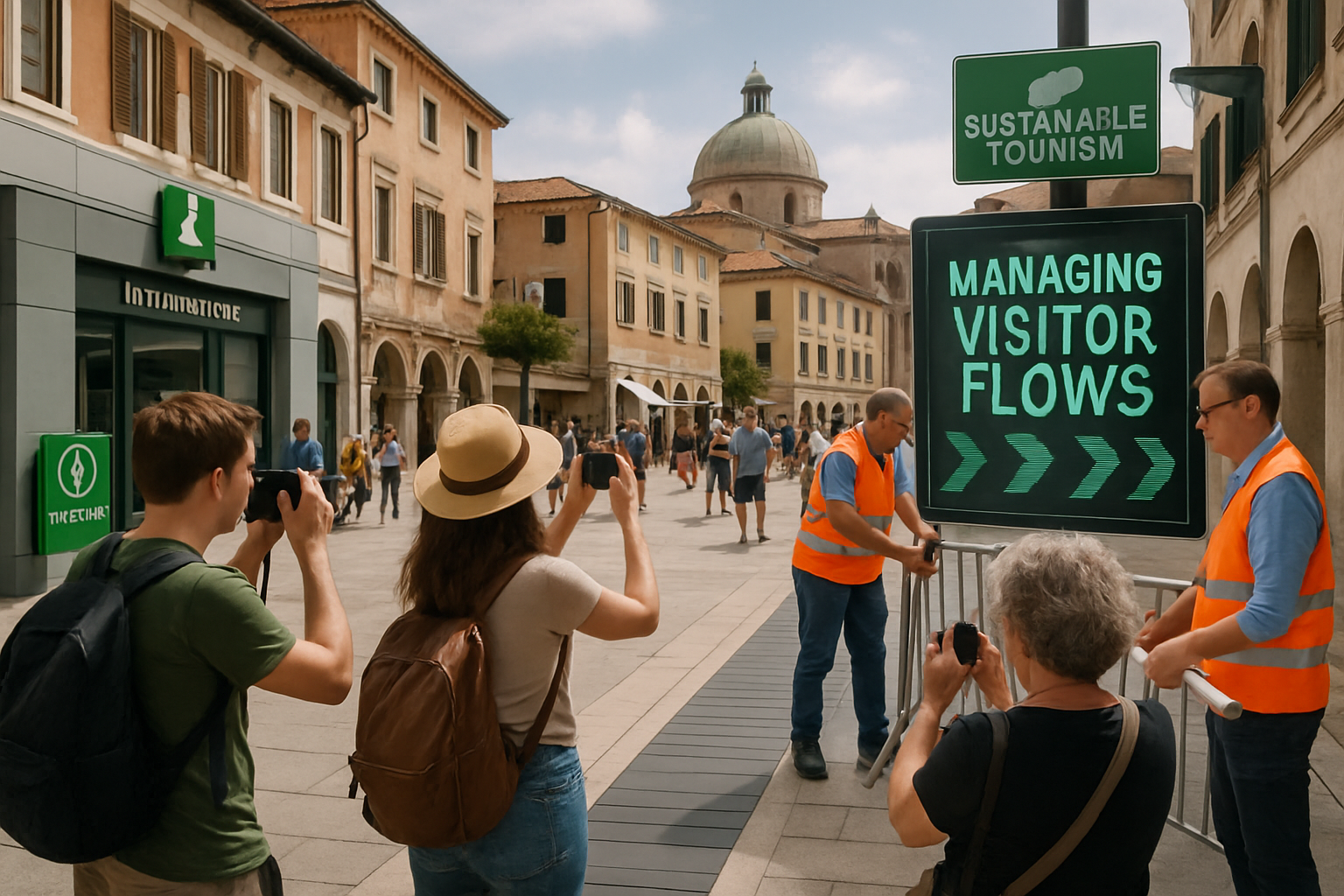
The global tourism industry is experiencing its most significant transformation since the COVID-19 pandemic, as destinations worldwide grapple with overtourism challenges while implementing innovative sustainable travel solutions and unprecedented infrastructure investments totaling over $570 billion in 2026.
From the cherry blossom-overwhelmed streets of Japan's Fujiyoshida to the fuel shortage concerns affecting European aviation, the travel sector is adapting to a complex web of challenges that are reshaping how we think about international mobility and destination management.
The Overtourism Crisis: When Viral Fame Becomes a Burden
Fujiyoshida, a small Japanese town near Mount Fuji, exemplifies the modern overtourism dilemma. Once a sleepy community with spectacular views, the town became an overnight sensation after its cherry blossoms went viral on social media. Despite cancelling its cherry blossom festival to reduce crowds, thousands of visitors still flock daily to capture the perfect Instagram shot, leaving the town's 13,000 permanent residents struggling to cope with up to 50,000 daily tourists during peak season.
This phenomenon reflects a broader trend where social media-driven destination discovery creates instant tourism surges that outpace local infrastructure and community capacity. Similar challenges face destinations across Europe, where traditional tourism hotspots are implementing radical new visitor management systems.
Italy's Capri has pioneered revolutionary overtourism management, prohibiting tour groups larger than 40 people and mandating wireless headsets for guides managing groups over 20 people. Rome's Trevi Fountain now generates €6 million annually through a €2 managed access system that preserves the historic site while controlling crowds. Venice has expanded its entry fee system from 29 days in the 2024 pilot to 60 days in 2026, demonstrating the evolution of dynamic pricing for visitor flow management.
European Travel Patterns Shift Amid Geopolitical Tensions
The desire of Europeans to travel in 2026 remains strong despite rising costs and Middle Eastern tensions, according to industry analysis. However, travelers are adapting by limiting both trip duration and spending while seeking safer alternatives to traditional routes.
British holidaymakers are increasingly opting for domestic UK summer breaks due to fears of flight cancellations linked to regional conflicts. Holiday park companies report surging bookings as travelers seek certainty amid warnings of potential jet fuel shortages and resulting airline cancellations across Europe.
This shift reflects broader changes in European travel behavior, with destinations like Croatia positioning themselves as safer alternatives while investing in Europe's most extensive seasonal healthcare network of 62 tourist medical clinics for the 2026 season. The country has also secured 30% increased funding for new air routes targeting Asian and North American markets, recognizing connectivity's crucial role in tourism competitiveness.
Technology Integration: Enhancing Rather Than Replacing Authenticity
The industry is witnessing unprecedented technological integration, with Generation Z travelers - representing 50% of those taking multiple trips over five days annually - driving demand for AI-integrated travel planning combined with authentic cultural experiences.
This technological revolution spans from advanced booking systems to sophisticated crowd management solutions. Singapore has exceeded tourism forecasts through comprehensive digital integration while maintaining the technology-hospitality balance. Croatia's implementation of AI-integrated planning systems works alongside extensive medical infrastructure to create comprehensive visitor support services.
However, technology is being deployed to enhance rather than replace authentic experiences. Ghana's UNESCO AI partnership represents an emerging economy model that leverages international expertise while maintaining cultural authenticity and ensuring community benefits from heritage preservation initiatives.
Climate Resilience Becomes Essential for Competitiveness
With January 2026 marking the 18th consecutive month of global temperatures exceeding 1.5°C above pre-industrial levels, climate adaptation has become essential for destination competitiveness rather than optional environmental stewardship.
Austria exemplifies successful adaptation, achieving 28.1% of overnight stays during shoulder seasons through strategic infrastructure investment and marketing that redistributes visitor flows from overcrowded summer peaks. This transformation creates year-round employment opportunities while enhancing visitor experiences during less congested periods.
Destinations implementing proactive climate adaptation measures - including alternative transportation networks, weather-resistant facilities, and seasonal diversification strategies - show greater resilience to environmental challenges and operational sustainability.
Regional Cooperation Replaces Competition
A fundamental shift from individual destination competition to regional cooperation is emerging across multiple continents. The Caribbean demonstrates this through coordinated cruise ship management, with Saint Kitts accommodating six vessels simultaneously while Dominican Republic projects 1.4 million cruise passengers with 90-95% disembarkation rates.
European destinations are sharing best practices for visitor management, infrastructure development, and crisis communication. Central America benefits from joint marketing efforts positioning countries like Nicaragua, Costa Rica, and Panama as offering diverse authentic experiences within compact geographical areas.
This collaborative approach proves more effective than isolated competition, creating multi-destination experiences that benefit entire regions while maintaining distinct cultural identities.
Economic Multiplier Effects Beyond Traditional Hospitality
Tourism's economic impact extends far beyond traditional accommodation and dining. Cyprus achieved record performance with 4.5 million visitors generating €3.6 billion revenue in 2025, demonstrating how quality-focused strategies deliver superior outcomes compared to volume-based approaches.
The sector now supports comprehensive community development through infrastructure improvements, cultural industry advancement, artisan network expansion, and year-round employment creation. Countries implementing sophisticated tourism infrastructure show greater economic resilience and sustainable investment attraction.
Thailand's positioning as "Asia's Content Hub" alongside its "Healing is the New Luxury" wellness campaign demonstrates how destinations diversify beyond traditional tourism categories to reduce dependency and create sustainable economic models.
Consumer Behavior Evolution and Insurance Challenges
Standard travel insurance policies' exclusion of war-related cancellations has exposed significant consumer protection gaps, driving a shift toward package tours that offer comprehensive coverage frameworks. This trend reflects travelers' desire for additional security during uncertain periods.
The industry faces permanent structural changes including enhanced fuel hedging, alternative routing protocols, and comprehensive risk management systems. Airlines are implementing long-term adaptations rather than temporary adjustments, representing a fundamental evolution in aviation operations.
Workforce and Infrastructure Challenges
Bulgaria's tourism sector faces critical workforce shortages requiring 85% foreign workers during the 2026 season, with over 16,000 international workers approved for the labor market since early 2026. This represents an acute personnel crisis affecting service quality and tourism competitiveness across European destinations.
Conversely, successful infrastructure investments demonstrate positive outcomes. Algeria's El Menea Airport successfully reopened operations for large aircraft after years of suspension, welcoming Boeing 737-300 flights from Algiers as part of enhanced inter-provincial connectivity initiatives.
Future Implications for Global Tourism
April 2026 represents a watershed moment establishing new tourism industry standards that will influence the sector for decades ahead. Success factors consistently emerge across regions: cultural authenticity preservation, strategic infrastructure enhancement, meaningful community involvement, international cooperation, and adaptive management responding to rapidly changing conditions.
The industry choice between maintaining traditional volume-based approaches versus developing sustainable quality-focused strategies will determine the fundamental nature of international travel in an increasingly interconnected yet volatile world.
As tourism matures from simple economic activity to comprehensive community development catalyst, destinations demonstrating technological innovation balanced with authentic cultural experiences, implementing comprehensive visitor services, and maintaining strong international cooperation frameworks are positioned to emerge stronger from current challenges.
The transformation represents evolution toward resilient, sustainable, culturally meaningful international travel that enriches both visitors and welcoming communities through sophisticated destination management balancing economic objectives with cultural preservation and environmental responsibility.