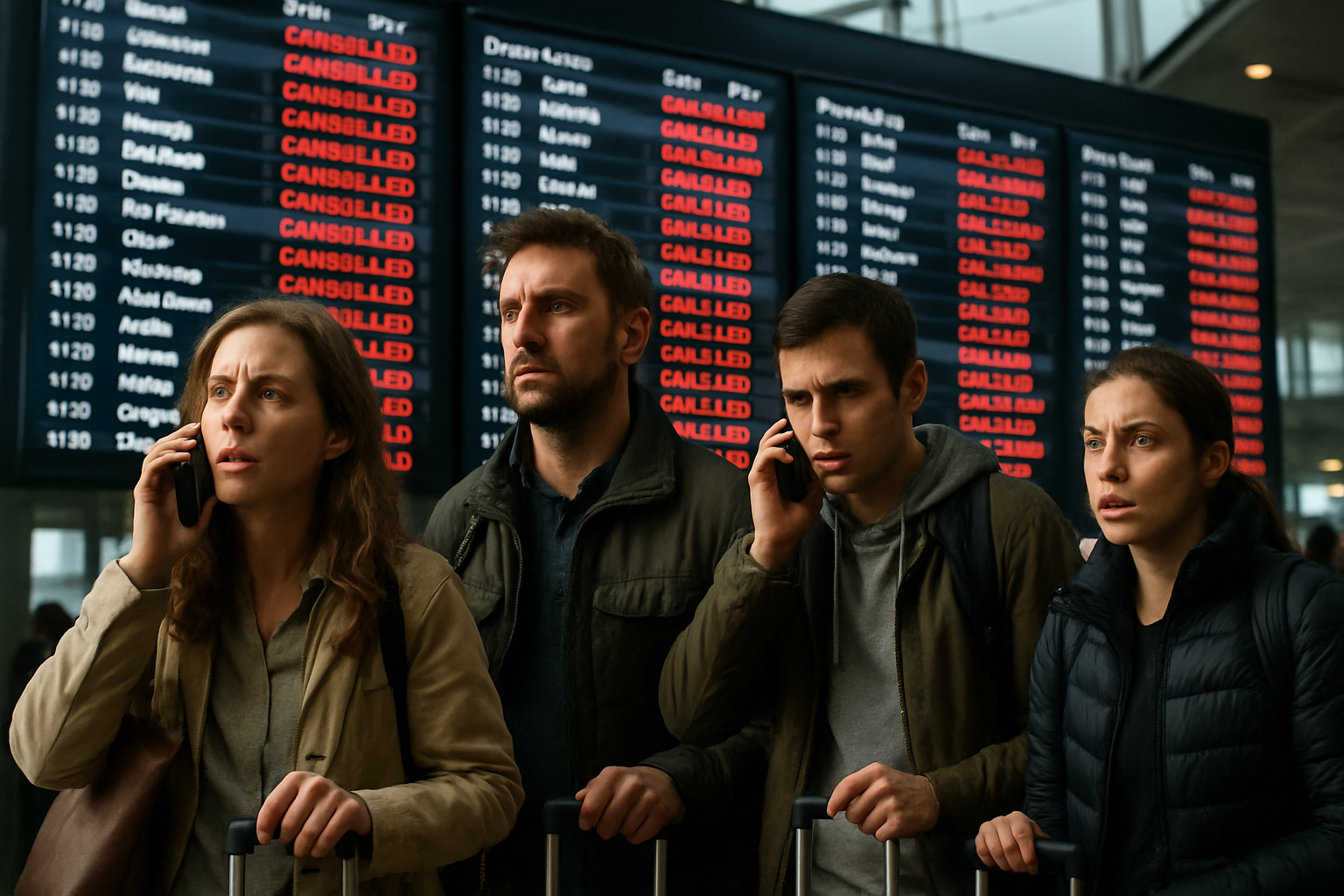
The global tourism industry confronts its most severe operational crisis since the COVID-19 pandemic as ongoing Middle East conflicts, soaring fuel costs, and safety concerns fundamentally reshape international travel patterns, forcing millions of travelers to reconsider their destinations and methods of travel.
Aviation Crisis Reaches Critical Scale
Over 18,000 flights have been cancelled worldwide since March 2026, creating the most extensive aviation disruption in modern history. Dubai International Airport, the world's busiest with over 86 million passengers annually, remains completely shut down from missile damage, eliminating critical Europe-Asia hub connections that millions of travelers depend on.
The crisis has forced major carriers including Emirates, Etihad, Air France-KLM, Wizz Air, and Bulgaria Air to suspend Middle East operations indefinitely. Eight countries have simultaneously closed their airspace—Iran, Iraq, Israel, UAE, Qatar, Syria, Kuwait, and Bahrain—representing the most comprehensive regional disruption since the Gulf War.
"We're seeing the busiest crisis since COVID-19, with every phone call being an emergency," said Swedish travel agency representatives, echoing sentiments heard across the industry worldwide.
— Swedish Travel Industry Association
Fuel Crisis Compounds Challenges
Jet fuel prices have surged 122% from $85-90 to $150-200 per barrel due to Iran's closure of the Strait of Hormuz, which affects 40% of global oil transit. This dramatic increase has forced airlines to implement emergency surcharges, with Air France-KLM adding 50 euros to long-haul tickets and Norwegian Airlines deploying 125 additional flights after SAS cancelled over 1,000 flights due to unsustainable fuel costs.
The energy crisis extends far beyond aviation. Oil prices have breached $100 per barrel for the first time since 2014, with warnings they could reach $200. Natural gas prices have surged 24% in Europe and 78% in the United States, directly impacting tourism operations through higher heating and operational costs during the crucial spring season.
Regional Tourism Redistribution Accelerates
As traditional Middle Eastern routes become unavailable, travelers are increasingly seeking alternatives within Europe and other regions. Croatia has positioned itself as a safer European alternative, benefiting from Europe's most extensive seasonal healthcare network with 62 tourist medical clinics for the 2026 season. Spain, which already leads Europe with 513.6 million tourist nights annually, is capturing additional redirected demand from traditional Middle Eastern destinations.
However, the disruption has created both winners and losers. The Caribbean faces a "perfect storm" of Middle East disruptions combined with Cuba's aviation isolation, while New Zealand's tourism recovery is threatened as one-third of European travelers typically use Middle Eastern hubs to reach the country.
Travel Insurance Gaps Exposed
The crisis has revealed critical gaps in travel protection, as standard insurance policies exclude war-related cancellations, leaving individual travelers financially exposed. This vulnerability is driving a fundamental shift toward package tours over independent travel, as operators develop comprehensive coverage frameworks while individual travelers remain unprotected.
Swedish traveler Emily Grosser's experience exemplifies the extreme costs faced by passengers requiring emergency rerouting—she paid $560 for alternative routing from Paris to Australia after her Dubai connection was cancelled. Such stories highlight the financial burden placed on travelers caught in the crisis.
Industry Transformation Accelerates
The tourism industry is undergoing permanent transformation beyond the immediate crisis response. Enhanced security screening, mandatory conflict insurance, and pre-approval for high-risk destinations are becoming standard features of international travel. Route diversification has become an urgent priority to reduce dangerous over-dependence on Middle Eastern hubs.
Technology integration is advancing rapidly, with examples including Rome's Trevi Fountain generating €6 million annually through a €2 managed access system, and Venice expanding entry fees to 60 days in 2026 versus 29 days in the 2024 pilot program. These innovations demonstrate how destinations are balancing visitor management with revenue generation.
Government Responses and Evacuations
The crisis has prompted the largest coordinated international evacuation since the Arab Spring of 2011, with over 500,000 citizens extracted from Middle East conflict zones. Australia alone has 115,000 trapped nationals, Germany 30,000 tourists, and Cyprus activated its ESTIA evacuation plan for the first time, coordinating the extraction of 2,000+ EU nationals from the UAE.
These evacuations have demonstrated both the value of international cooperation and the gaps in existing crisis response mechanisms. The successful coordination has provided a template for future emergency responses in an increasingly volatile geopolitical environment.
Long-term Implications for Global Travel
The March 2026 crisis represents a watershed moment for the tourism industry, potentially defining travel patterns for decades ahead. The industry faces a fundamental choice between maintaining global connectivity and adapting to more regionalized, security-conscious travel patterns.
Recovery timelines remain uncertain because, unlike weather disruptions, the current crisis depends on military and diplomatic resolution rather than predictable natural cycles. Airlines are conducting daily operational reviews but cannot make long-term scheduling decisions with multiple airspaces closed.
Quality Over Quantity Emerges as New Standard
The crisis has accelerated the industry's evolution toward quality-focused strategies over volume approaches. Destinations investing in comprehensive visitor services, authentic cultural experiences, and climate-resilient infrastructure are positioned to emerge stronger from these unprecedented challenges.
Generation Z travelers, who represent 50% of those taking multiple trips of five or more days annually, are driving demand for AI-integrated travel planning combined with authentic cultural experiences. This generation's preferences are pushing the industry toward technology integration that enhances rather than replaces genuine cultural connections.
Success factors emerging from the crisis include cultural authenticity preservation, enhanced visitor experiences through strategic infrastructure investment, meaningful community involvement in tourism planning, international cooperation frameworks, and adaptive management responding to changing consumer preferences.
As the tourism industry navigates these unprecedented challenges, the choices made now will influence travel patterns for years to come, determining whether the sector maintains its role in global connectivity or evolves toward more fragmented, security-conscious regional patterns.