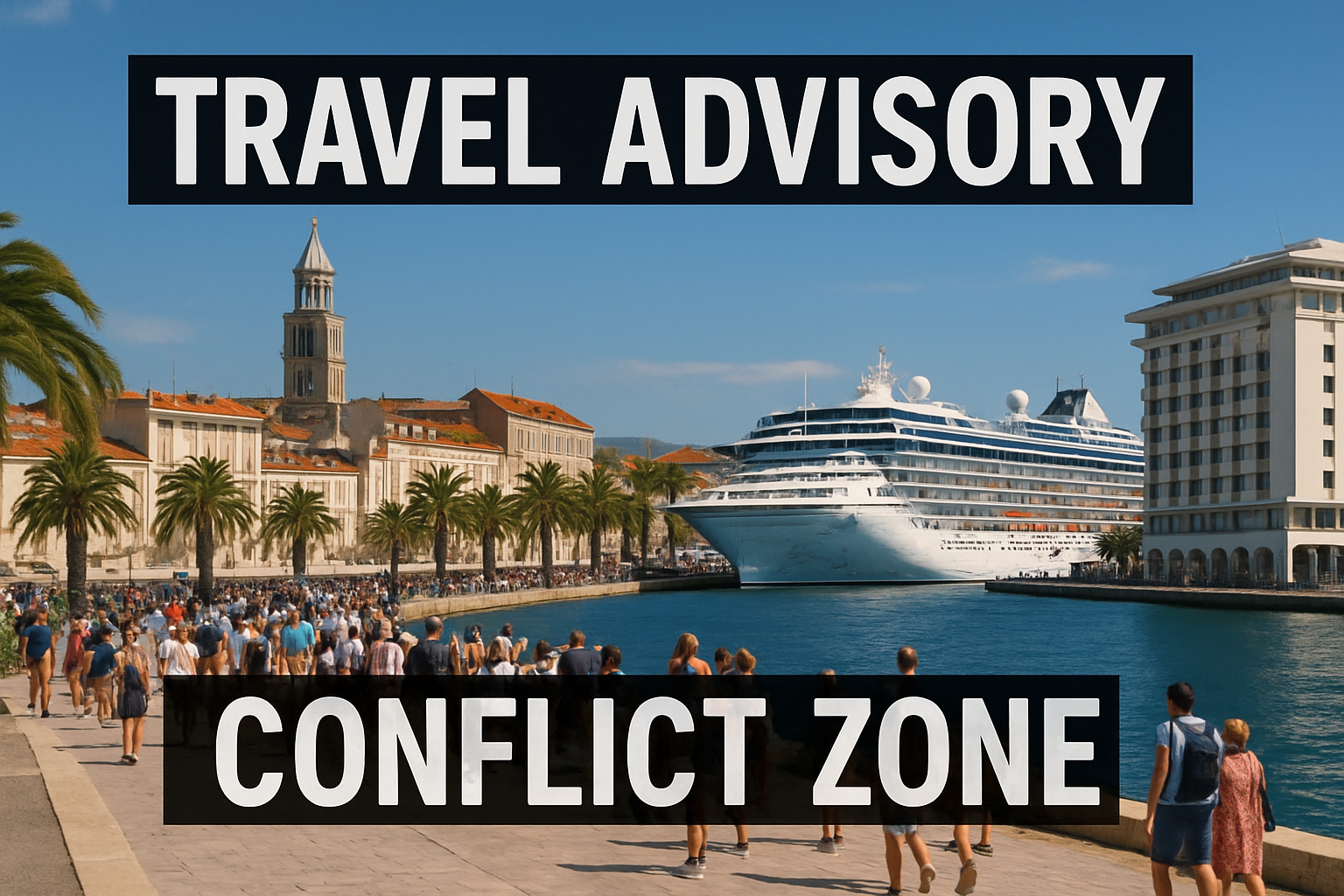
The global tourism industry is experiencing unprecedented challenges as regional conflicts create massive aviation disruptions while simultaneously opening opportunities for alternative destinations, marking the most significant transformation of travel patterns since the pandemic.
Cyprus tourism operators are grappling with mounting uncertainty as the prolonged Middle East conflict has triggered a freeze in new bookings for the spring season. According to PASYXE Larnaca chairman Marios Polyviou, March cancellations in the Larnaca district reached between 15% and 20%, with hotel occupancy failing to exceed 40% during what should be peak booking season.
"Cyprus needs to make clear that it remains a safe destination," Polyviou told Phileleftheros, emphasizing the urgency of implementing measures discussed at recent meetings at the Presidential Palace under President Nikos Christodoulides.
Regional Conflicts Transform Tourism Landscape
The current crisis represents the most severe aviation disruption since COVID-19, with over 18,000 flights cancelled worldwide since March 1, 2026. Eight Middle Eastern countries have simultaneously closed their airspace, including Iran, Iraq, Israel, UAE, Qatar, Syria, Kuwait, and Bahrain - the most comprehensive regional closure in modern aviation history.
Dubai International Airport, the world's busiest with over 86 million annual passengers, remains completely shut down following missile damage. Major carriers including Emirates, Etihad, Air France-KLM, Wizz Air, and Bulgaria Air have suspended Middle East operations indefinitely, creating a cascading effect across global travel networks.
"This is the greatest test for the tourism industry since World War II, with implications extending far beyond operational challenges to fundamental questions about international mobility in an increasingly unstable world."
— Industry Analysis, Historical Context
Cyprus: Tourism Under Pressure
Cyprus, despite achieving a record 4.5 million visitors in 2025 generating €3.6 billion in revenue, now faces severe disruption. The island nation's tourism sector had successfully diversified its markets beyond traditional UK dependency, but the current crisis threatens this progress.
The situation has been exacerbated by the activation of Cyprus's ESTIA evacuation plan for the first time, coordinating the repatriation of over 2,000 EU and third-country nationals from the UAE. While demonstrating the government's crisis management capabilities, this unprecedented activation has raised anxiety levels among potential visitors.
Tourism stakeholders are now waiting for concrete measures to restore confidence, as the sector that contributed 14% to Cyprus's GDP faces an uncertain spring season.
Alternative Destinations Gain Appeal
While some destinations struggle, others are positioning themselves as attractive alternatives. Spain's Alicante has emerged as a standout destination for Swedish travelers seeking Mediterranean experiences without regional security concerns.
The Costa Blanca coastal city offers a compelling combination of sunny beaches, winding streets adorned with flowers, and proximity to vibrant urban life - exactly what many Northern Europeans seek for their summer holidays. This positioning comes at a crucial time as travelers increasingly prioritize safety considerations in their destination choices.
Tourism industry experts note that destinations offering similar Mediterranean appeal without geopolitical risks are experiencing increased interest, though booking patterns remain cautious due to overall market uncertainty.
Industry Adaptation and Innovation
The crisis has accelerated existing trends toward quality-focused tourism strategies over volume-based approaches. Croatia, for example, continues to benefit as travelers seek safer European alternatives, while the country has invested in deploying 62 tourist medical clinics for the 2026 season - Europe's most extensive seasonal healthcare network.
Technology integration has become essential for destination management, with successful examples like Rome's Trevi Fountain €2 entry system generating €6 million annually while managing overcrowding. These models provide templates for sustainable tourism development that balances economic objectives with visitor experience and heritage preservation.
Economic Impact and Recovery Timeline
The economic implications extend far beyond tourism, with oil prices surging 10% past $80 per barrel as the Strait of Hormuz - affecting 40% of global oil transit - has been declared unsafe. Natural gas prices have increased 24% in Europe and 78% in the United States, directly impacting tourism operational costs.
Major shipping companies Maersk and MSC have suspended operations, with over 150 tankers stranded in the Persian Gulf carrying billions of dollars worth of cargo. This supply chain disruption affects everything from fuel for airlines to goods for tourist destinations.
Unlike weather-related disruptions that have predictable recovery timelines, the current crisis depends on military and diplomatic resolutions. Industry experts cannot provide definitive scheduling as security conditions remain volatile.
Government Response and Evacuation Operations
The crisis has triggered the largest coordinated international evacuation since the Arab Spring in 2011. Australia has been working to extract 115,000 trapped nationals, while Germany faces the challenge of repatriating 30,000 tourists.
Successful evacuation flights include Emirates EK414 carrying over 200 passengers to Sydney and Cyprus Airways operating Dubai-Larnaca routes. However, some evacuation flights have departed half-empty due to passenger safety concerns about traveling through the affected regions.
Travel Insurance Gaps Exposed
The crisis has revealed critical gaps in travel protection, as standard travel insurance policies exclude war-related cancellations. This has driven a shift toward package tours over independent travel, as tour operators develop comprehensive coverage frameworks to protect travelers.
Austrian European Consumer Centres confirmed that travelers experiencing regional "anxiety" have no recourse unless they book organized tours, highlighting fundamental flaws in current protection systems.
Long-term Industry Transformation
March 2026 represents a watershed moment for the tourism industry, potentially defining travel patterns for decades ahead. The crisis has exposed the vulnerability of over-reliance on Middle Eastern aviation hubs and highlighted the need for route diversification strategies.
Airlines are implementing emergency protocols including enhanced fuel loading, complex rerouting through Caribbean stopovers for trans-Pacific routes, and dramatically increased operational costs. Route diversification has become urgent to reduce dependency on Middle Eastern hubs, with Russian and Ukrainian airspace already closed due to ongoing conflicts.
Enhanced security screening, mandatory conflict-coverage insurance, and pre-approval systems for high-risk destinations are likely to become standard industry practices. Consumer preferences are shifting toward last-minute bookings and flexible arrangements, forcing tourism operators to adopt more agile business models.
Regional Winners and Losers
The crisis is creating distinct regional winners and losers. European destinations, particularly in the Mediterranean, are positioned to benefit from redirected demand as travelers seek alternatives to traditional routes through Middle Eastern hubs.
The Caribbean faces a "perfect storm" with Cuba's aviation isolation affecting 400 weekly flights and 70,000 seats, combined with Middle East disruptions affecting global connectivity. New Zealand's tourism recovery is threatened as one-third of European travelers traditionally use Middle Eastern hubs for connections.
Meanwhile, destinations that have invested in comprehensive visitor support services, authentic cultural experiences, and sustainable development models are showing greater resilience during the crisis.
Future Outlook and Success Factors
The tourism industry's response to this crisis will likely influence global travel patterns for years to come. Success factors emerging from the current challenges include cultural authenticity preservation, enhanced visitor experiences through strategic infrastructure, climate-resilient development, meaningful community involvement, and international cooperation.
Destinations that can balance economic growth with community benefits, cultural preservation, and environmental responsibility are positioning themselves for long-term competitiveness in an increasingly complex global marketplace.
The industry faces a critical choice between developing safe regional enclaves or building robust systems that enable continued global mobility despite persistent security challenges. This decision will fundamentally shape the future of international tourism and determine whether the sector maintains its role in global connectivity or evolves toward more fragmented, security-conscious travel patterns.
As the situation continues to evolve, the tourism industry's adaptation strategies and crisis management approaches are establishing new standards that will influence destination competitiveness and traveler behavior well beyond the immediate crisis period.