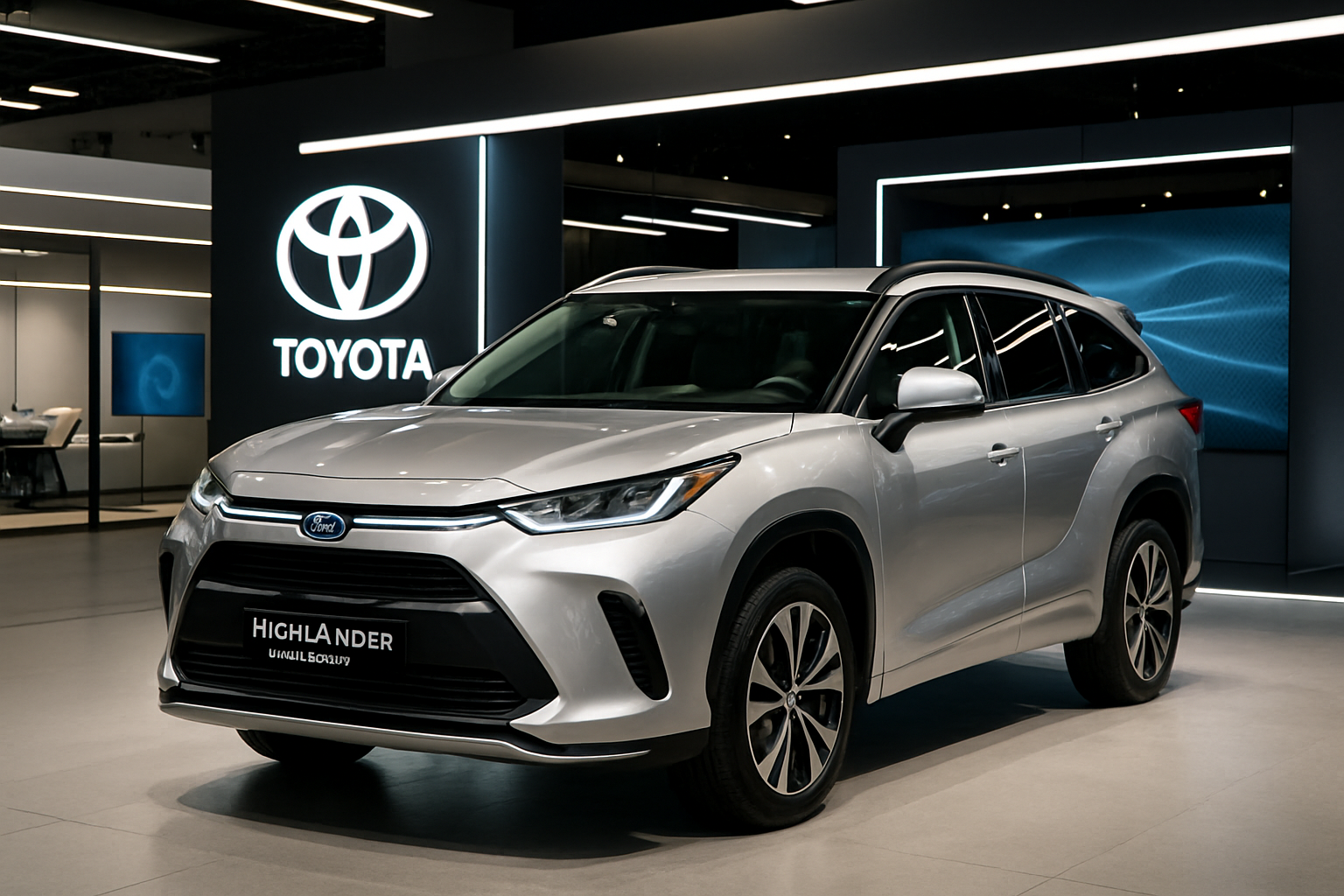
Toyota Motor Corporation has unveiled the 2027 Highlander as a fully electric vehicle, marking a dramatic shift for the nameplate that has defined family transportation for 25 years and positioning Toyota's most family-oriented SUV directly against the Kia EV9 and Hyundai Ioniq 9 in the emerging three-row electric SUV segment.
The announcement represents a significant milestone in Toyota's electrification strategy, transforming one of its most successful family vehicles into an all-electric platform. Built at Toyota's Princeton manufacturing facility, the 2027 Highlander EV signals the Japanese automaker's commitment to accelerating its electric vehicle transition while maintaining its leadership in the competitive SUV market.
Strategic Market Positioning
The decision to electrify the Highlander places Toyota in direct competition with established electric three-row SUVs that have gained significant market traction. The Kia EV9 and Hyundai Ioniq 9 have carved out substantial market share in the premium electric family SUV segment, creating a blueprint that Toyota appears ready to challenge with its own interpretation of electric family transportation.
This strategic move comes at a critical juncture for Toyota, which has faced criticism for its relatively conservative approach to electric vehicle adoption compared to competitors. The Highlander's transformation to an all-electric platform demonstrates the company's recognition that family-oriented vehicles must adapt to changing consumer preferences and regulatory requirements.
Manufacturing and Production Strategy
The choice to build the 2027 Highlander EV at Toyota's Princeton facility underscores the company's commitment to North American production for one of its most important markets. This domestic manufacturing approach aligns with current trends toward regional production and supply chain localization, particularly important given ongoing global supply chain challenges affecting the automotive industry.
The Princeton facility's role in producing the electric Highlander represents a significant investment in advanced manufacturing capabilities, likely requiring substantial upgrades to accommodate electric vehicle production requirements including battery integration, electric drivetrain assembly, and specialized quality control processes.
Industry Context and Timing
Toyota's announcement occurs amid a broader automotive industry transformation, with traditional automakers accelerating their electric vehicle programs to compete with established EV manufacturers and new market entrants. The timing coincides with significant developments across the industry, including recent leadership changes at Toyota with CFO Kenta Kon appointed as new CEO effective April 1, 2026, specifically to accelerate decision-making processes during the industry transformation.
The electric vehicle market continues to face challenges including supply chain constraints, particularly in critical materials where China maintains 60% of global production and 90% of refining capacity for essential components like lithium, cobalt, and rare earth elements. These supply chain considerations likely influenced Toyota's timing and production strategy for the Highlander EV.
Competitive Landscape Analysis
The three-row electric SUV segment has emerged as a crucial battleground for automakers seeking to capture family-oriented consumers transitioning to electric vehicles. The Kia EV9 has established strong market presence with its combination of interior space, advanced technology, and competitive pricing, while the Hyundai Ioniq 9 has leveraged the company's E-GMP platform to deliver impressive range and performance capabilities.
Toyota's entry with the Highlander EV brings the company's reputation for reliability and durability to the electric three-row segment, potentially attracting consumers who have been hesitant to adopt electric vehicles due to concerns about long-term dependability. The Highlander nameplate's 25-year history provides Toyota with significant brand equity in the family SUV market.
Technology and Innovation Implications
While specific technical specifications for the 2027 Highlander EV have not been disclosed, the vehicle's development likely incorporates lessons learned from Toyota's hybrid technology leadership and recent electric vehicle initiatives. The company's extensive experience with battery technology through its hybrid programs positions it to deliver competitive electric drivetrain performance and efficiency.
The electric Highlander's development also reflects broader industry trends toward vehicle electrification, with manufacturers investing heavily in battery technology, charging infrastructure compatibility, and integrated digital systems that enhance the electric vehicle ownership experience.
Market Impact and Consumer Response
The transformation of the Highlander to an all-electric platform signals Toyota's recognition that family vehicles must evolve to meet changing consumer expectations and regulatory requirements. This move could accelerate electric vehicle adoption among families who have traditionally relied on gasoline-powered SUVs for their transportation needs.
The announcement comes as various markets implement increasingly stringent emissions regulations and electric vehicle mandates, creating additional pressure for automakers to expand their electric vehicle offerings across all major vehicle segments, particularly in the high-volume family SUV category.
Production Timeline and Availability
With the 2027 model year designation, Toyota appears to be targeting a production timeline that allows for comprehensive development, testing, and manufacturing preparation. This timeline also provides the company with opportunities to address potential supply chain challenges and ensure adequate battery supply for large-scale production.
The Princeton facility's role in production suggests Toyota is prioritizing the North American market for the electric Highlander launch, likely reflecting the importance of this market for three-row SUV sales and the strategic value of domestic production for market responsiveness and logistics efficiency.
Strategic Implications for Toyota
The 2027 Highlander EV represents more than a single model electrification; it signals Toyota's broader commitment to transforming its core vehicle lineup for the electric era. The decision to electrify one of its most important family vehicles demonstrates the company's willingness to take calculated risks in pursuit of electric vehicle market leadership.
This strategic shift aligns with CEO-elect Kenta Kon's mandate to accelerate decision-making and corporate responses to rapidly changing market conditions. The Highlander EV announcement suggests Toyota is moving beyond its historically conservative approach to embrace more aggressive electric vehicle development timelines and market positioning strategies.
As the automotive industry continues its transition toward electrification, Toyota's transformation of the Highlander nameplate from a traditional gasoline-powered SUV to an all-electric family vehicle marks a significant milestone in the company's evolution and the broader shift toward sustainable family transportation solutions.