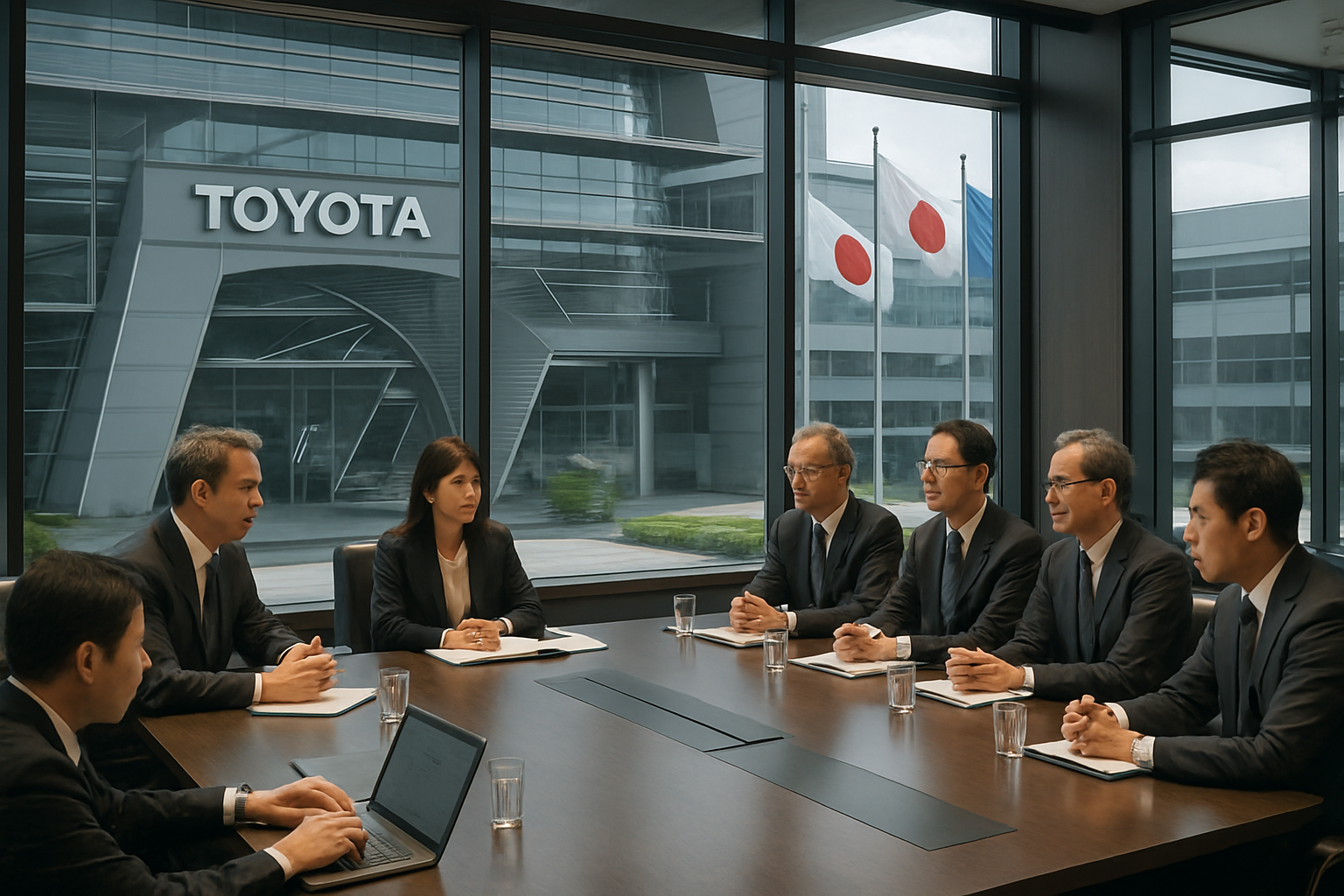
Toyota Motor Corporation announced a significant leadership transition on Friday, appointing Chief Financial Officer Kenta Kon as the company's new Chief Executive Officer, effective April 1, 2026, replacing current president and CEO Koji Sato.
The announcement marks a strategic management restructuring at the world's largest automaker, designed to accelerate decision-making processes and strengthen the company's competitive position in an increasingly dynamic automotive industry. The leadership change comes at a critical time as Toyota navigates challenges from electric vehicle transition pressures, supply chain complexities, and evolving market dynamics.
Strategic Leadership Transition
According to official announcements from Toyota's headquarters, the transition represents a carefully planned succession designed to leverage Kon's financial expertise and strategic oversight experience. As CFO, Kon has played a crucial role in Toyota's financial management and strategic planning during a period of significant industry transformation.
The timing of the April 1 effective date aligns with Japan's traditional fiscal year beginning, suggesting the company has coordinated the leadership change with its annual planning cycles. This systematic approach reflects Toyota's methodical corporate culture and emphasis on stability during transitions.
Financial Performance Context
The leadership announcement coincides with Toyota's strong financial performance despite global automotive industry challenges. Recent reports indicate the company has raised profit and sales forecasts for the fiscal year ending March 2026, citing successful cost reduction initiatives and effective marketing strategies to counter U.S. tariff impacts.
Toyota's resilience in maintaining profitability while investing in future technologies demonstrates the company's strategic positioning under outgoing CEO Sato's leadership. The automaker sold a record 11.32 million vehicles in the previous year, reinforcing its position as the global industry leader.
"The appointment reflects Toyota's commitment to maintaining financial discipline while pursuing innovation and growth in rapidly changing automotive markets."
— Industry Analysis, Toyota Leadership Transition
Industry Transformation Pressures
The leadership change occurs as the automotive industry faces unprecedented transformation driven by electric vehicle adoption, autonomous driving technology development, and changing consumer preferences. Global automakers are investing heavily in new technologies while managing traditional combustion engine operations.
Toyota's approach to this transition has emphasized hybrid technology as a bridge to fully electric vehicles, a strategy that has provided competitive advantages in markets where charging infrastructure remains limited. The new leadership under Kon will likely continue this measured approach while accelerating investments in next-generation technologies.
Global Market Challenges
The automotive industry currently faces multiple pressures including supply chain constraints, semiconductor shortages, and geopolitical tensions affecting international trade. Toyota's global manufacturing network requires careful coordination to maintain efficiency while adapting to regional market variations.
Recent trade policy developments, including potential tariff implications from various international agreements, require sophisticated financial management and strategic planning. Kon's financial background positions him well to navigate these complex economic challenges while maintaining Toyota's profitability.
Leadership Background and Qualifications
Kenta Kon's appointment as CEO represents an internal promotion from the financial leadership ranks, continuing Toyota's tradition of developing executives through diverse corporate experiences. As CFO, he has demonstrated expertise in financial strategy, risk management, and corporate planning during a period of significant industry evolution.
His background in financial management provides valuable perspective for addressing the capital-intensive nature of automotive industry transformation. The transition to electric vehicles and development of autonomous driving technologies require substantial investment coordination and resource allocation decisions.
Accelerated Decision-Making Focus
Company statements emphasize that the leadership restructuring aims to accelerate decision-making processes, suggesting Toyota recognizes the need for faster responses to rapidly changing market conditions. Traditional Japanese corporate decision-making processes, while thorough, sometimes face criticism for slower implementation compared to newer automotive competitors.
The focus on decision-making speed reflects broader industry trends where automotive companies must rapidly adapt to technological developments, regulatory changes, and shifting consumer preferences. Tesla and Chinese electric vehicle manufacturers have demonstrated the competitive advantages of agile corporate structures.
Organizational Efficiency
Streamlining management processes while maintaining Toyota's renowned quality standards represents a significant operational challenge. The company's Production System has long served as an industry benchmark, but adapting these principles to rapidly evolving technology development requires organizational evolution.
Effective integration of traditional automotive excellence with emerging technology capabilities will be crucial for maintaining Toyota's market leadership position. The new leadership structure must balance innovation speed with the reliability and quality standards that have defined the Toyota brand.
International Market Implications
Toyota's leadership transition has implications for international automotive markets, particularly given the company's global manufacturing presence and market relationships. The automaker operates production facilities across multiple continents and maintains complex supplier networks requiring coordinated management.
Regional market adaptations, from European emission standards to Chinese market regulations and American safety requirements, demand sophisticated corporate coordination. Financial leadership experience becomes increasingly valuable as regulatory complexity increases across international markets.
The company's ability to maintain competitive positioning in key markets including North America, Europe, and Asia will depend significantly on effective resource allocation and strategic investment decisions under the new leadership structure.
Future Strategic Direction
Under Kon's leadership, Toyota will likely continue its multi-pathway approach to electrification, including hybrid, plug-in hybrid, battery electric, and hydrogen fuel cell technologies. This diversified strategy reflects the company's assessment that different markets will adopt various technologies at different rates.
Investment in manufacturing flexibility to accommodate multiple powertrain technologies requires careful financial planning and operational coordination. The new CEO's financial background may influence resource allocation toward the most promising technologies and markets.
Technology Investment Priorities
Balancing research and development investments across traditional automotive excellence and emerging technologies represents a crucial strategic challenge. Toyota's significant investments in hybrid technology provide competitive advantages, but full electric vehicle development requires continued substantial funding.
Autonomous driving technology development, connected vehicle services, and mobility solutions represent additional investment areas requiring strategic coordination. Financial discipline will be essential for maintaining profitability while pursuing these capital-intensive opportunities.
Industry Leadership Continuity
The transition maintains Toyota's position as a stable industry leader during a period of significant automotive transformation. While other automakers have experienced more dramatic leadership changes or strategic pivots, Toyota's approach reflects its methodical corporate culture and long-term strategic planning.
Maintaining operational excellence while adapting to industry evolution requires leadership that understands both traditional automotive operations and emerging technology requirements. The internal promotion approach suggests confidence in Toyota's existing management development and strategic direction.
As the automotive industry continues evolving toward electrification, autonomy, and new mobility models, Toyota's leadership transition positions the company to maintain its global market leadership while adapting to changing competitive dynamics. The April 1 effective date provides time for thorough transition planning and strategic coordination.