While a 30-year-old luthier in Luxembourg carefully restores centuries-old instruments, traditional wrestling masters in Old Delhi watch their ancient sport fade into obscurity—a tale of two contrasting fates for cultural heritage in the modern world.
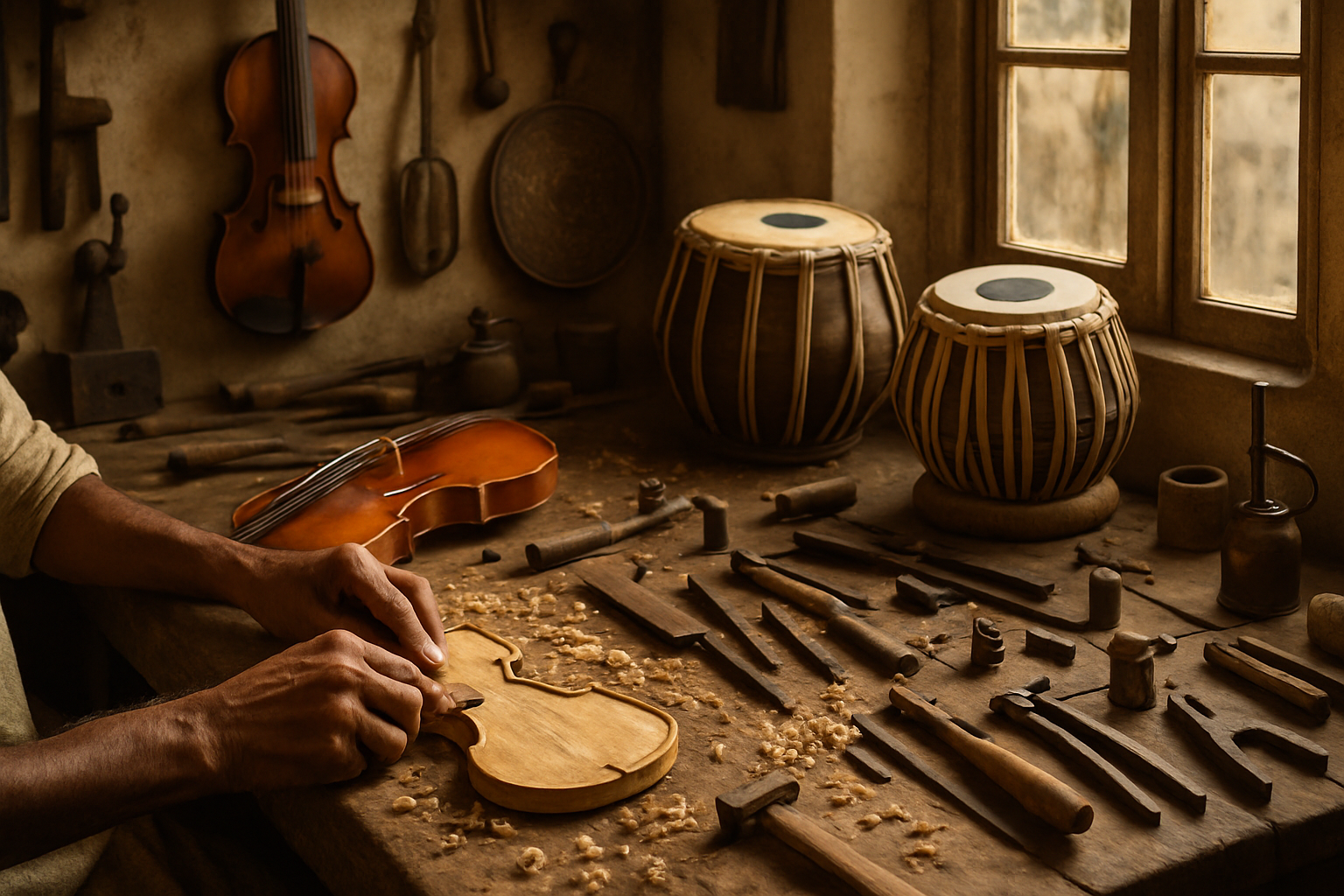
Jacques Sanavia's workshop in Mamer, Luxembourg, tells a story of cultural resurrection. Surrounded by hundreds of musical instruments in various stages of repair, the young luthier represents a growing movement of artisans aged 20 to 35 who are betting on timeless crafts in an increasingly digital world.
"I have the chance to work on fabulous instruments," Sanavia explains, his hands delicately handling violins and cellos that have carried melodies across generations. His workshop, filled with disassembled instruments waiting patiently for restoration and others resting safely in their cases, embodies the careful balance between preservation and innovation that defines contemporary artisanship.
The New Generation of Traditional Craftspeople
Sanavia's story reflects a broader European renaissance in traditional crafts. According to recent cultural preservation data, young Europeans are increasingly drawn to artisanal professions, viewing them as meaningful alternatives to corporate careers. This trend aligns with the global cultural renaissance documented throughout February 2026, where heritage preservation has gained unprecedented momentum worldwide.
The luthier's work involves not just repairing instruments but understanding their historical context and cultural significance. Each violin or cello tells a story—of the craftsperson who originally made it, the musicians who played it, and the audiences who heard its voice. This deep connection to cultural continuity drives the new generation of artisans who refuse to let traditional skills disappear.
Wrestling's Decline in Delhi's Cultural Heart
Three thousand kilometers away in Old Delhi, a starkly different narrative unfolds. Traditional wrestling akhadas—training grounds that have fostered India's wrestling culture for centuries—are closing their doors as public interest wanes and local competitions disappear. The COVID-19 pandemic dealt a devastating blow to these institutions, exacerbating existing financial struggles and forcing the suspension of tournaments that were lifelines for the sport.
The decline represents more than the loss of athletic tradition. Wrestling akhadas served as community centers where moral values, discipline, and cultural identity were transmitted alongside physical training. The mud pits where wrestlers once grappled represent centuries of cultural continuity now threatened by modernization and changing entertainment preferences.
"We lose a piece of who we are when these traditions fade away."
— Wrestling community leader, Old Delhi
The crisis has been compounded by concerns over match-fixing and betting, which have eroded spectator trust and diminished the sport's reputation. Young wrestlers, who once saw the akhadas as pathways to glory, now question whether traditional wrestling can provide sustainable careers in contemporary India.
Economic Pressures and Cultural Values
Both stories illuminate the complex economics of cultural preservation. While Luxembourg's Jacques Sanavia benefits from a society that values artisanal skills and has the economic stability to support traditional crafts, Delhi's wrestling community struggles with fundamental survival issues. The contrast highlights how economic conditions profoundly impact cultural continuity.
In Luxembourg and across Europe, government support for traditional crafts through cultural policies, apprenticeship programs, and tourism initiatives creates an ecosystem where young artisans can thrive. The country's stable economy allows customers to invest in quality craftsmanship, making traditional trades financially viable.
Meanwhile, India's wrestling akhadas operate in an increasingly challenging economic environment. Without consistent funding streams or modern promotional strategies, these institutions cannot compete with contemporary entertainment options or provide adequate financial returns for participants.
Technology's Double-Edged Impact
Modern technology plays contradictory roles in both narratives. For luthiers like Sanavia, digital tools can enhance precision in restoration work while social media platforms help connect with customers worldwide. The internet enables young artisans to access historical techniques, connect with master craftspeople globally, and reach markets that appreciate traditional skills.
However, the same technological advancement that empowers European artisans contributes to the decline of traditional wrestling in India. Digital entertainment, video games, and modern sports broadcasting offer more immediate gratification than the slow, disciplined world of akhada training. Young people gravitate toward activities that promise quicker rewards and broader social recognition.
Global Context and Cultural Preservation Efforts
These contrasting stories unfold within a broader global context of cultural preservation efforts. Recent international initiatives have demonstrated varying approaches to maintaining heritage—from Qatar's comprehensive Afghan cultural exhibitions to Rwanda's investment in creative industries as economic drivers.
The success of cultural preservation often depends on community engagement, economic viability, and institutional support. Luxembourg's artisan revival benefits from all three factors, while Delhi's wrestling culture faces challenges in each area. This disparity suggests that effective heritage preservation requires coordinated efforts addressing social, economic, and cultural dimensions simultaneously.
Climate Change and Cultural Vulnerability
Both traditional crafts and sports face additional pressures from climate change. Rising temperatures and extreme weather events threaten the physical spaces where cultural activities occur. While climate-controlled workshops can protect delicate instruments and tools, outdoor training grounds like wrestling akhadas become increasingly uncomfortable and unsafe during extreme heat events.
The environmental dimension adds urgency to preservation efforts. Cultural practices adapted to specific climatic conditions may become impossible to maintain as weather patterns shift dramatically. This reality makes current preservation efforts more critical, as windows of opportunity for maintaining traditional practices may be narrowing.
Digital Documentation and Knowledge Transfer
Both communities are exploring digital preservation methods, though with different levels of success. European artisans increasingly use video documentation to record traditional techniques, creating digital archives that ensure knowledge transfer even if apprenticeship systems fail. Online platforms connect master craftspeople with aspiring artisans across geographical boundaries.
Indian wrestling communities have begun similar efforts, documenting traditional training methods and philosophical approaches. However, the physical nature of wrestling makes digital preservation less comprehensive than for crafts like luthiery. The embodied knowledge of wrestling—the feel of mud beneath feet, the rhythm of training, the community bonds forged through shared struggle—resists complete digitization.
Future Pathways for Cultural Heritage
The divergent paths of Luxembourg's craft revival and Delhi's wrestling decline suggest that cultural preservation requires tailored approaches recognizing local conditions and constraints. Successful preservation involves more than maintaining traditional techniques—it requires creating sustainable economic models, engaging younger generations, and adapting to contemporary realities while preserving essential cultural values.
For traditional crafts, the path forward appears more promising. The artisanal movement taps into contemporary desires for authenticity, sustainability, and meaningful work. As automation advances, handmade products acquire increased value as expressions of human creativity and cultural continuity.
Traditional sports like wrestling face steeper challenges but retain possibilities for revival through adaptive strategies. Modernizing training facilities, developing professional pathways, and integrating traditional values with contemporary athletic science could revitalize interest. Success requires community commitment, financial investment, and creative adaptation to changing social conditions.
The stories of Jacques Sanavia and Delhi's wrestling akhadas remind us that cultural heritage exists not as static museum pieces but as living traditions requiring active nurturing. Whether these traditions thrive or fade depends on our collective willingness to support them through practical actions, economic investments, and intergenerational knowledge transfer. In an era of rapid change, preserving cultural diversity requires both honoring the past and creatively adapting to the future.