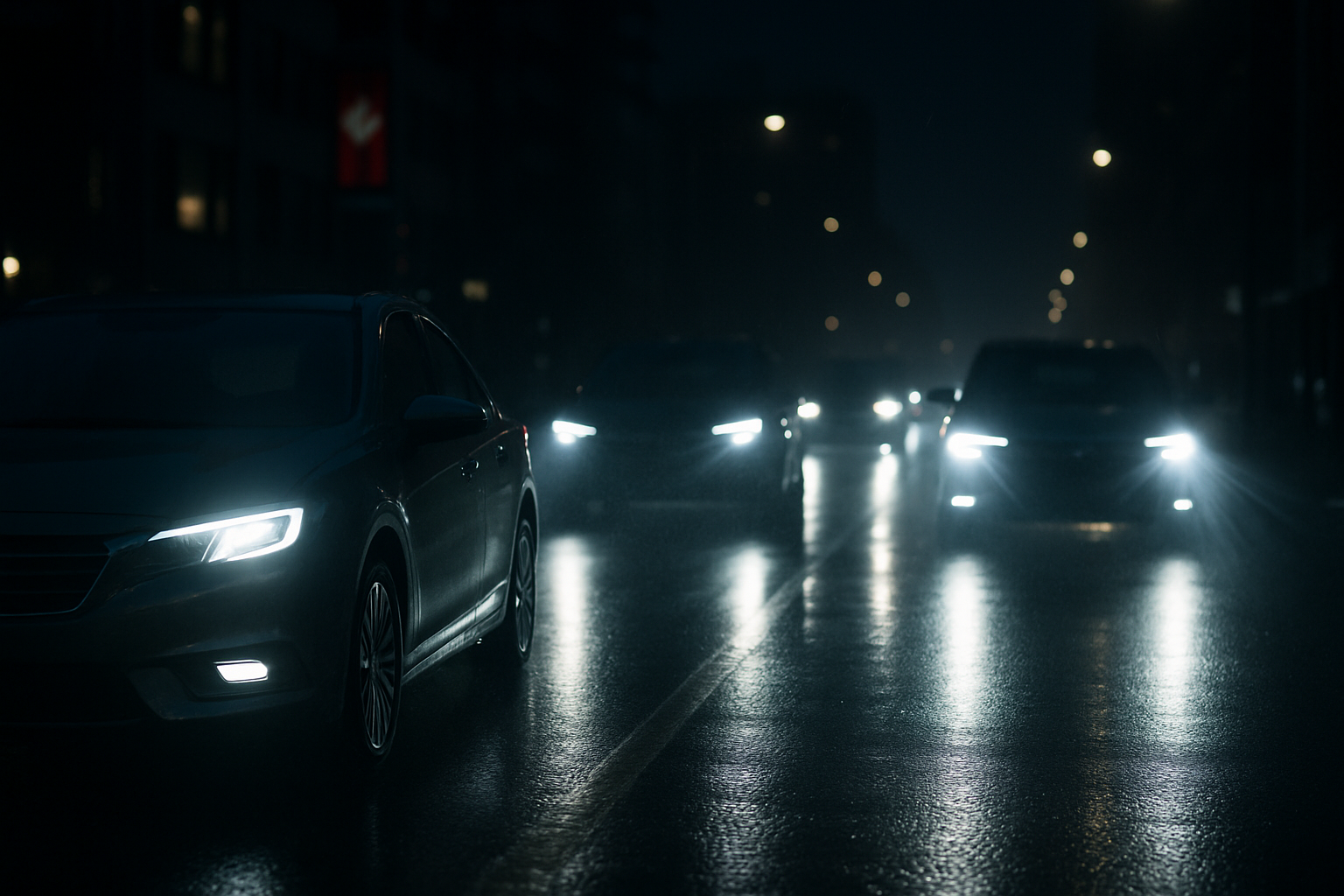
Transport Canada has launched a comprehensive investigation into mounting safety concerns over excessively bright LED vehicle headlights that are creating dangerous glare conditions for drivers, pedestrians, and cyclists across the country. The federal agency is asking Canadians to share their experiences through an online survey as reports of visibility problems and night-driving difficulties surge nationwide.
The investigation comes as eye care professionals report a dramatic increase in patient complaints about headlight brightness affecting their ability to drive safely in dark conditions. Dr. Sarah Thompson, a London, Ontario optometrist, says she's hearing more concerns from patients about difficulty driving at night due to increasingly bright vehicle headlights that create blinding glare.
"What we're seeing is a fundamental shift in how headlight technology is impacting road safety," Dr. Thompson explained. "The LED lights produce an intense white light that can be overwhelming for drivers, especially older adults whose eyes are more sensitive to glare. This isn't just about comfort – it's about preventing accidents."
The LED Revolution and Unintended Consequences
The proliferation of LED headlight technology has revolutionized automotive lighting, offering improved energy efficiency and longer lifespan compared to traditional halogen bulbs. However, the transition has created unexpected safety challenges. LEDs produce a white light with higher color temperature than conventional headlights, which can appear more intense to the human eye, particularly in contrast with darker surroundings.
Industry data shows that LED headlights have become standard equipment on most new vehicles manufactured since 2020, with automakers promoting enhanced visibility and safety benefits. However, the technology's widespread adoption has coincided with increasing reports of glare-related driving difficulties, suggesting that the benefits may come with significant drawbacks for other road users.
The issue extends beyond simple brightness levels to include factors such as beam pattern, mounting height, and the spectral characteristics of LED light sources. Unlike traditional incandescent bulbs that produce a warmer yellow light, LEDs emit a cooler white light that can create more pronounced contrast effects, making it difficult for oncoming drivers to adjust their vision quickly.
Transport Canada's Comprehensive Response
Transport Canada's online survey represents the most comprehensive federal effort to date to quantify the scope of LED headlight safety concerns. The initiative aims to collect detailed data from drivers, pedestrians, and cyclists about their experiences with vehicle headlight glare, including specific circumstances that create the most dangerous conditions.
The survey covers various scenarios including urban and rural driving conditions, weather impacts, and the particular challenges faced by vulnerable road users such as older drivers and pedestrians. Federal officials emphasize that the data collection will inform potential regulatory changes to headlight brightness standards and installation requirements.
"We're taking these safety concerns very seriously," said a Transport Canada spokesperson. "The survey will help us understand the real-world impact of current headlight technologies and determine what regulatory adjustments may be necessary to protect all road users."
The investigation also examines international approaches to headlight regulation, comparing Canadian standards with those in Europe and other jurisdictions that have implemented specific measures to address LED glare issues. This comparative analysis will inform potential policy changes and technical standards updates.
Growing Safety Concerns from Medical Professionals
The medical community has become increasingly vocal about headlight-related vision problems, with optometrists and ophthalmologists reporting significant increases in patient complaints. These concerns extend beyond temporary discomfort to include genuine safety risks, particularly for older drivers who may already face age-related vision challenges.
Research indicates that drivers over 50 are particularly susceptible to glare effects from LED headlights, as aging eyes recover more slowly from bright light exposure. This delayed recovery time can create dangerous blind spots during critical moments of nighttime driving, increasing accident risks at intersections and during lane changes.
The issue has prompted some driving instructors to modify their night-driving instruction techniques, teaching defensive strategies for dealing with LED headlight glare. These adaptations include adjusting mirror angles, using peripheral vision techniques, and maintaining greater following distances to compensate for reduced visibility.
Global Context of Transportation Safety Investigations
Transport Canada's headlight investigation occurs within a broader context of transportation safety challenges that have emerged throughout 2026. Memory analysis reveals a pattern of safety investigations across multiple transportation sectors, from aviation incidents at LaGuardia Airport to automotive recalls affecting tens of thousands of vehicles.
The Hyundai recall of 69,060 SUVs in March 2026 highlighted critical safety defects in seat folding systems, while ongoing electric vehicle adoption has created new safety considerations around battery technology and charging infrastructure. These investigations demonstrate the complex interplay between technological advancement and safety assurance in modern transportation systems.
The global automotive industry faces unprecedented challenges balancing innovation with safety standards. Memory chip shortages have increased safety system costs sixfold through 2027, while China's dominance in critical materials production creates strategic vulnerabilities. These factors complicate efforts to implement comprehensive safety solutions while maintaining affordability and accessibility.
Technical Challenges and Regulatory Solutions
Addressing LED headlight glare requires sophisticated understanding of photometric standards, beam patterns, and human visual physiology. Transport Canada's investigation must balance legitimate safety benefits of improved illumination against the negative impacts of excessive glare on other road users.
Potential regulatory solutions include mandatory beam pattern adjustments, brightness limitations based on mounting height, and requirements for adaptive lighting systems that automatically adjust intensity based on traffic conditions. European regulations have already implemented some of these measures, providing a template for Canadian policy development.
The technical complexity extends to aftermarket LED conversions, where consumers retrofit older vehicles with LED bulbs designed for different optical systems. These modifications often create particularly severe glare problems because the LED light sources don't align properly with the vehicle's original reflector housing, creating scattered light patterns that can blind oncoming drivers.
Economic and Industry Implications
The investigation's findings could have significant implications for Canada's automotive sector, potentially requiring costly modifications to existing headlight designs and manufacturing processes. Automakers have invested heavily in LED technology, and regulatory changes could necessitate engineering redesigns and updated certification processes.
However, the economic costs of accidents caused by headlight glare far exceed the expenses of implementing improved lighting standards. Each traffic fatality costs society hundreds of thousands of dollars in lost productivity, medical expenses, and legal proceedings, making comprehensive safety measures economically justified from a public health perspective.
The investigation also considers the needs of Canada's diverse geography, from urban centers with extensive street lighting to rural areas where proper headlight function is critical for wildlife detection and navigation. These varying conditions require flexible regulatory approaches that can accommodate different driving environments while maintaining consistent safety standards.
International Cooperation and Best Practices
Transport Canada's investigation includes collaboration with international safety agencies and research institutions studying similar headlight glare issues. The European Union has implemented specific photometric standards for LED headlights, while Australia has conducted comprehensive studies on glare effects in different driving conditions.
These international partnerships provide valuable data on effective regulatory approaches and technical solutions. Sweden's Vision Zero initiative, which has achieved dramatic reductions in traffic fatalities through comprehensive safety measures, offers insights into systemic approaches to road safety that include lighting considerations.
The investigation also examines successful adaptive lighting technologies that automatically adjust beam patterns and intensity based on traffic conditions, weather, and driving speed. These systems represent a potential technological solution that could maintain the benefits of LED lighting while minimizing glare effects on other road users.
Future Implications for Road Safety
The outcomes of Transport Canada's headlight investigation could establish precedents for addressing other emerging safety challenges in rapidly evolving transportation systems. As vehicles become increasingly automated and connected, the balance between technological advancement and safety assurance becomes more critical.
The investigation's methodology and stakeholder engagement process may serve as a template for future safety evaluations of emerging technologies. The comprehensive data collection approach, combining professional medical observations with public experience reports, provides a model for evidence-based policy development in complex technical domains.
Success in addressing LED headlight glare could demonstrate Canada's capacity for proactive safety regulation that keeps pace with technological change. This capability will become increasingly important as transportation systems incorporate artificial intelligence, autonomous driving features, and other advanced technologies that require careful safety evaluation.
The investigation represents a crucial test of regulatory agility in addressing unintended consequences of technological progress. As Transport Canada collects and analyzes public feedback, the results will influence not only headlight standards but potentially broader approaches to ensuring that innovation enhances rather than compromises public safety on Canadian roads.