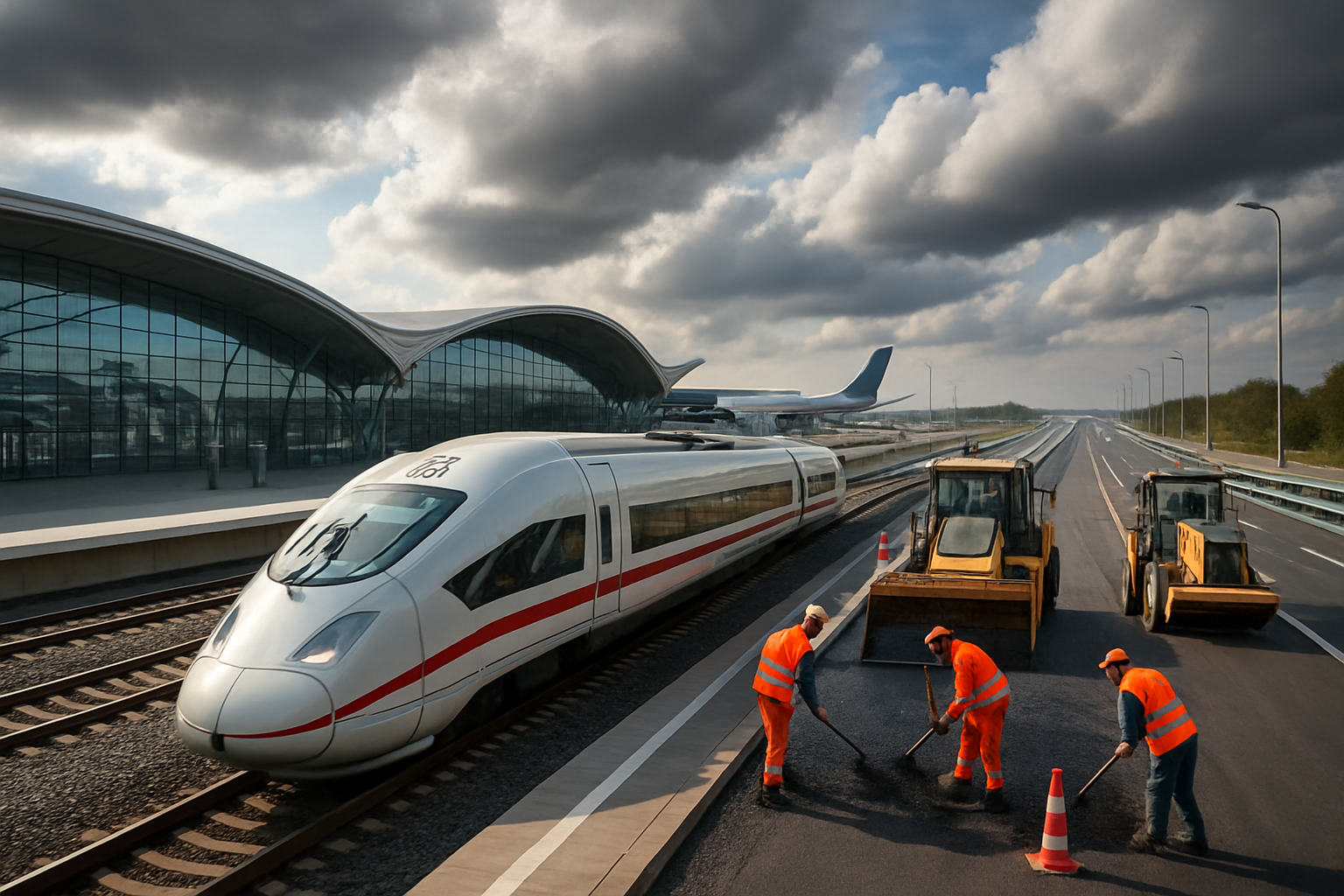
A comprehensive wave of transportation infrastructure developments across six nations demonstrates the unprecedented global investment surge driving international connectivity and regional integration, with projects spanning airport modernization, high-speed railway expansion, and maritime transport enhancement.
From Hungary's nearly completed airport renovation to Saudi Arabia's historic cross-border railway agreement with Qatar, February 2026 has witnessed remarkable progress in transportation infrastructure that will reshape regional connectivity and economic development for decades to come.
Airport Infrastructure Transformations
Hungary's Hévíz-Balaton Airport renovation represents a spectacular example of comprehensive infrastructure modernization. According to MP Bálint Nagy, the first phase of development is nearing completion after a year and a half of intensive work, with results now clearly visible across the facility.
The investment encompasses technical infrastructure, passenger services, and energy efficiency improvements while strengthening the region's economic and tourism role. The runway and taxiway have undergone complete renovation, modern navigation systems have been installed, and the terminal building has received comprehensive interior renovation and energy modernization.
In line with sustainability considerations, a solar park has been established to partially cover the airport's energy needs, demonstrating how modern infrastructure projects integrate environmental responsibility with operational efficiency. This approach reflects broader European Union commitments to sustainable development and energy independence.
Revolutionary Railway Developments
The most significant railway development emerged from Saudi Arabia, where the Council of Ministers approved a groundbreaking agreement for an electric high-speed railway link with Qatar. Custodian of the Two Holy Mosques King Salman chaired the Cabinet session that formalized this historic transportation milestone.
The 785-kilometer high-speed electric rail line linking Riyadh and Doha will feature speeds exceeding 300 km/h, connecting key stations including Dammam and Al-Ahsa. The revolutionary system will reduce travel time between the two capitals to approximately two hours, fundamentally transforming regional connectivity and economic integration.
"This high-speed rail connection represents a new era of Gulf cooperation and regional integration."
— Saudi Council of Ministers Statement
Hungary also demonstrated railway modernization leadership with the arrival of five brand-new Siemens Vectron locomotives. According to MÁV Group CEO statements, these German-made vehicles were delivered under a leasing agreement with international railway company Akiem, reflecting the evolving financing philosophy shaping European railway operations.
This approach aligns with changing financing and operating models increasingly adopted by European railway companies, where vehicles are acquired through innovative leasing arrangements rather than traditional ownership structures, providing greater operational flexibility and financial efficiency.
Maritime Transport Enhancement
Gabon's maritime sector received a significant boost with the official announcement of the new vessel Elobey VI by the Compagnie nationale de navigation intérieure et internationale (CNNII). This important acquisition reinforces the national fleet and strengthens vital Libreville-Port-Gentil connections.
The vessel acquisition represents part of a broader policy to strengthen maritime transportation infrastructure connecting Gabon's major commercial centers. Enhanced maritime connectivity supports economic development, reduces transportation costs, and improves supply chain efficiency for both passengers and cargo movements.
Maritime infrastructure development has become increasingly critical as nations seek to diversify transportation networks and reduce dependency on single-mode connectivity. The integration of maritime services with other transportation modes creates comprehensive mobility solutions supporting economic growth and regional integration.
Leadership Changes in Rail Management
Ireland's transportation sector experienced significant leadership transitions with Irish Rail chairman Steve Murphy stepping down after just two years in the role. Former Dublin Bus chairman Ultan Courtney will replace Murphy for a one-year period while the recruitment process is conducted.
Leadership stability in transportation organizations proves crucial for maintaining project continuity and strategic vision implementation. The Irish Rail transition occurs during a critical period of infrastructure investment and service expansion across Ireland's rail network.
Diplomatic Infrastructure Challenges
Canada faced unique diplomatic challenges related to infrastructure, with Prime Minister Mark Carney speaking directly to President Trump following tensions over the Gordie Howe Bridge. The diplomatic intervention highlights how major infrastructure projects can become focal points for international relations and cross-border cooperation.
The Gordie Howe International Bridge represents a critical transportation link between Canada and the United States, facilitating billions of dollars in annual trade. Managing such strategic infrastructure requires sustained diplomatic engagement and bilateral cooperation to ensure operational continuity.
Global Infrastructure Investment Context
These developments occur within an unprecedented global infrastructure investment surge exceeding $570 billion, spanning multiple continents and transportation modes. Previous months have witnessed Vietnam's $120 billion expressway commitment, Kenya's accelerated project completions, and Nicaragua's Chinese-partnered airport reconstruction.
The February 2026 projects demonstrate sophisticated transportation planning incorporating smart technology, climate adaptation, and sustainable development principles. From Toronto's Eglinton Crosstown Line opening to Saudi Arabia's Haramain Railway expansion, nations are prioritizing transportation infrastructure as economic development foundations.
Regional integration initiatives, including the African Continental Free Trade Area (AfCFTA) and bioceanic corridor development in South America, drive much of this investment by creating economic incentives for enhanced connectivity. Transportation infrastructure serves as the physical backbone enabling increased trade, tourism, and economic cooperation.
Technology Integration and Sustainability
Modern transportation infrastructure projects increasingly integrate advanced technology with environmental sustainability. Hungary's airport solar installation, Saudi Arabia's high-speed electric rail system, and Hungary's locomotive leasing arrangements demonstrate how contemporary infrastructure balances operational efficiency with environmental responsibility.
Smart transportation systems incorporating real-time data analytics, automated operations, and integrated payment systems become standard features rather than innovative additions. These technological capabilities improve passenger experiences while reducing operational costs and environmental impacts.
Climate adaptation considerations influence infrastructure design, as demonstrated by projects incorporating extreme weather resilience, energy efficiency, and sustainable materials. The integration of renewable energy sources, as seen in Hungary's airport solar park, represents a growing trend across transportation infrastructure development.
Economic Development Implications
Transportation infrastructure investments create significant economic multiplier effects extending far beyond immediate construction employment. Enhanced connectivity facilitates trade expansion, tourism development, and business investment by reducing transportation costs and improving accessibility.
The Saudi-Qatar railway project exemplifies how transportation infrastructure can strengthen regional economic integration while supporting national development objectives. Similarly, Gabon's maritime vessel acquisition improves domestic connectivity essential for economic diversification and growth.
International partnerships, as demonstrated by Hungary's German locomotive acquisition and various multilateral financing arrangements, showcase how transportation infrastructure development benefits from cross-border cooperation and knowledge sharing.
Future Infrastructure Outlook
The February 2026 transportation infrastructure developments establish precedents for continued global investment in connectivity enhancement. Projects demonstrate that successful infrastructure development requires strategic planning, international cooperation, innovative financing, and integration with broader economic development objectives.
As nations compete for economic competitiveness in an interconnected world, transportation infrastructure becomes increasingly critical for attracting investment, facilitating trade, and supporting tourism. The projects highlighted represent examples of strategic infrastructure investment supporting long-term economic prosperity and regional integration.
Success factors include sustained political commitment, adequate financing mechanisms, technical expertise, and community engagement. The diverse range of projects—from airport renovations to high-speed railways to maritime vessel acquisitions—demonstrates that effective transportation infrastructure development requires comprehensive approaches addressing multiple transportation modes and connectivity needs.