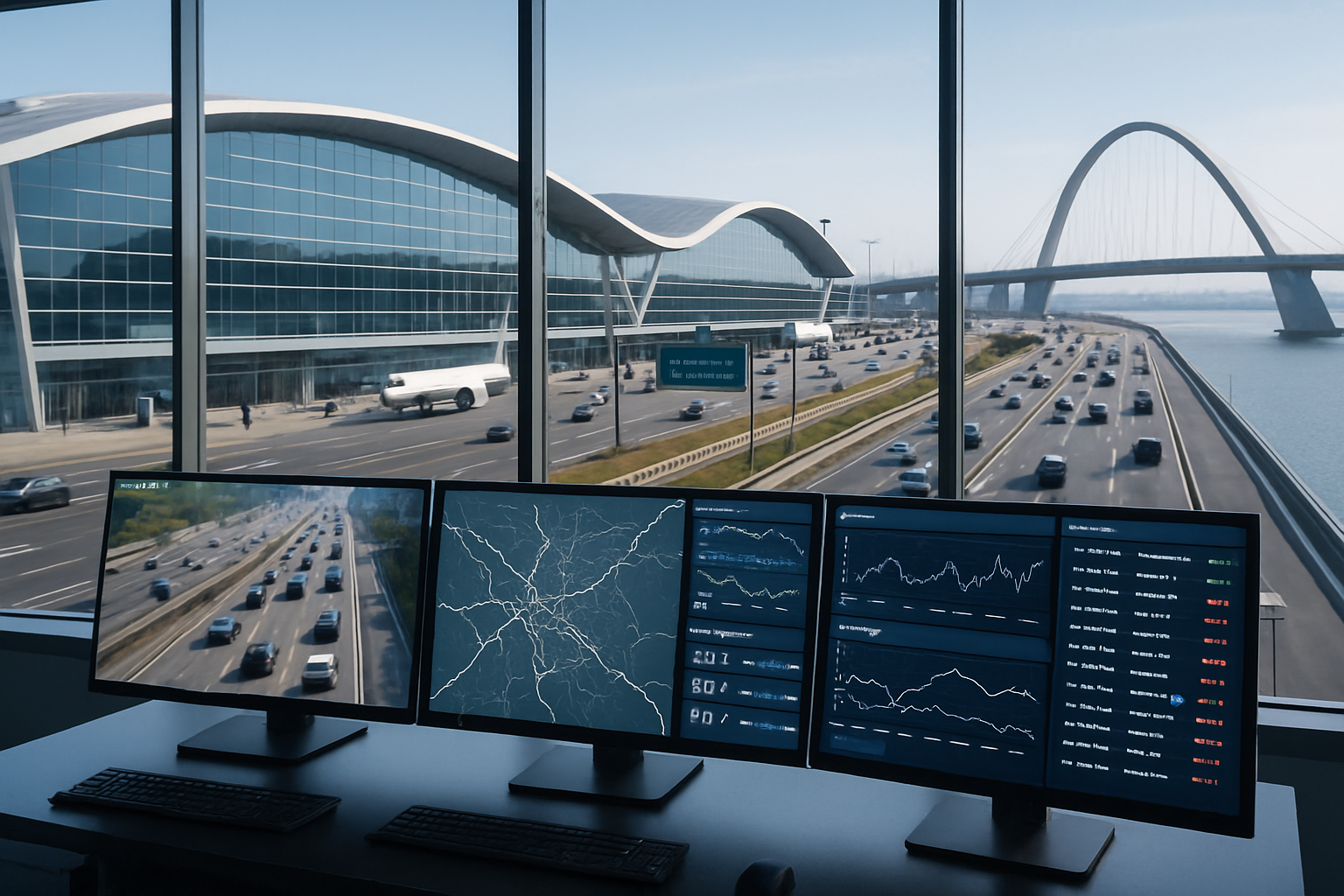
Major cities across Europe and Asia are implementing transformative transportation infrastructure projects worth hundreds of millions, with Zagreb launching a revolutionary €3 million traffic portal and Vietnam approving a massive $147 million bridge and road system to unlock development potential.
The City of Zagreb has initiated a public procurement procedure for developing a comprehensive Traffic Portal, representing one of Europe's most ambitious digital transportation management systems. The €3 million platform will consolidate traffic data from various sources, including road sensors, cameras, public transport systems, and real-time bicycle and pedestrian traffic monitoring.
According to city officials, this digital infrastructure will enable more detailed analyses and better understanding of traffic flows across Croatia's capital. The system is designed to improve public access to current traffic information while enhancing coordination between city services and residents.
Zagreb Airport Expansion Under Consideration
Simultaneously, Zagreb Airport is evaluating the reopening of its former Pleso passenger terminal, which has remained closed since March 28, 2017. Under the existing concession agreement, the Zagreb Airport International Company (ZAIC) consortium must begin terminal expansion within 90 days of reaching five million annual passengers for the first time.
Before the coronavirus pandemic disrupted global travel patterns, this milestone was projected to occur much sooner. However, the airport's management is now conducting a comprehensive review of capacity requirements and infrastructure needs to support projected passenger growth through the remainder of the decade.
A final decision on the terminal reopening is expected by the end of 2026, with the airport authority weighing passenger volume forecasts against operational efficiency and infrastructure investment requirements.
Vietnam's Historic Infrastructure Investment
Vietnam's port city Hai Phong has approved an ambitious VND 3.858 trillion ($147 million) infrastructure project to build a six-lane bridge and 4.2-kilometer road system connecting the city center to previously undeveloped southern coastline areas. Officials describe this investment as a transformative initiative that will fundamentally reshape the city's urban geography.
The project represents part of Vietnam's broader $120 billion commitment to construct 9,000 kilometers of expressways by 2050, positioning the country as Southeast Asia's premier logistics hub. This massive undertaking will expand Vietnam's highway network nearly tenfold from current levels.
"This infrastructure investment will unlock significant development potential in previously inaccessible areas while improving connectivity for residents and businesses."
— Hai Phong Municipal Authority
The bridge and road system are designed to support both immediate transportation needs and long-term urban development goals, incorporating smart technology integration and climate adaptation measures as standard requirements rather than retrofitted additions.
Global Infrastructure Renaissance Context
These developments occur within an unprecedented global infrastructure investment surge exceeding $570 billion in 2026, representing coordinated international recognition that transportation networks serve as strategic foundations for economic competitiveness, climate adaptation, and international cooperation.
Recent completed projects include Mexico's El Insurgente train system, Malaysia's AirBorneo aviation expansion, and Paraguay's advancing Bioceanic Bridge initiative. European initiatives encompass the Franz-Josefs-Bahn railway modernization between Prague and Vienna, Estonia's sustainable transportation leadership, and comprehensive highway improvements across multiple nations.
Modern infrastructure projects increasingly incorporate sophisticated technology integration from the design phase, including real-time monitoring systems, predictive maintenance capabilities, digital payment integration, and environmental optimization protocols.
Technology Integration and Smart Cities
Zagreb's Traffic Portal exemplifies the evolution toward integrated urban systems that leverage multiple data sources to optimize transportation efficiency. The platform will process information from road sensors, traffic cameras, public transportation networks, and pedestrian monitoring systems to provide comprehensive traffic management.
This technological approach reflects broader trends toward smart city development, where transportation infrastructure serves as a foundation for broader urban innovation. Similar systems are being implemented across Europe, Asia, and North America as cities seek to manage growing urbanization while reducing environmental impact.
The integration of bicycle and pedestrian traffic monitoring demonstrates the comprehensive approach modern cities are taking to transportation planning, recognizing that sustainable urban mobility requires coordination across all transportation modes.
Economic Multiplier Effects
Infrastructure investments create substantial economic multiplier effects extending beyond construction employment. Zagreb's digital traffic system will support permanent technology sector jobs while improving business productivity through reduced transportation costs and enhanced logistics efficiency.
Vietnam's Hai Phong bridge project will generate immediate construction employment while creating long-term economic opportunities through improved market access and reduced transportation barriers. The project supports regional integration objectives within ASEAN economic cooperation frameworks.
Zagreb Airport's potential terminal expansion would enhance Croatia's position as a southeastern European aviation hub, supporting tourism growth and business connectivity essential for the country's continued economic development within European Union markets.
Climate Adaptation and Sustainability
Contemporary infrastructure projects must address climate adaptation as a central requirement rather than an optional consideration. January 2026 marked the 18th consecutive month of global temperatures exceeding 1.5°C above pre-industrial levels, creating operating conditions beyond traditional infrastructure design parameters.
Projects now incorporate enhanced drainage systems, weather-resistant materials, backup power systems, and renewable energy integration as standard features. The "build back better" principle has become standard practice for major infrastructure investments, designing for future climate conditions rather than historical weather patterns.
Zagreb's Traffic Portal includes environmental monitoring capabilities that will support the city's broader sustainability objectives, while Vietnam's bridge project incorporates climate resilience planning essential for coastal infrastructure.
International Cooperation and Knowledge Sharing
Success factors for major infrastructure projects consistently include sustained political commitment, transparent governance, comprehensive stakeholder engagement, adaptive management strategies, and international cooperation involving technical assistance and knowledge sharing.
Croatia's digital traffic system builds on best practices from smart city implementations worldwide, while Vietnam's infrastructure expansion benefits from international engineering expertise and financing innovation. These projects demonstrate how countries can leverage global knowledge while maintaining local ownership and control.
The coordination of multiple simultaneous infrastructure projects across different regions reflects unprecedented international cooperation in addressing shared challenges of urbanization, climate adaptation, and economic development.
Future Transportation Networks
March 2026 represents a pivotal moment in global transportation development, with decisions made now establishing precedents that will influence infrastructure strategies for decades. The convergence of technological advancement, environmental awareness, and international cooperation is creating development models that prioritize comprehensive sustainability alongside economic growth.
These projects demonstrate the evolution from reactive crisis management to proactive infrastructure planning that anticipates future challenges while serving immediate community needs. Success will be measured not only by improved connectivity and economic benefits but also by environmental protection and community engagement.
The transportation infrastructure surge of 2026 potentially represents a watershed moment when humanity systematically began building the physical foundations for sustainable prosperity in an uncertain but increasingly interconnected world. The integration of digital technology, environmental sustainability, and international cooperation in these projects establishes templates that will influence global development patterns for the remainder of the century.