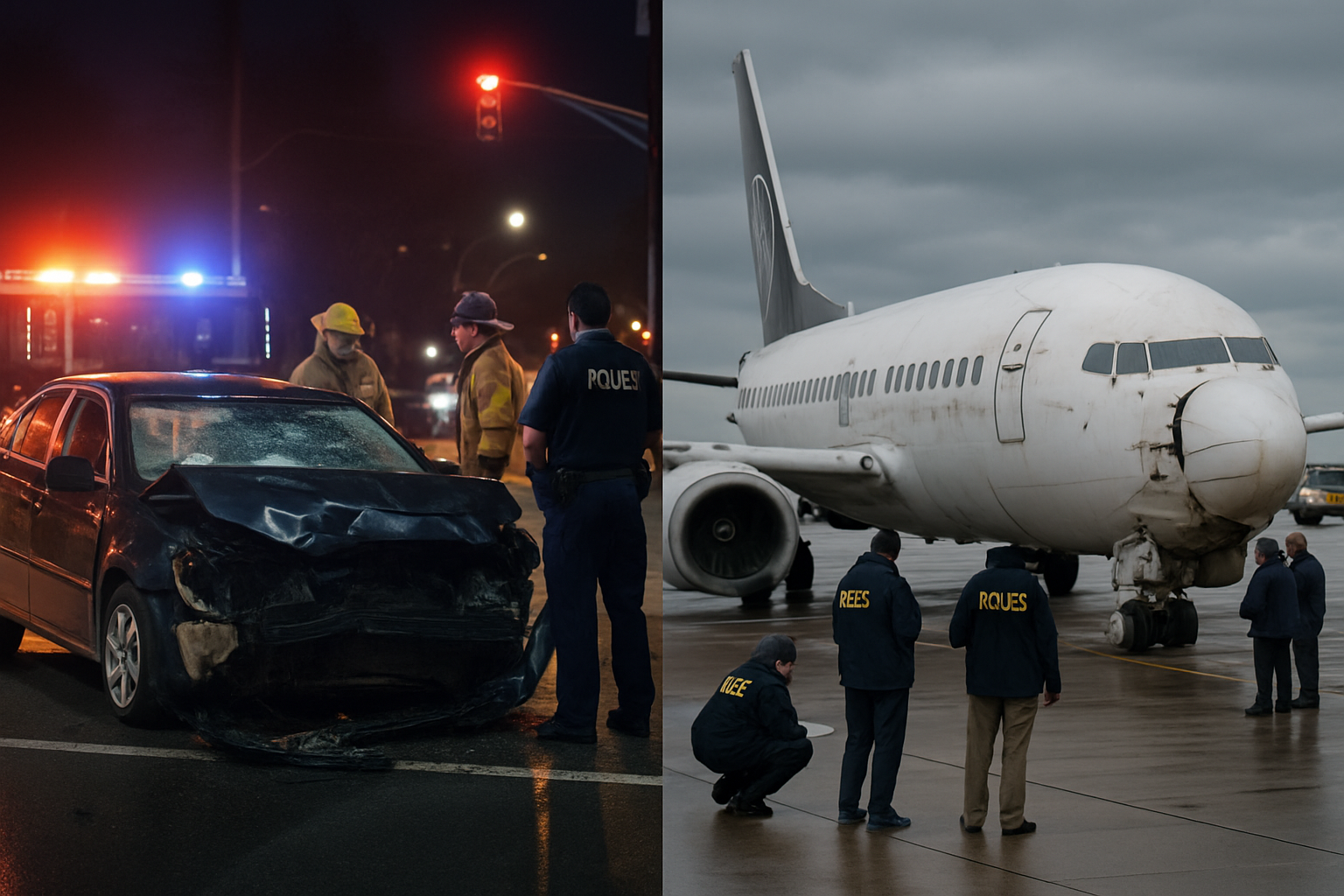
A cluster of fatal transportation accidents across Colombia, New Zealand, and other international locations this week has intensified concerns about a deepening global transportation safety crisis that has claimed hundreds of lives since the beginning of 2026.
The latest incidents include a tragic family road accident in Colombia's Zipaquirá-Ubaté toll area and multiple serious crashes in New Zealand's Tasman region, adding to an alarming pattern of transportation-related fatalities that experts say reflects systemic infrastructure vulnerabilities exacerbated by climate change pressures.
Latest Fatal Incidents
In Colombia, a family traveling from Bogotá to their hometown of Suaita in Santander was killed in a devastating accident at the Zipaquirá-Ubaté toll plaza. The tragedy was particularly heartbreaking as one family member had left earlier and avoided the fatal crash that claimed the lives of his relatives.
Meanwhile, New Zealand authorities are investigating a fatal collision at the intersection of Coastal Highway (SH60) and Easton Loop in Tasman, which occurred at approximately 2:45 PM on Friday. The crash, involving two vehicles, killed one person and left another injured, highlighting ongoing road safety challenges in the region.
"These aren't isolated incidents. We're seeing a concerning pattern of transportation accidents that suggests our infrastructure and safety systems are being pushed beyond their limits."
— Transportation Safety Expert
Context of a Global Crisis
The recent accidents occur against the backdrop of what experts are calling the most challenging year for global transportation safety since the COVID-19 pandemic. Since March 2026, Planet News has documented over 200 significant transportation incidents across more than 50 countries, including:
- The LaGuardia Airport collision in March that killed two Air Canada Express pilots
- Colombia's military C-130 Hercules crash in the Amazon region that claimed 69 lives
- Bolivia's military aircraft disaster at El Alto Airport with 22 fatalities
- Multiple road accidents across Algeria, Bangladesh, and other developing nations
This crisis unfolds as global temperatures have exceeded 1.5°C above pre-industrial levels for 22 consecutive months, creating operational conditions that transportation networks were never designed to handle.
Systemic Infrastructure Vulnerabilities
Aviation safety experts point to several interconnected factors contributing to the current crisis:
- Aging Infrastructure: Many transportation networks worldwide are operating with outdated systems that cannot cope with modern traffic volumes and extreme weather conditions
- Climate Pressures: Unprecedented weather patterns are testing infrastructure beyond historical design parameters
- Emergency Response Gaps: Coordination failures between different agencies and jurisdictions during critical incidents
- Technology Integration Challenges: Difficulties in implementing advanced safety systems due to semiconductor shortages and cost increases

Aviation Industry Under Pressure
The aviation sector has been particularly affected, with the International Air Transport Association (IATA) reporting 51 aviation accidents in 2025 among 38.7 million flights globally. While maintaining statistically exceptional safety records, each incident provides crucial lessons for protocol improvements.
The March 2026 Middle East crisis alone cancelled over 18,000 flights worldwide, while multiple military aviation accidents in Latin America have highlighted the challenges facing aging aircraft fleets operating in demanding geographic conditions.
Transportation Safety Board Canada has been "sounding the alarm about the risk of collisions and runway incursions since 2010," with runway incursions—the incorrect presence of vehicles, people, or aircraft on surfaces designated for takeoff and landing—remaining a persistent threat.
Economic and Human Impact
The economic consequences of transportation safety failures extend far beyond immediate operational disruptions. Each traffic fatality costs hundreds of thousands of dollars in lost productivity, medical expenses, and legal proceedings. Transportation artery disruptions create regional economic ripple effects affecting agricultural exports, tourism revenues, and supply chains.
The human cost is even more devastating, with working populations who depend on shared transportation—such as fishermen, construction workers, and agricultural laborers—being particularly vulnerable throughout 2026.
Successful Safety Models
Despite the challenges, several countries have demonstrated that comprehensive safety improvements are achievable:
- Sweden's Vision Zero: This approach has achieved significant fatality reductions through infrastructure design that accounts for human error rather than expecting perfect driver behavior
- Netherlands' Safe System Approach: Designs networks to minimize accident consequences through better engineering and emergency response
- Australia's Speed Management: Urban speed management programs have successfully reduced fatalities in city centers
Technology Solutions and Challenges
Advanced technology offers promising solutions, including AI-powered predictive maintenance, real-time infrastructure monitoring, and advanced driver assistance systems. However, implementation faces significant challenges from a global semiconductor shortage that has increased technology costs sixfold through 2027.
International cooperation on safety standards has become crucial, with the International Civil Aviation Organization (ICAO) actively reviewing emergency vehicle coordination protocols at airports worldwide following recent incidents.
Calls for Urgent Action
Transportation experts emphasize that the current crisis requires immediate, coordinated international action rather than piecemeal national responses. Key requirements include:
- Enhanced data analysis to identify accident patterns
- Infrastructure investment in lighting, signage, and emergency response capabilities
- Legal framework enhancement with consistent enforcement
- Public education campaigns targeting high-risk behaviors
- International cooperation for sharing best practices
- Climate-resilient infrastructure design anticipating future rather than historical weather patterns
"We're at a watershed moment that requires recognition that transportation infrastructure cannot continue operating under historical assumptions. The convergence of aging systems, climate change, and increasing demand requires fundamental transformation."
— International Transportation Safety Council
Looking Forward
As investigations continue into the latest incidents in Colombia and New Zealand, the broader challenge remains clear: traditional reactive approaches to transportation safety are proving inadequate in an era of unprecedented environmental and operational challenges.
The aviation community has committed to the principle that every accident provides crucial lessons for preventing future tragedies. The goal is not just maintaining current safety standards but continuously raising the bar for acceptable risk in industries where millions of lives depend on getting safety protocols right every day.
Success in addressing this crisis will depend on unprecedented international cooperation, sustained political commitment to safety over convenience, and comprehensive solutions that address the root causes rather than symptoms of transportation safety failures.
As the investigation findings from recent incidents are expected to influence safety procedures globally for years to come, the window for implementing effective preventive measures continues to narrow as transportation volumes grow and operational environments become more challenging due to climate change.