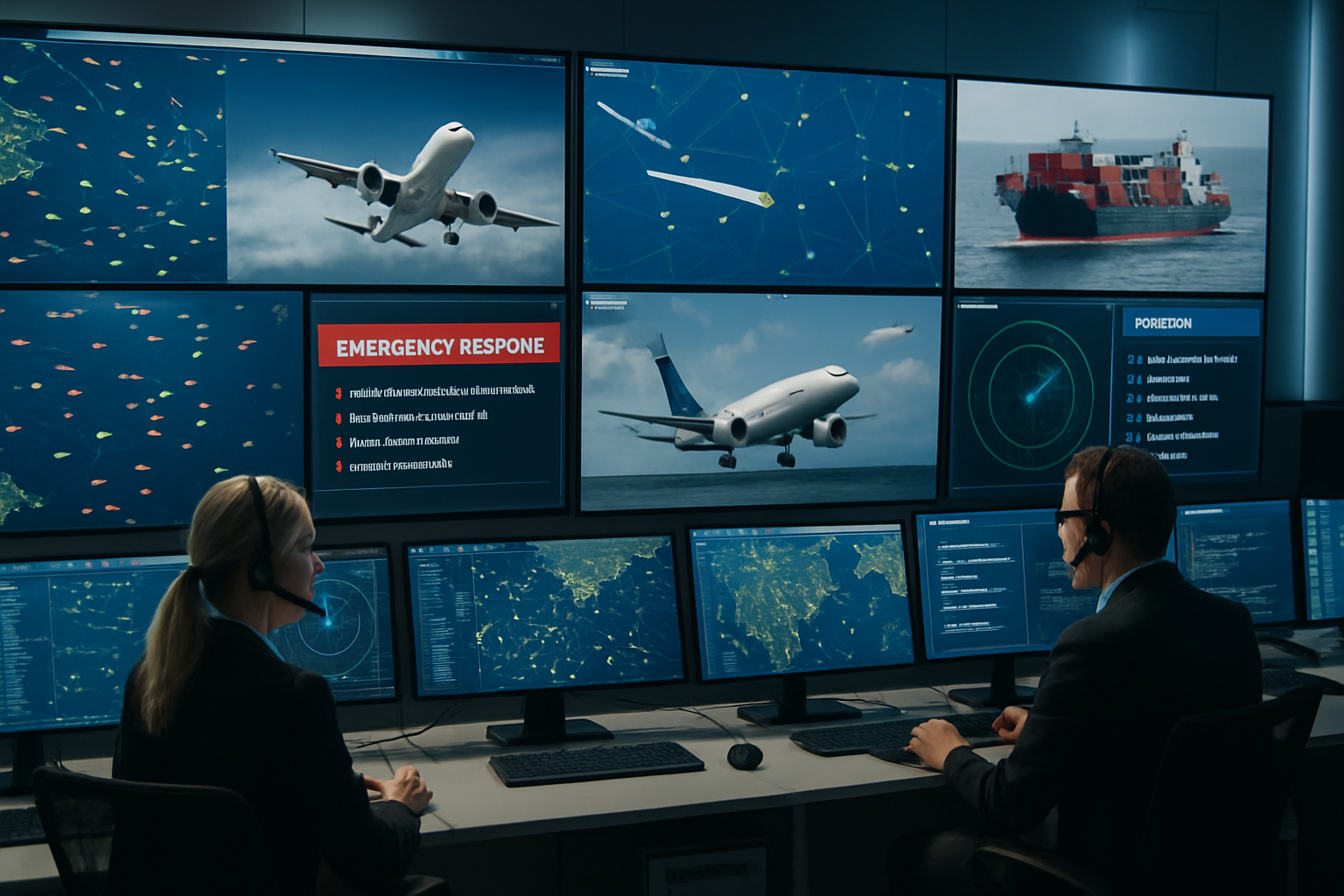
Transportation safety systems face mounting pressure as recent incidents across Caribbean airports and Middle Eastern airspace reveal critical vulnerabilities in global aviation and maritime security protocols, highlighting the need for enhanced international coordination and technological solutions.
Airport Security Breach in Caribbean
A former Jamaican police officer recruited to the Royal Turks and Caicos Islands Police Force has been charged with illegal possession of ammunition after security personnel at Howard Hamilton International Airport discovered multiple rounds concealed in his luggage during routine screening. Ian Graham, identified as a former Jamaica Constabulary Force member, faces court proceedings this week following the weekend incident that exposed significant gaps in law enforcement vetting procedures.
The discovery during standard security screening prompted immediate investigation by the RT&CIPF, which subsequently conducted a search of the officer's residence. Additional ammunition rounds were found during the property search, indicating a broader pattern of illegal weapons possession. The incident raises serious questions about background verification processes for law enforcement personnel transferring between Caribbean jurisdictions.
"This incident highlights critical vulnerabilities in our inter-jurisdictional law enforcement coordination systems and the need for enhanced screening protocols."
— Caribbean Aviation Security Expert
Regional Airspace Security Concerns
Simultaneously, Qatar's Civil Aviation Authority has issued reassurances that the nation's airspace remains "fully controlled and safe" despite ongoing regional tensions. The QCAA statement emphasizes continuous monitoring and strict safety measures, reflecting broader concerns about aviation security in the Middle East corridor.
These developments occur within the context of 2026's unprecedented transportation safety challenges, which have included multiple aviation crises, maritime incidents, and infrastructure vulnerabilities affecting global supply chains and passenger safety protocols.
Historical Context and Pattern Analysis
The current incidents reflect a troubling pattern of transportation safety vulnerabilities that have emerged throughout 2026. Earlier this year witnessed the most severe global aviation crisis since COVID-19, with over 18,000 flights cancelled worldwide due to Middle Eastern airspace closures. Dubai International Airport, the world's busiest with 86 million annual passengers, was completely shut down following missile damage, creating cascading effects throughout global aviation networks.
Military aviation has faced particular challenges, with the Colombian Air Force C-130 Hercules crash at Puerto Leguízamo Airport in March killing at least 8 people and injuring 83 others. The incident, involving 125 personnel on a routine transport mission, highlighted aging aircraft fleet vulnerabilities in Latin America's demanding geographic conditions.
Maritime Safety Challenges
Maritime transportation has faced equally severe disruptions. The Strait of Hormuz crisis, which handles 40% of global seaborne oil transit, demonstrated the vulnerability of critical maritime chokepoints to geopolitical tensions. Over 150 oil and LNG tankers were stranded in the Persian Gulf, representing billions in cargo value and exposing fundamental weaknesses in global supply chain architecture.
Russian LNG tanker Arctic Metagaz, carrying 61,000 tons of LNG, suffered a drone attack leaving a large hull breach 38 nautical miles southeast of Malta. The incident represents the first successful drone attack on a Russian LNG tanker and highlights emerging technological threats to maritime infrastructure.
Technological and Regulatory Responses
Transportation authorities worldwide are implementing enhanced safety measures in response to these challenges. Japan announced the world's most restrictive aviation battery policy, banning portable power banks on all flights effective April 2026, following multiple thermal runaway incidents that exposed crew members to toxic smoke.
Advanced technology integration includes satellite tracking, AI-powered navigation systems, and real-time analytics for improved maritime surveillance. Predictive maintenance algorithms now help identify potential vessel failures before they become critical, while digital monitoring provides unprecedented visibility into global shipping patterns.
"We're seeing a fundamental shift toward predictive risk management rather than reactive responses to transportation safety challenges."
— International Maritime Organization Official
Industry Adaptation and Emergency Protocols
The aviation industry has been forced to develop unprecedented contingency planning measures. Airlines now implement emergency protocols including enhanced fuel loading to avoid refueling in affected zones, complex rerouting strategies to navigate multiple closed airspaces, and significantly increased operational costs to maintain global connectivity.
Route diversification has accelerated as carriers seek to reduce dependency on Middle Eastern hubs for Europe-Asia connections. The closure of Russian and Ukrainian airspace, combined with Middle Eastern disruptions, has created the most challenging routing environment in aviation history.
International Cooperation Frameworks
The International Civil Aviation Organization (ICAO) has called for enhanced international cooperation in cybersecurity, climate adaptation, and security risk management. New frameworks emphasize information sharing, coordinated enforcement actions, and standardized response protocols to address the interconnected nature of modern transportation challenges.
European maritime officials have demonstrated effective multilateral responses, such as Belgium's shadow fleet seizure operation conducted in coordination with French support and G7/Nordic/Baltic cooperation. These actions target over 600 vessels worldwide operating with false documentation and concealed ownership to circumvent sanctions.
Economic and Strategic Implications
Transportation disruptions have created severe economic consequences extending far beyond immediate operational costs. Stock markets experienced dramatic crashes, with Pakistan's KSE-100 recording its largest single-day decline in history at -8.97%, while oil prices surged past $80 per barrel due to shipping route uncertainties.
The vulnerability of modern transportation networks to geopolitical shock has exposed fundamental weaknesses requiring years or decades of supply diversification and infrastructure transformation. Strategic petroleum reserves provide only temporary buffers for sustained disruptions, accelerating discussions about energy architecture evolution.
Future Safety Framework Development
Transportation safety experts emphasize that current challenges require comprehensive systemic responses rather than isolated technical fixes. Enhanced international cooperation, standardized safety protocols, and adaptive training programs for emerging threats represent critical development priorities.
Key areas for improvement include advanced wildlife detection and deterrent systems for airports, improved weather prediction and communication systems for maritime operations, enhanced cross-border emergency response coordination, and standardized safety reporting and data sharing mechanisms.
"The transportation safety lessons from 2026 inform the development of robust, adaptive safety systems as global volumes grow and operational environments become more challenging."
— Transportation Safety Research Institute
Regulatory Evolution and Oversight
Regulatory authorities worldwide are moving toward stricter enforcement mechanisms with substantial financial penalties driving operational safety improvements. Singapore's $110,350 fine against Air India for an incident that "eroded public confidence" in aviation safety exemplifies this trend toward accountability-driven regulation.
Emergency response systems require fundamental updates to handle the frequency and complexity of modern transportation incidents. Traditional safety protocols, designed for historical operating patterns, prove inadequate for current climate volatility and geopolitical instability affecting transportation networks globally.
Looking Forward: Building Resilient Systems
The transportation safety challenges of 2026 represent a watershed moment requiring fundamental transformation in how the global community approaches infrastructure security, emergency preparedness, and international cooperation. Success in addressing these challenges will establish frameworks for decades of safer, more resilient transportation systems.
Recovery from current crises depends not only on immediate technical solutions but also on sustained diplomatic efforts to address underlying geopolitical tensions that threaten transportation infrastructure. The template-setting nature of current responses will influence international transportation policies and crisis management approaches well into the future.
As the transportation sector adapts to this new reality, the emphasis must remain on protecting civilian populations while maintaining the global connectivity essential for economic prosperity and international cooperation. The lessons learned from Caribbean airport security breaches to Middle Eastern airspace challenges will shape transportation safety protocols for years to come.