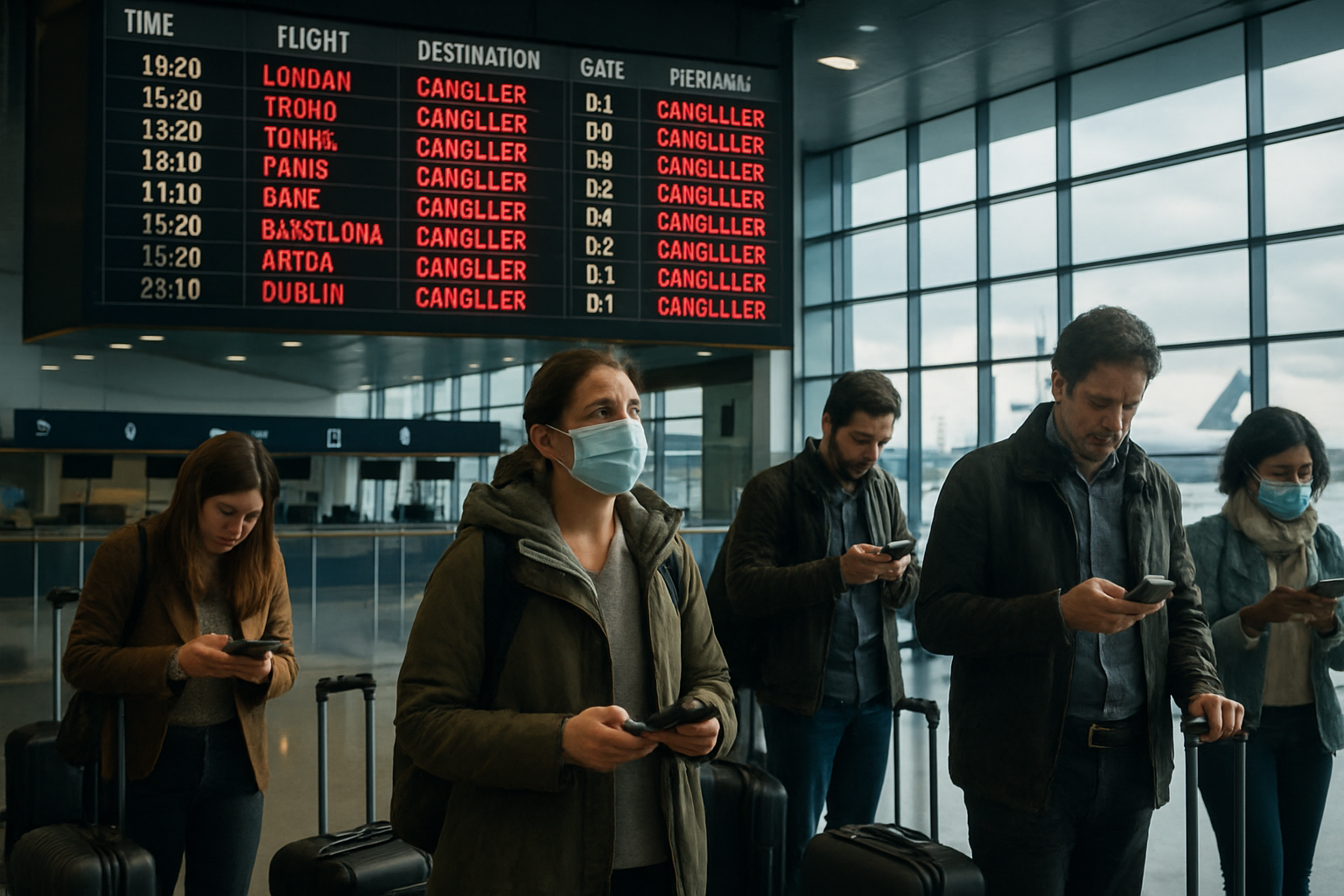
The global travel and tourism industry continues to navigate unprecedented disruptions as ongoing conflicts in the Middle East compound existing challenges, forcing airlines, cruise operators, and governments to implement emergency measures that are reshaping international travel patterns.
The crisis, which began with conflicts escalating in early March 2026, has created the most comprehensive travel disruption since the COVID-19 pandemic, affecting everything from Passover travel plans in Israel to cruise line policies regarding children and airline route restructuring worldwide.
Middle East Conflicts Drive Flight Restrictions
Israeli airlines face severe operational constraints as authorities have tightened passenger quotas and halved takeoffs and landings amid ongoing security concerns. Arkia has shifted significant portions of its operations to Egypt and Jordan, while El Al has been forced to limit flights to just seven destinations, dramatically reducing options for Israeli travelers during the crucial Passover travel season.
The restrictions come as Iran-related tensions continue to disrupt regional aviation networks, with authorities citing security concerns that have persisted since the major crisis earlier in March. Flight tracking data shows continued volatility in Middle Eastern airspace, forcing airlines to maintain enhanced security protocols and alternative routing strategies.
"The situation remains fluid, and we are working closely with aviation authorities to maintain safe operations while serving our passengers' needs,"
— Industry Aviation Source
European Airlines Slash International Routes
The impact extends far beyond the Middle East, with Asian carriers making difficult operational decisions. Budget carrier Cebu Pacific has announced significant cuts to its international flight volume, citing the need to reduce fuel consumption amid soaring energy costs. The Philippine airline's decision particularly affects travelers from provincial areas who depend on these international connections.
European airlines are experiencing similar pressures. EasyJet's leadership has acknowledged that the Middle East conflicts have begun impacting flight bookings, while rising oil prices threaten to drive up air fares significantly by summer's end. The airline has hedged much of its fuel costs into 2027, providing temporary relief, but executives warn that cost increases will inevitably reach consumers.
Norwegian Airlines demonstrated industry agility by rapidly deploying 125 additional flights across the Nordic region to meet surge demand after SAS cancelled over 1,000 flights due to fuel cost pressures. The move highlights how airlines are adapting through capacity reallocation and route optimization.
Cruise Industry Implements Child-Free Policies
In an unexpected development, several cruise lines have begun implementing policies that ban children from certain voyages, marketing these as "child-free" experiences for adult travelers seeking to "dodge tantrums, dive bombs and the fallout from sugar highs." The trend reflects the industry's pivot toward niche market segments as traditional family cruising faces new challenges.
This policy shift comes as the broader cruise industry grapples with operational complexities stemming from global port restrictions and passenger safety concerns. The child-free cruise concept represents an attempt to maintain profitability while adapting to changing consumer preferences and operational constraints.
Energy Crisis Compounds Travel Challenges
The travel industry's challenges are significantly amplified by ongoing energy market volatility. Oil prices have remained elevated due to persistent concerns about Middle Eastern supply routes, with Strait of Hormuz tensions affecting approximately 40% of global oil transit. This has created a cascading effect throughout the tourism sector, from airline fuel costs to cruise ship operations.
The energy crisis has forced airlines to implement complex rerouting strategies, often involving Caribbean stopovers for trans-Pacific routes to avoid affected regions. These adaptations have dramatically increased operational costs and flight times, impacts that are increasingly being passed on to consumers through higher fares and reduced service frequency.
Regional Tourism Realignment
The ongoing crisis has accelerated a significant realignment in global tourism patterns. European destinations, particularly Croatia and Spain, are benefiting as travelers seek safer alternatives to traditional Middle Eastern and long-haul routes. Croatia's investment in comprehensive healthcare infrastructure and quality-focused tourism development has positioned it advantageously during this period of uncertainty.
Conversely, destinations heavily dependent on Middle Eastern aviation hubs face continued challenges. New Zealand's tourism recovery has been threatened as approximately one-third of European travelers typically use Middle Eastern connections. The Caribbean faces what experts describe as a "perfect storm" of Middle East disruptions combined with ongoing aviation challenges in the region.
Technology and Adaptation Strategies
The industry has responded with technological innovations and adaptive management strategies. Airlines are implementing enhanced fuel loading protocols, sophisticated route optimization systems, and improved passenger communication platforms to manage disruptions more effectively. Rome's Trevi Fountain €2 managed access system, which generates €6 million annually while controlling overcrowding, exemplifies how destinations are using technology for sustainable tourism management.
Travel insurance providers are adapting their coverage frameworks, with package tour operators developing comprehensive protection systems while standard policies continue to exclude war-related cancellations. This shift is driving travelers toward organized tours over independent travel, fundamentally altering market dynamics.
Government and Industry Response
Governments worldwide have implemented enhanced emergency protocols, with several nations activating unprecedented evacuation capabilities developed during earlier crises. The European Union's ESTIA evacuation plan has become a template for coordinated international response, while individual nations have strengthened their crisis management frameworks.
Industry leaders are accelerating route diversification strategies to reduce dependency on any single regional hub. Airlines are investing in alternative routing capabilities, enhanced contingency planning, and flexible operational models that can adapt rapidly to geopolitical volatility.
Long-term Industry Transformation
The current crisis represents what experts describe as a "template-setting moment" for 21st-century tourism. Enhanced security screening, mandatory conflict-coverage insurance, and pre-approval systems for high-risk destinations are likely to become standard industry features. Consumer behavior is shifting toward last-minute bookings and flexible arrangements, forcing the industry to develop more agile business models.
The tourism sector is undergoing a fundamental transformation from volume-based strategies toward quality-focused approaches. Regional cooperation is replacing individual competition through collaborative marketing, shared infrastructure, and multi-destination experiences that benefit entire regions rather than single destinations.
Economic and Social Impact
The economic implications extend far beyond the immediate travel sector. Tourism-dependent economies are implementing comprehensive recovery strategies while building resilience against future disruptions. The industry's adaptation is creating new employment patterns, with emphasis on year-round positions and community-focused development that benefits local populations.
Infrastructure investments exceeding $570 billion globally are supporting enhanced visitor services, with destinations like Croatia deploying Europe's most extensive seasonal healthcare network. These investments demonstrate the industry's commitment to long-term sustainability and visitor safety.
Looking Forward
The recovery timeline remains uncertain, as unlike weather-related disruptions, the current challenges depend on geopolitical and diplomatic developments. Industry analysts emphasize that the sector's resilience depends on maintaining international cooperation, investing in crisis management capabilities, and developing diversified operational models.
The travel industry's response to 2026's challenges will likely influence tourism patterns for decades. The choice between maintaining global connectivity despite security challenges versus adopting more regionalized, security-conscious travel patterns represents a fundamental decision point for the industry's future direction.
Success in navigating these challenges depends on several key factors: cultural authenticity preservation, enhanced visitor experiences through strategic infrastructure, meaningful community involvement, and robust international cooperation frameworks. Destinations that balance economic objectives with cultural preservation, environmental responsibility, and visitor satisfaction are positioned to emerge stronger from these unprecedented challenges.