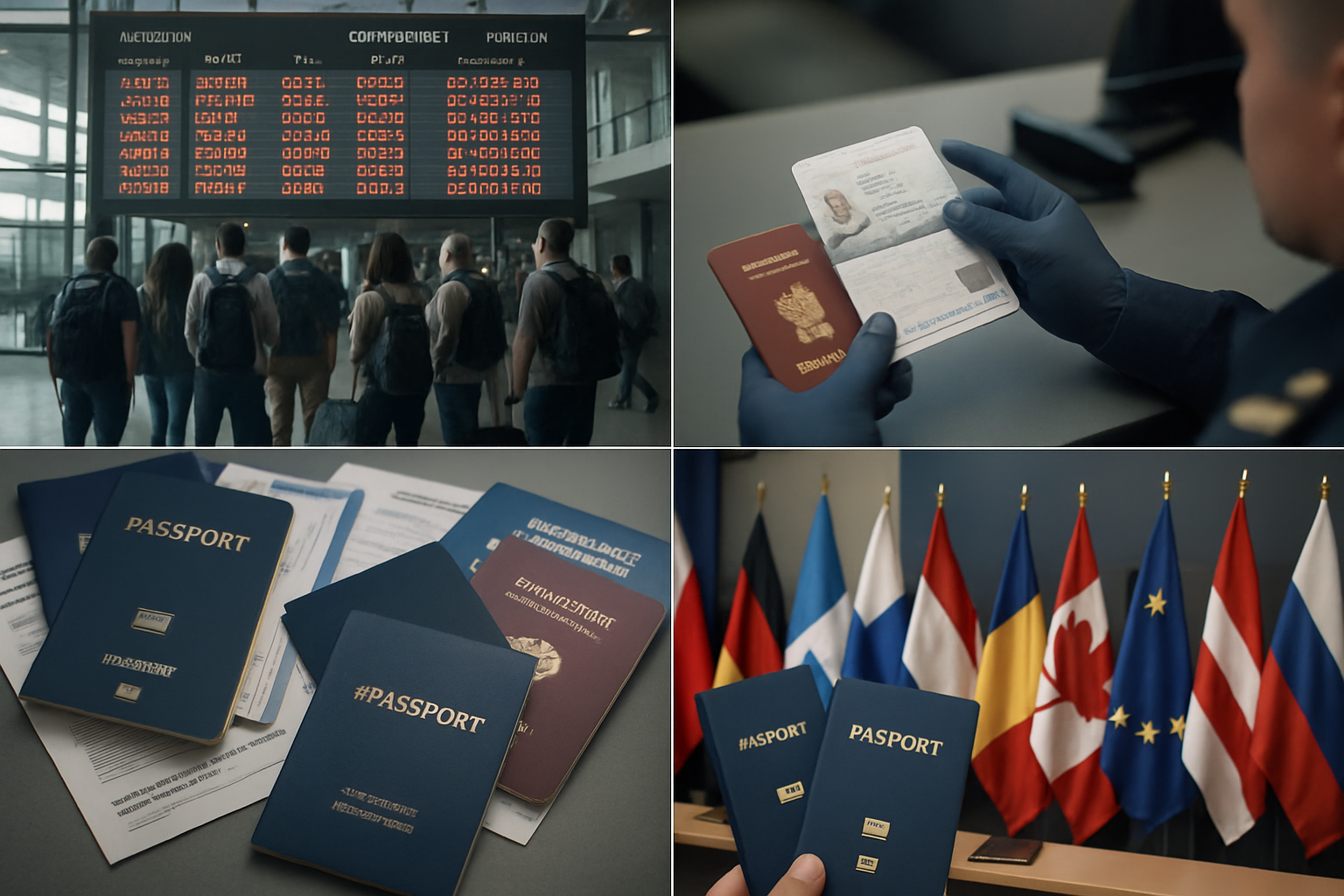
The global travel industry faces its most complex crisis since the pandemic as new border regulations for dual nationals create widespread disruption while regional conflicts fundamentally reshape international tourism patterns.
The crisis reached new heights this week as British teenagers found themselves stranded abroad due to new Home Office rules requiring dual nationals to present British passports or pay £589 for "certificates of entitlement" to enter the UK using foreign documents. Meanwhile, Canada issued fresh travel advisories for Belize citing crime and health concerns, while Germany's tourism industry adapts to shifting patterns as travelers avoid conflict zones.
British Dual Nationals Crisis Intensifies
Two additional British teenagers have become trapped overseas following the UK's controversial February 25, 2026 implementation of new border control rules. The cases emerged just hours after a 16-year-old British schoolgirl was blocked from boarding a flight in Denmark, having already missed two weeks of school.
The new regulations require British dual nationals to present British passports or pay substantial fees for alternative documentation, creating what critics describe as a "bureaucratic nightmare" for millions of British citizens living abroad.
"These cases demonstrate the real-world impact of poorly implemented policy changes that are separating families and disrupting young people's education,"
— Immigration Rights Advocate
The policy change represents part of a broader digital transformation requiring all foreign nationals to use electronic visas (eVisas) exclusively, replacing physical visa vignettes. However, the implementation has created widespread hardship for legitimate travelers, particularly affecting the estimated 5 million British citizens living overseas.
Regional Security Concerns Reshape Tourism
Canada's Government updated travel advisories for Belize on March 20, 2026, urging citizens to exercise increased caution due to violent crime concerns, particularly in urban areas. The advisory specifically highlights incidents of robberies and assaults affecting both local communities and tourist zones.
The warning places Belize among several Caribbean and Latin American destinations flagged for potential risks, including Costa Rica, Cuba, Colombia, and the Dominican Republic. Canadian authorities also noted potential health risks beyond crime-related concerns, demonstrating the multi-faceted nature of contemporary travel security challenges.
German Tourism Industry Adaptation
German travel companies report significant shifts in destination preferences as conflicts in the Middle East deter travelers from traditional routes to Asia. The Frankfurter Allgemeine Zeitung highlighted how ongoing conflicts have led to substantial flight price increases across Europe, with many travelers opting for Mediterranean and African destinations instead of Asian routes.
Travel operators describe this trend as "Canary Islands instead of Dubai," reflecting how geopolitical tensions directly influence tourism patterns. The shift demonstrates the industry's need for flexible planning and alternative destination development.
Economic Impact on Tourism Industry
The convergence of border bureaucracy, security concerns, and regional conflicts creates unprecedented challenges for an industry still recovering from pandemic impacts. Tourism-dependent regions face immediate cancellation pressures alongside long-term reputation concerns affecting future bookings.
Spain, which recorded 513.6 million tourist nights annually, has positioned itself as a primary beneficiary of shifting travel patterns. However, rising operational costs from fuel surcharges and higher energy expenses compound the challenges facing even successful destinations.

Insurance and Protection Gaps
Austrian European Consumer Centre analysis reveals critical gaps in travel insurance coverage, particularly regarding war-related cancellations. Standard policies exclude coverage for conflicts, creating protection gaps as the distinction between war, civil unrest, and terrorism determines coverage levels that can shift rapidly in modern conflicts.
This insurance inadequacy drives consumers toward package tours over independent travel, as operators develop comprehensive coverage frameworks while individual travelers remain exposed to financial losses from circumstances beyond their control.
Digital Border Technology Challenges
The UK's Electronic Travel Authorization (ETA) system, implemented February 25, 2026, affects 85 countries including all EU member states. The £16 digital application fee represents the complete end of freedom of movement privileges for Europeans following Brexit.
While the EU's Entry/Exit System (EES) successfully detected over 4,000 overstayers in its first four months, implementation challenges include potential 4-hour queues during peak periods, forcing the European Commission to authorize partial summer suspensions.
Industry Transformation Underway
The travel industry increasingly embraces quality-focused strategies over volume-based approaches, prioritizing visitor satisfaction, longer stays, and higher per-capita spending over simple arrival numbers. This transformation reflects adaptation to security challenges while maintaining economic viability.
Technology integration has become standard, with real-time monitoring, predictive maintenance, digital payments, and environmental optimization implemented from the design phase rather than retrofitted additions. Climate adaptation has evolved from optional enhancement to mandatory requirement as infrastructure must withstand future rather than historical weather conditions.
Regional Cooperation Emerges
Despite individual challenges, regional cooperation increasingly replaces competitive approaches through collaborative marketing, shared best practices, and multi-destination experiences. Caribbean nations coordinate response strategies, while European destinations work together despite individual border policy differences.
Success factors for destinations include sophisticated management combining marketing excellence with operational efficiency, cultural authenticity with modern infrastructure, and economic objectives with environmental responsibility.
Climate and Conflict Convergence
The crisis occurs during the 18th consecutive month of temperatures exceeding 1.5°C above pre-industrial levels, creating additional pressure on infrastructure and destination stability. Climate adaptation requirements now intersect with security concerns and border management challenges.
Economic multiplier effects extend beyond hospitality through infrastructure improvements, cultural programming, workforce development, and local artisan support, creating year-round employment opportunities even amid current disruptions.
Path Forward
Industry resilience and innovation during this transformative period establish foundations that will influence tourism policy for decades ahead. The convergence of technological advancement, environmental awareness, and international cooperation creates development models prioritizing sustainability alongside economic growth.
Recovery requirements include coordinated action among governments, industry stakeholders, and international organizations; comprehensive insurance frameworks addressing modern conflicts; enhanced real-time information sharing; and standardized evacuation protocols for crisis situations.
The March 2026 crisis represents a watershed moment for international tourism, demonstrating industry fragility in an interconnected but volatile world. The sector faces a critical choice between creating safe enclaves or developing robust systems that enable continued global mobility despite persistent security challenges.
Success in navigating these challenges will determine whether the industry emerges stronger with enhanced crisis management capabilities or fragments into restricted, localized markets that limit the human desire for exploration and cultural exchange that has driven tourism growth for decades.