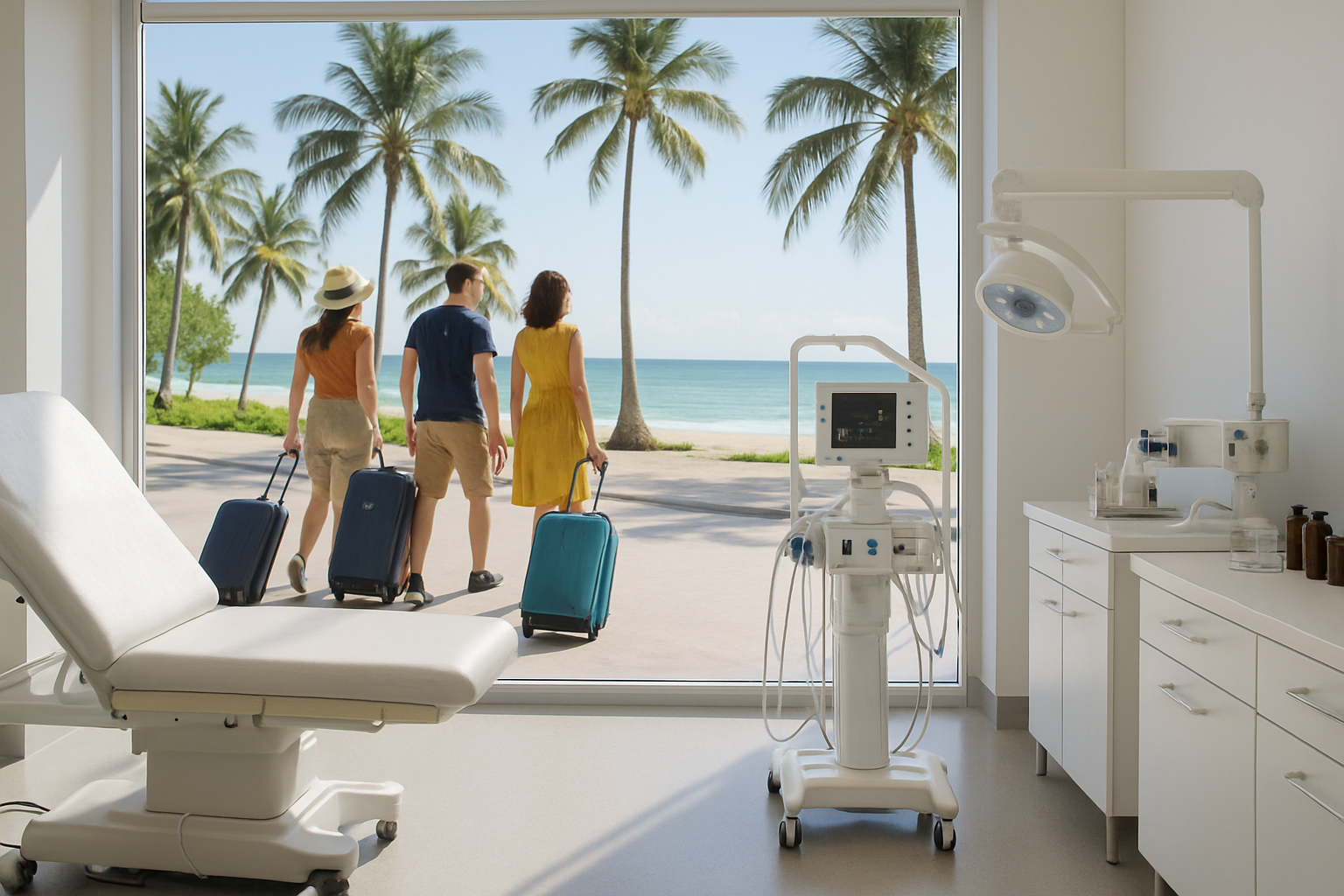
The global travel and tourism industry continues its remarkable transformation in March 2026, with Croatia pioneering medical tourism innovations while both Croatia and the Dominican Republic strategically targeting the valuable German market through sophisticated campaigns at ITB Berlin 2026.
Croatia's Medical Tourism Breakthrough
University Hospital Centre Rijeka has achieved a major milestone in Croatian medicine by performing the country's first incision-free stomach reduction procedure, marking a significant advancement in medical tourism capabilities. This endoscopic sleeve gastroplasty represents Croatia's evolving position as a sophisticated healthcare destination, complementing its traditional appeal as a Mediterranean tourism hotspot.
The procedure, conducted in Rijeka on March 4, 2026, demonstrates Croatia's commitment to expanding beyond conventional tourism offerings. The success comes as Croatia has already positioned itself as Europe's leader in seasonal healthcare infrastructure, deploying 62 tourist medical clinics for the 2026 season - the continent's most extensive seasonal healthcare network.
"This represents a fundamental shift in how we view tourism infrastructure - healthcare accessibility is now integral to destination competitiveness."
— Healthcare Industry Analyst, referring to Croatia's medical tourism expansion
German Market Strategic Focus
At ITB Berlin 2026, both Croatia and the Dominican Republic are showcasing their tourism offerings with particular emphasis on attracting German visitors, recognizing Germany as one of Europe's most lucrative source markets.
Croatia's presence at the world's leading travel trade fair highlights its position among the top 10 destinations for German travelers. The country's sophisticated approach combines traditional Mediterranean attractions with innovative medical services, creating a comprehensive destination portfolio that addresses diverse traveler needs.
The Dominican Republic's participation through the Asociación de Hoteles y Turismo de la República Dominicana emphasizes the strategic importance of the German market in the country's record tourism performance. In 2025, the Dominican Republic welcomed 11.6 million international visitors, with German arrivals showing significant growth and consolidating Germany as one of the leading European source markets for the Caribbean destination.
Record-Breaking Performance
The Dominican Republic's tourism success extends beyond visitor numbers to economic impact. German visitors have become key contributors to the country's foreign exchange earnings, with the destination experiencing sustained hotel occupancy rates exceeding 70% and demonstrating remarkable resilience in the post-pandemic recovery period.
This performance occurs within the broader context of the Caribbean leading an unprecedented global investment wave, with tourism infrastructure receiving over $570 billion in comprehensive development funding worldwide. The Dominican Republic's strategic positioning at ITB Berlin 2026 reflects its commitment to maintaining momentum in the competitive European market.
Industry Transformation Patterns
The developments highlighted at ITB Berlin 2026 represent broader trends reshaping international tourism. The industry has evolved from volume-based approaches to quality-focused strategies, with destinations like Croatia investing in specialized medical facilities and countries like the Dominican Republic targeting specific high-value demographic segments.
Generation Z travelers, who represent 50% of those making multiple annual trips lasting five or more days, are driving demand for authentic experiences combined with practical considerations like healthcare accessibility. Croatia's medical tourism infrastructure directly addresses these evolving preferences while maintaining cultural authenticity.
Regional cooperation has replaced individual destination competition, with countries coordinating marketing efforts and collaborative infrastructure development. The Caribbean region, including the Dominican Republic, has demonstrated sophisticated port management capabilities, with destinations like Saint Kitts and Nevis simultaneously accommodating six cruise ships while maintaining operational excellence.
Healthcare Infrastructure as Competitive Advantage
Croatia's deployment of 62 tourist medical clinics represents a proactive approach to destination management that addresses pandemic-era lessons about visitor safety and healthcare preparedness. This infrastructure investment extends beyond emergency services to encompass specialized procedures like the breakthrough gastroplasty performed in Rijeka.
The integration of healthcare services with tourism infrastructure creates comprehensive visitor support systems that enhance destination competitiveness. Medical tourism represents a growing segment of international travel, with travelers seeking destinations that combine leisure experiences with access to high-quality healthcare services.
"The convergence of tourism and healthcare represents the future of destination development - visitors want assurance that comprehensive support services are available throughout their journey."
— Tourism Industry Development Expert
Economic Impact and Multiplier Effects
The economic implications of these tourism developments extend far beyond traditional hospitality sectors. Croatia's medical tourism initiatives support specialized healthcare employment, equipment procurement, and technical training programs. The Dominican Republic's German market focus generates foreign exchange earnings that support broader economic development objectives.
Tourism multiplier effects include transportation improvements, cultural industry support, artisan networks, and community infrastructure enhancement. Both Croatia and the Dominican Republic demonstrate how strategic tourism development creates year-round employment opportunities and sustainable economic foundations.
The success of destinations implementing comprehensive tourism infrastructure shows greater economic resilience and sustainable investment attraction. Countries that balance immediate economic benefits with long-term cultural preservation and environmental responsibility are establishing new standards for 21st-century tourism competitiveness.
Technology Integration and Authentic Experiences
Modern tourism development emphasizes technology integration that enhances rather than replaces authentic cultural experiences. Croatia's medical facilities utilize advanced diagnostic and treatment technologies while preserving the country's Mediterranean cultural identity. The Dominican Republic leverages digital marketing platforms to reach German audiences while maintaining its Caribbean authenticity.
AI-integrated travel planning tools enable visitors to discover authentic experiences while accessing practical information about healthcare services, transportation options, and cultural activities. This technological sophistication supports the quality-focused tourism strategies that both Croatia and the Dominican Republic are implementing.
Climate Resilience and Sustainability
The tourism developments showcased at ITB Berlin 2026 occur within the context of climate adaptation requirements, as January 2026 marked the 18th consecutive month of global temperatures exceeding 1.5°C above pre-industrial levels. Both Croatia and the Dominican Republic are implementing climate-resilient infrastructure that supports sustained tourism operations despite environmental challenges.
Sustainable development models emphasize community involvement, environmental protection, and cultural preservation alongside economic objectives. Success increasingly requires destinations to demonstrate adaptive capacity for climate disruptions while maintaining visitor satisfaction and community well-being.
Future Outlook and Strategic Implications
The March 2026 developments represent template-setting initiatives for tourism industry evolution. Croatia's integration of medical services with traditional tourism offerings and the Dominican Republic's strategic market targeting demonstrate sophisticated destination management approaches that balance multiple objectives.
International cooperation through events like ITB Berlin 2026 enables best practices sharing, collaborative marketing efforts, and coordinated infrastructure development. The success of these initiatives influences similar programs across other destinations, contributing to global tourism industry maturation toward sustainable, community-focused development models.
The convergence of medical innovation, strategic marketing, and sustainable development principles establishes new benchmarks for destination competitiveness in an increasingly sophisticated global marketplace. As the tourism industry continues its post-pandemic transformation, destinations that successfully integrate practical visitor services with authentic cultural experiences are positioned for long-term success in serving both visitors and local communities effectively.