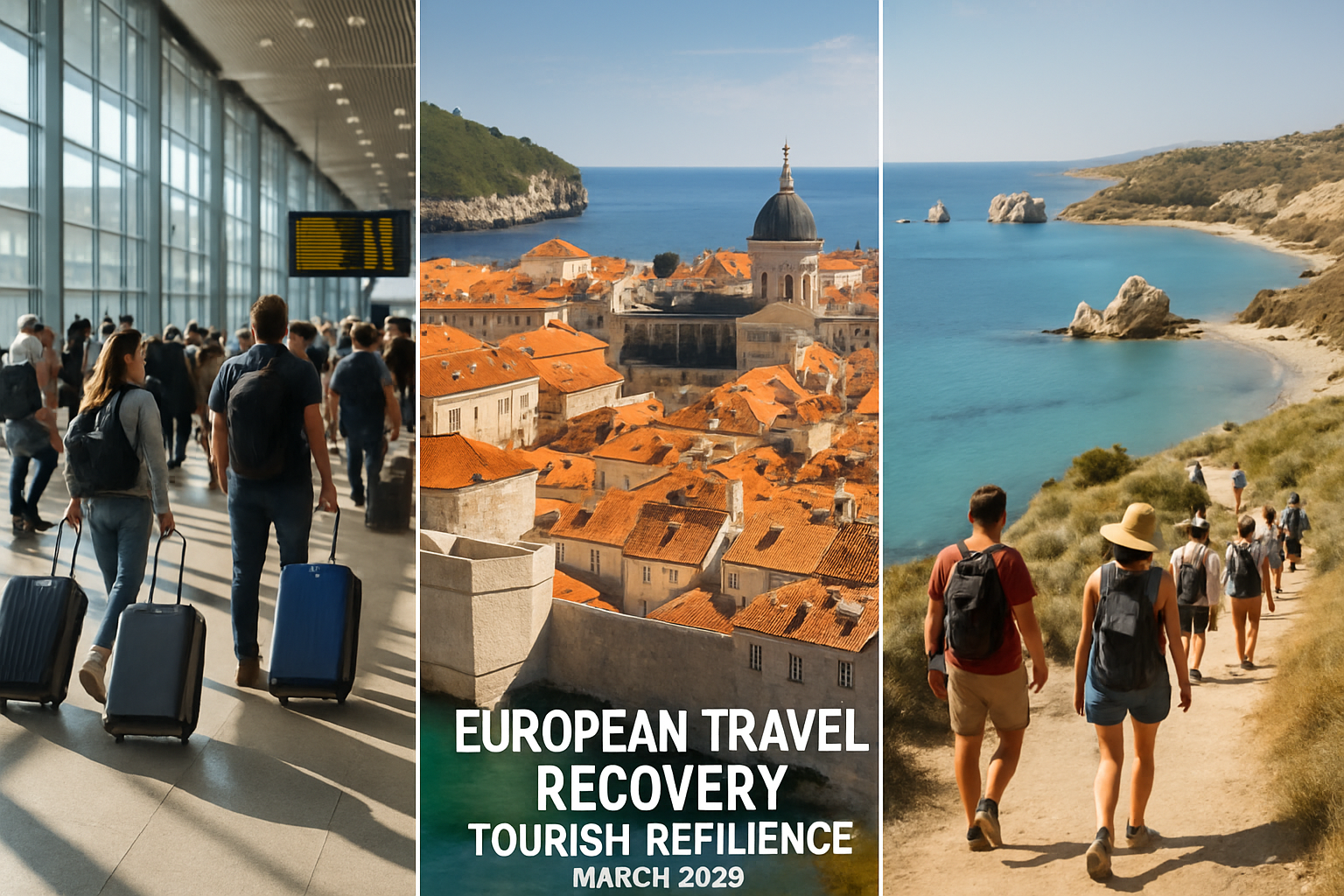
European destinations are demonstrating remarkable resilience and adaptability in March 2026, with Croatia experiencing significant passenger growth while Cyprus launches strategic campaigns to counter tourism concerns, reflecting the complex dynamics of post-crisis travel recovery across the Mediterranean region.
Croatian Aviation Sector Posts Strong Growth
Croatia's aviation sector has emerged as a standout performer in the European travel landscape, with Zagreb Airport reporting substantial passenger increases that are prompting infrastructure considerations. The country's airports collectively served 365,000 passengers during January 2026, marking an impressive 8.8% increase compared to the same period in 2025.
Zagreb Airport led this growth trajectory, handling 295,000 passengers in January—representing a 6.4% year-on-year increase according to the Central Bureau of Statistics. This consistent growth has prompted airport authorities to consider reopening the facility's former passenger terminal to accommodate rising demand, a move that would significantly expand capacity at Croatia's busiest airport.
"The passenger numbers continue to rise, and we're actively evaluating all options to ensure we can meet this growing demand effectively."
— Zagreb Airport Authority
The growth success story extends beyond Zagreb, with nearly all Croatian airports participating in the expansion. Only Rijeka Airport experienced a decline during the typically quiet January period, while other regional airports contributed to the national growth figure that positions Croatia as one of Europe's most resilient aviation markets.
Cyprus Responds to Tourism Image Challenges
Cyprus finds itself in a markedly different position, implementing a coordinated response to tourism concerns following recent regional security incidents. The island nation has launched a comprehensive information campaign after booking cancellations affected both spring and summer seasons, prompted by security concerns related to a drone strike incident at the British base at Akrotiri.
President Nikos Christodoulides convened an emergency meeting with ministers and tourism industry leaders to address the situation, recognizing the urgent need to counter negative perceptions that could impact the crucial tourism sector. The Presidential Palace meeting concluded with a clear priority: implementing a coordinated information campaign targeting partners throughout the tourism industry.
The Employers and Industrialists Federation (OEB) has stepped forward with strong messaging, emphasizing that "Cyprus remains a safe and reliable destination for international investment, business activity and quality tourism." The federation highlighted the resilience of the Cypriot economy, noting it has "proven strong institutionally, operationally and organisationally against every kind of crisis and international or regional geopolitical upheaval."
Regional Tourism Infrastructure Investment
Both countries' experiences reflect broader trends in European tourism infrastructure development, part of what industry analysts describe as an unprecedented $570+ billion global infrastructure surge supporting comprehensive visitor services. Croatia has positioned itself at the forefront of this movement, deploying 62 tourist medical clinics for the 2026 season—representing Europe's most extensive seasonal healthcare network.
This infrastructure investment demonstrates the evolution from volume-based tourism strategies toward quality-focused approaches that prioritize visitor experience and safety. The success of Croatia's model has influenced similar developments across the Mediterranean, where destinations are increasingly recognizing healthcare infrastructure as essential for competitive tourism positioning.
Ireland's Strategic Tourism Funding Reallocation
Ireland demonstrates another approach to tourism development challenges through strategic funding reallocation. Donegal County Council has redirected €20,000 originally allocated for Owencarrow tourism works toward the Creeslough to Glenveagh road project, after the original plans could not proceed as intended.
The reallocation, approved by the Glenties Municipal District and proposed by Independent Councillor Michael McClafferty, illustrates the practical challenges facing tourism infrastructure development. The Minor Tourism Related Works Grant Scheme funding, originally designed for improvements to signage, scenic areas, picnic facilities, and beaches, is no longer available to Donegal County Council—a situation that Sinn Féin Councillor Brian Carr described as problematic for future tourism development.
Industry Transformation Toward Sustainability
These developments across Croatia, Cyprus, and Ireland reflect broader transformations in the European tourism industry. The sector is increasingly characterized by quality-focused strategies that emphasize visitor experience enhancement, cultural authenticity preservation, and climate-resilient infrastructure development.
Generation Z travelers are driving much of this change, with research indicating they made multiple trips over five days in 2025 and are demanding AI-integrated travel planning combined with authentic cultural experiences. This demographic shift is compelling destinations to balance technological convenience with cultural authenticity, creating sophisticated destination management approaches that serve both economic objectives and community benefits.
Regional Cooperation and Competition
The contrasting experiences of Croatian growth and Cypriot challenges highlight how regional cooperation is becoming increasingly important in European tourism. Destinations are recognizing that collaborative approaches to marketing, infrastructure development, and crisis management often prove more effective than purely competitive strategies.
Cyprus's coordinated government and industry response to its tourism image challenges exemplifies this approach, while Croatia's consistent growth demonstrates the benefits of sustained infrastructure investment and strategic positioning within European travel networks.
Economic Multiplier Effects
The tourism developments across these European destinations generate significant economic multiplier effects extending far beyond traditional hospitality services. Croatia's airport growth supports transportation improvements, while Cyprus's tourism campaigns involve multiple sectors from marketing to diplomatic services. Ireland's funding reallocation demonstrates how tourism infrastructure investment creates broader community benefits through road improvements and connectivity enhancement.
These multiplier effects include job creation, infrastructure development, international trade facilitation, and cultural preservation activities. The comprehensive nature of modern tourism development requires coordinated approaches that balance immediate economic benefits with long-term sustainability and community welfare.
Looking Forward: Resilience and Adaptation
The March 2026 developments across European tourism destinations demonstrate both the challenges and opportunities facing the industry in an increasingly complex global environment. Croatia's growth trajectory shows the rewards of consistent infrastructure investment and strategic positioning, while Cyprus's proactive response to external challenges illustrates the importance of coordinated crisis management.
Success factors emerging from these examples include cultural authenticity preservation, enhanced visitor experiences through strategic infrastructure, meaningful community involvement, climate-resilient development, and international cooperation. The tourism industry's evolution toward sophisticated destination management that balances economic prosperity with cultural identity and environmental integrity appears to be establishing new competitiveness standards for the decade ahead.
As European destinations continue adapting to changing traveler expectations, regional security considerations, and climate challenges, the experiences of Croatia, Cyprus, and Ireland provide valuable templates for sustainable tourism development that serves both visitor satisfaction and community prosperity.