Trinidad and Tobago's vibrant Carnival 2026 celebrations showcased the nation's cultural heritage through traditional competitions and street festivities, yet the annual event was marked by significant controversies over broadcast censorship and organizational standards that sparked debate among participants and spectators alike.
The highlight of the festivities came with Terri Lyons' triumphant return to the Calypso Monarch crown, securing her second title since 2020 with a soulful rendition of her song "Blessings" at the Dimanche Gras show at Queen's Park Savannah. Lyons received the event's only standing ovation from what organizers described as the largest audience to attend the prestigious competition in recent years.
Technical Controversies Dominate Headlines
However, the celebrations were overshadowed by a major broadcast controversy involving former Calypso Monarch Helon Francis, whose performance suffered from mysterious audio loss during the live Trinidad and Tobago Television (TTT) broadcast. The technical failure prompted accusations of censorship from opposition figures and raised questions about editorial control over cultural content.
"It's rather coincidental that something like that could have happened while a song that speaks to the same thing is being performed,"
— Helon Francis, Former Calypso Monarch
The government has firmly denied any censorship, with state-owned TTT issuing formal apologies to viewers for the technical malfunction. Opposition MP Stuart Young publicly challenged the government's explanation, adding political dimensions to what many consider a purely technical issue. The incident highlights ongoing tensions between artistic expression and broadcast oversight in Trinidad and Tobago's media landscape.
Record-Breaking Royal Performances
In the Carnival King and Queen competition, Curtis Eustace made history by defending his 2025 crown to secure his remarkable 11th title, extending his record as the most successful Carnival King in the competition's history. His back-to-back victories demonstrated the exceptional artistry and craftsmanship that defines Trinidad's mas tradition.
Accompanying Eustace's triumph, the Queen competition saw continued excellence with another successful defense, as the reigning Queen retained her crown in what spectators described as a display of extraordinary costume design and performance artistry.
Despite their victories, Eustace issued sharp criticism of the Trinidad and Tobago Carnival Bands Association (TTCBA) for what he characterized as poor organization of this year's competition. His pointed critique, delivered as he exited the stage after being announced winner, contrasted the King and Queen competition's management unfavorably with the Calypso Monarch competition hosted by the Trinbago Unified Calypsonians Organization.
Political Participation and Community Engagement
Prime Minister Kamla Persad-Bissessar demonstrated the government's commitment to Carnival traditions by participating in J'Ouvert celebrations in Barrackpore early Monday morning. Accompanied by Culture Minister Michelle Benjamin and Naparima MP Narendra Roopnarine, the Prime Minister was photographed smiling with a traditional lei around her neck, embodying the festival's inclusive spirit.
Before the celebrations, the Prime Minister had urged citizens to enjoy Carnival safely and responsibly, calling on participants "not to do anything to embarrass themselves or their families." This message reflected ongoing government efforts to balance cultural celebration with public safety concerns.
Cultural Debates and Costume Traditions
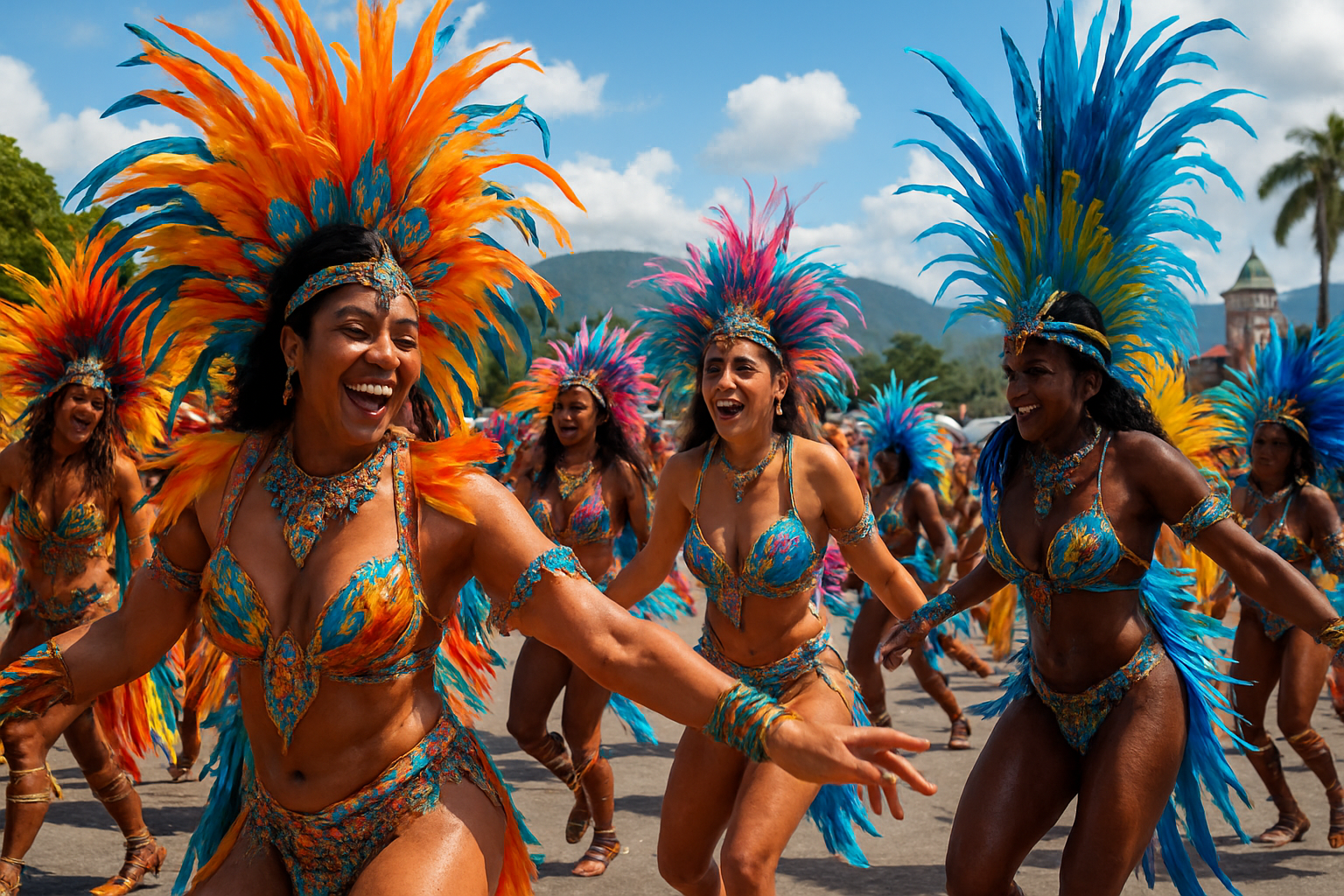
The traditional Monday mas parade through Port-of-Spain generated significant discussion among spectators about evolving costume designs and cultural authenticity. As thousands of women took to the streets in elaborate carnival attire, debates arose among onlookers about the balance between traditional craftsmanship and contemporary design approaches.
"Carnival is Woman, and Carnival Monday 2026 was certainly no different,"
— Joshua Seemungal, Senior Reporter
Irving Murray, a veteran masquerader who participated for over two decades until Legacy mas band closed operations, expressed mixed feelings about current costume standards at the South Quay Judging Point. His observations reflected broader community conversations about maintaining traditional mas artistry while allowing for creative evolution.
The judging process attracted crowds of spectators who engaged in spirited discussions about bikini designs, beadwork, and fabric choices, demonstrating the public's deep investment in maintaining carnival's artistic standards. These debates underscored the cultural significance of mas as both artistic expression and community identity marker.
International Context and Tourism Impact
Trinidad and Tobago's Carnival 2026 occurred within the broader context of a global cultural renaissance, with carnival celebrations worldwide demonstrating unprecedented community engagement and international attention. According to tourism industry analysis, the nation's carnival maintained steady visitor levels matching previous years, though officials noted that repeat visitors dominated arrivals rather than attracting significant new international audiences.
TIATT Chairman Charles Carvalho acknowledged this pattern while noting the challenge of converting steady tourism performance into enhanced local economic benefits. The situation reflects broader Caribbean challenges of market maturation versus expansion in an increasingly competitive global tourism landscape.
Economic and Cultural Significance
The carnival season supports thousands of jobs across Trinidad and Tobago's cultural ecosystem, from costume makers and musicians to hospitality workers and security personnel. The competitions at Queen's Park Savannah serve as showcases for the nation's artistic heritage, attracting both local audiences and international media coverage that benefits the country's cultural diplomacy efforts.
The 2026 celebrations demonstrated successful synthesis of cultural preservation with contemporary innovation, maintaining traditional elements such as calypso storytelling and elaborate mas costume design while incorporating modern production techniques and broader community participation.
Looking Forward: Challenges and Opportunities
As Trinidad and Tobago's Carnival 2026 concludes, the celebration leaves behind a complex legacy of cultural triumph tempered by organizational concerns and technical controversies. The success of individual competitors like Terri Lyons and Curtis Eustace demonstrates the enduring excellence of the nation's carnival traditions, while the broadcast controversy and organizational criticisms highlight areas requiring attention for future celebrations.
The government's active participation, led by Prime Minister Persad-Bissessar's J'Ouvert appearance, reinforces political commitment to supporting national culture. However, the technical failures and management criticism suggest that administrative improvements may be necessary to match the artistic excellence displayed by competitors.
As the carnival season transitions toward preparation for 2027, stakeholders will likely focus on addressing the technical and organizational challenges that emerged this year while building upon the cultural successes that continue to make Trinidad and Tobago's Carnival one of the Caribbean's most significant cultural celebrations.