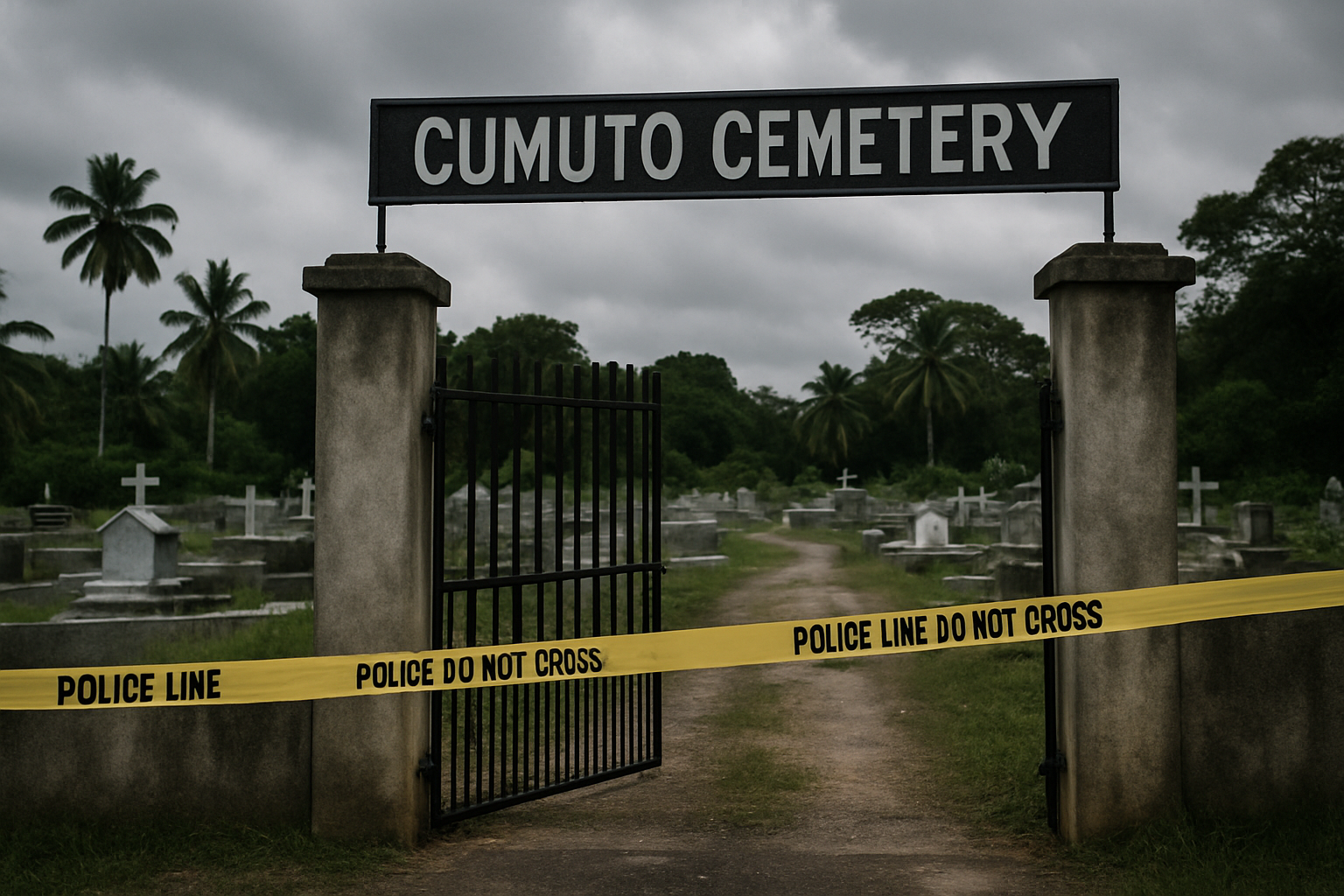
A shocking discovery at Cumuto Cemetery in Trinidad and Tobago has exposed what investigators describe as one of the most serious breaches of burial protocols in Caribbean history, after authorities found 56 bodies being illegally disposed of by funeral home workers in a case that has sparked outrage from religious groups and raised serious questions about institutional oversight.
The Trinidad and Tobago Police Service (TTPS) launched a multi-agency investigation after discovering the attempted mass burial on Saturday at the cemetery located in the Cumuto District, approximately 40 kilometers east of Port of Spain. Two workers from an unnamed funeral home were detained in connection with the incident, which preliminary findings suggest may involve the unlawful disposal of unclaimed corpses from healthcare institutions.
Details of the Discovery
According to police statements, the bodies were found with various identification methods, with some remains showing evidence of autopsy procedures. Initial investigations indicate possible links to a health institution, though officials have not yet disclosed which facility may be involved. The systematic nature of the disposal suggests an institutional source rather than an individual criminal act, according to law enforcement sources.
The Sangre Grande Regional Corporation (SGRC), which oversees the Cumuto Cemetery, has emphatically denied granting permission for the burial operation. In a statement released Monday, the corporation distanced itself from any authorization for the mass burial, emphasizing that proper protocols were not followed.
"The Sangre Grande Regional Corporation did not authorize or grant permission for this burial operation. We are cooperating fully with the police investigation to determine how this occurred on our premises."
— SGRC Official Statement
Muslim Community Outrage
The discovery has particularly outraged Trinidad's Muslim community, with religious leaders condemning what they describe as the "inhumane" treatment of the deceased. Imam Rasheed Karim, head of Ummah T&T and the Islamic Fada'il Services Trust (IFST), expressed deep concern over the manner in which the bodies were handled.
According to Islamic burial traditions, the deceased must be treated with dignity and respect, and the improper handling of remains is considered a serious violation of religious principles. The Muslim community has called for a thorough investigation to ensure those responsible are held accountable and that proper burial protocols are established to prevent similar incidents.
The involvement of infants among the 56 bodies has particularly distressed community leaders, who noted that the treatment of children's remains requires special sensitivity under Islamic law. The discovery has raised questions about how unclaimed bodies from hospitals and morgues are handled throughout Trinidad and Tobago's healthcare system.
Institutional Failures Exposed
This incident occurs against the backdrop of what healthcare experts describe as the "Therapeutic Revolution of 2026" - a period of significant strain on healthcare systems worldwide. Trinidad and Tobago's healthcare infrastructure has been under particular pressure, with nursing shortages and institutional challenges affecting service delivery across the twin-island nation.
The discovery comes at a time when the country's healthcare system is already facing significant challenges, including ongoing disputes over staffing levels and compensation that have led to coordinated nursing "sickouts" disrupting healthcare delivery. Healthcare workers have reported being trapped in mandatory overtime situations due to chronic understaffing, creating additional pressure on an already strained system.
Investigation Scope and Process
The TTPS has confirmed that a comprehensive multi-agency investigation is underway, involving police investigators and other state authorities. Statements are being taken from persons of interest as inquiries continue, with investigators working to establish the full circumstances surrounding the attempted mass burial.
The investigation is examining several key areas: the chain of custody for the bodies, institutional protocols at healthcare facilities, oversight mechanisms for funeral homes, and compliance with burial regulations. Authorities are also reviewing morgue protocols across multiple healthcare facilities to determine if systemic failures contributed to the incident.
Preliminary findings suggest the bodies may have been labeled, pointing to possible institutional origins rather than random disposal. This has led investigators to examine relationships between funeral homes and healthcare facilities to determine if proper procedures were followed in the transfer and handling of remains.
Broader Healthcare Context
The mass burial discovery highlights broader challenges facing Trinidad and Tobago's healthcare system, which operates under significant financial and operational constraints. The incident raises critical questions about the handling of unclaimed remains and the protocols in place to ensure dignified treatment of the deceased.
Healthcare experts note that the proper handling of unclaimed bodies requires clear legal frameworks, adequate resources, and strong oversight mechanisms. The Cumuto incident suggests potential gaps in these systems that may have allowed improper disposal practices to develop.
The timing of the discovery is particularly significant, occurring during a period when Trinidad and Tobago is participating in international security initiatives, including the Shield of Americas Anti-Cartel Coalition, and has received $6 million in U.S. health partnerships. The incident threatens to undermine confidence in institutional capacity during a critical period for the country's international relationships.
Regional and International Implications
The discovery has implications beyond Trinidad and Tobago's borders, as it highlights challenges facing healthcare systems throughout the Caribbean region. The incident occurs as Caribbean nations grapple with resource constraints, infrastructure challenges, and the ongoing effects of global healthcare pressures.
International observers have noted the incident as an example of the institutional capacity challenges facing small island developing states. The response to the crisis will be closely watched as a test of democratic governance and institutional accountability in the region.
Calls for Reform
The incident has sparked calls for comprehensive reform of healthcare oversight mechanisms, including:
- Enhanced morgue protocols and record-keeping systems
- Clearer legal frameworks for handling unclaimed remains
- Stronger supervisory mechanisms for funeral homes
- Regular compliance monitoring of healthcare facilities
- Greater transparency in healthcare operations
- Community engagement in oversight processes
Religious leaders have specifically called for the establishment of interfaith committees to ensure that burial practices respect the religious traditions of all communities in Trinidad and Tobago's diverse society.
Political Response
Government officials have acknowledged the seriousness of the situation and pledged full support for the investigation. The incident has prompted calls from opposition figures for a comprehensive review of healthcare oversight mechanisms and burial protocols.
The discovery comes at a sensitive time for the government of Prime Minister Kamla Persad-Bissessar, which has been working to strengthen healthcare systems and improve institutional capacity. The handling of this crisis will likely influence public confidence in the administration's ability to ensure proper oversight of essential services.
Moving Forward
As the investigation continues, authorities face the complex task of identifying all the remains, notifying families where possible, and ensuring proper burial according to religious and cultural traditions. The process of addressing this institutional failure will likely take months and require coordination between multiple agencies and community groups.
The incident serves as a stark reminder of the importance of maintaining robust oversight mechanisms in healthcare and funeral services. The response will be closely watched as a test of institutional capacity and democratic governance in Trinidad and Tobago.
For the families of the deceased and the broader community, the discovery represents a profound breach of trust that will require sustained effort to address. The religious communities' demands for dignity and respect in handling the dead reflect broader societal expectations about institutional accountability and ethical governance.
The Cumuto Cemetery mass burial discovery stands as a watershed moment for Trinidad and Tobago's healthcare and burial systems, demanding comprehensive reform to ensure such institutional failures never occur again. The international attention the case has received underscores the global significance of maintaining proper standards for the treatment of the deceased, regardless of their social or economic status.