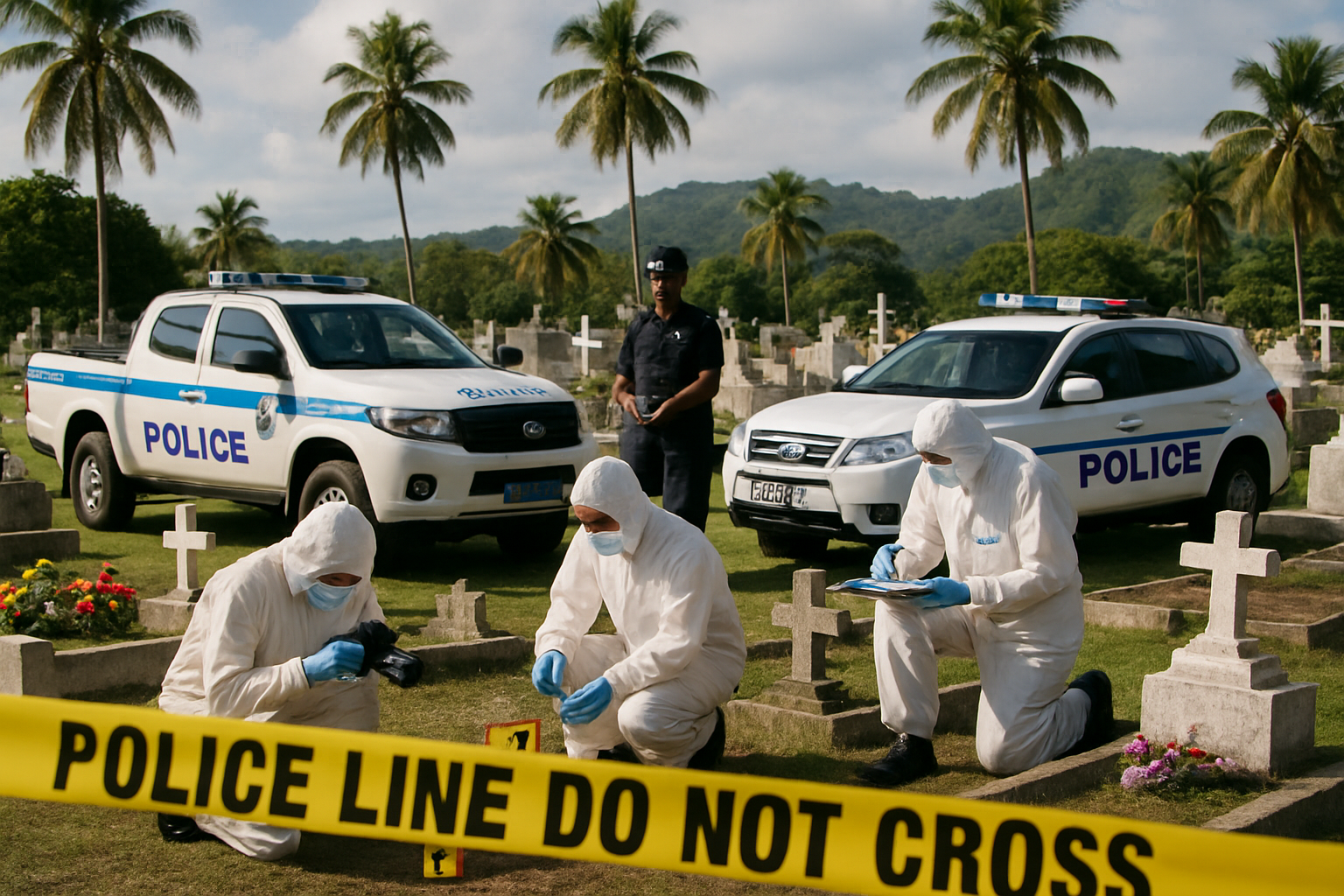
Police in Trinidad and Tobago launched a major investigation after the shocking discovery of 56 bodies — predominantly infants and young children — found dumped at a cemetery in the city of Cumuto on Saturday, in what authorities suspect may be a case of "unlawful disposal of unclaimed corpses."
The grim discovery has sent shockwaves through the twin-island Caribbean nation, raising urgent questions about morgue protocols, burial procedures, and the handling of unclaimed remains. The investigation comes amid ongoing security challenges in Trinidad and Tobago, where authorities have been grappling with sophisticated criminal networks and institutional vulnerabilities.
The Discovery
According to multiple international reports, the bodies were found at a cemetery in Cumuto, located in the Central Range of Trinidad. The discovery was made on Saturday, April 18, 2026, though specific details about how the bodies were found and who made the initial discovery remain under investigation.
Al Jazeera reported that police suspect the case involves the "unlawful disposal of unclaimed corpses," suggesting potential institutional failures in the proper handling of bodies that remained unclaimed at morgues or medical facilities. The breakdown in numbers — with the vast majority being infants and children — has particularly disturbed investigators and the public alike.
"This is an unprecedented discovery that requires thorough investigation to understand how so many bodies, particularly of vulnerable children, came to be disposed of in this manner."
— Source familiar with the investigation
Context of Security Challenges
This discovery occurs against a backdrop of significant security and institutional challenges in Trinidad and Tobago. The nation's security apparatus has been under strain, dealing with sophisticated criminal networks that demonstrate what law enforcement describes as "state-like capabilities."
In March 2026, authorities implemented a State of Emergency under Prime Minister Kamla Persad-Bissessar, reflecting escalating security concerns. The country has also been dealing with complex criminal investigations, including systematic targeting of security personnel and weapons trafficking operations with international connections.
Recent security incidents have included the murder of a Trinidad and Tobago Regiment soldier with military ammunition, highlighting vulnerabilities in the security apparatus. The discovery at Cumuto cemetery adds another layer of institutional concern, this time involving proper protocols for handling deceased individuals.
Healthcare System Strain
The discovery comes during what experts describe as the "Therapeutic Revolution of 2026," a period marked by remarkable medical advances alongside critical healthcare infrastructure challenges. Trinidad and Tobago's healthcare system has been experiencing significant strain, including:
- Critical staffing shortages across the healthcare system
- Industrial disputes between nurses and regional health authorities
- Concerns about transparency in healthcare contracting
- Challenges in emergency response coordination
In April 2026, the death of a senior doctor at Eric Williams Medical Sciences Complex after an extended Easter weekend shift highlighted the extreme stress on healthcare workers. The Trinidad and Tobago National Nurses Association has been pushing for salary increases, with workers remaining on "2013 salaries in 2026."
Investigative Focus
Authorities are focusing their investigation on several key areas:
- Morgue Protocols: Examining procedures at hospitals, morgues, and medical facilities for handling unclaimed bodies
- Legal Compliance: Determining whether proper legal procedures were followed for burial or cremation of unclaimed remains
- Chain of Custody: Tracing how the bodies came to be at the cemetery and who was responsible for their disposal
- Institutional Oversight: Reviewing supervisory mechanisms for ensuring proper handling of deceased individuals
The high proportion of infant and child remains is particularly concerning to investigators, as these cases typically require more sensitive handling and have different legal requirements than adult remains.
Regional and International Implications
The discovery has drawn international attention, with reports appearing in major global news outlets including Al Jazeera, Japan Today, and Spanish-language media. The case highlights broader challenges facing Caribbean nations in maintaining institutional capacity amid resource constraints and security pressures.
Trinidad and Tobago has been an active participant in international security cooperation, including the Shield of the Americas Anti-Cartel Coalition among 17 nations. However, this discovery suggests internal institutional challenges that may require enhanced oversight and reform.
Legal and Ethical Framework
The handling of unclaimed remains typically involves strict legal protocols designed to ensure dignity and proper documentation. Standard procedures usually include:
- Waiting periods for family members to claim bodies
- Public notification requirements
- Proper documentation and record-keeping
- Authorized burial or cremation procedures
- Oversight by relevant government agencies
The discovery suggests potential breakdowns in one or more of these safeguards, raising questions about oversight mechanisms and institutional accountability.
Community Impact
The discovery has deeply affected the local community in Cumuto and the broader Trinidad and Tobago population. The fact that the majority of bodies were those of children has particularly shocked residents, who are demanding answers about how such a situation could occur.
Local religious and community leaders have called for transparency in the investigation and reforms to prevent similar incidents. The case has also reignited discussions about healthcare system capacity, institutional oversight, and the protection of vulnerable populations.
Ongoing Investigation
Police continue their investigation into the circumstances surrounding the discovery, working to identify the bodies and determine the chain of events that led to their disposal at the cemetery. The investigation involves multiple agencies and is expected to examine records from hospitals, morgues, and other medical facilities across Trinidad and Tobago.
Authorities have not yet released information about potential charges or specific individuals under investigation. The complexity of the case, involving potentially dozens of institutions and multiple jurisdictions within Trinidad and Tobago, suggests the investigation will be lengthy and comprehensive.
"This investigation will examine every aspect of how these bodies came to be disposed of improperly, and we will ensure accountability for any institutional failures or criminal conduct."
— Law enforcement source
Systemic Reform Needs
The discovery has highlighted the need for comprehensive reforms in several areas:
Healthcare System Strengthening: Enhanced oversight of morgue operations, improved record-keeping systems, and clearer protocols for handling unclaimed remains.
Institutional Accountability: Stronger supervisory mechanisms to ensure compliance with legal requirements and ethical standards in the handling of deceased individuals.
Community Engagement: Better communication with families and communities about procedures for claiming bodies and supporting vulnerable populations during medical crises.
Legal Framework Review: Assessment of current laws and regulations governing the handling of unclaimed remains to identify gaps and strengthen protections.
Moving Forward
As the investigation continues, Trinidad and Tobago faces the challenge of rebuilding public trust in institutional systems while addressing the immediate concerns raised by this discovery. The case serves as a stark reminder of the importance of maintaining rigorous oversight of sensitive institutional functions, particularly those involving vulnerable populations.
The discovery at Cumuto cemetery represents not just a criminal investigation but a broader test of institutional capacity and accountability in Trinidad and Tobago. How authorities handle this case and implement necessary reforms will have lasting implications for public confidence in the nation's healthcare and legal systems.
The investigation remains active, with authorities promising a thorough examination of all circumstances that led to this shocking discovery. As the Caribbean nation continues to grapple with complex security and institutional challenges, this case underscores the critical importance of maintaining the highest standards in the treatment of the deceased and protection of the most vulnerable members of society.