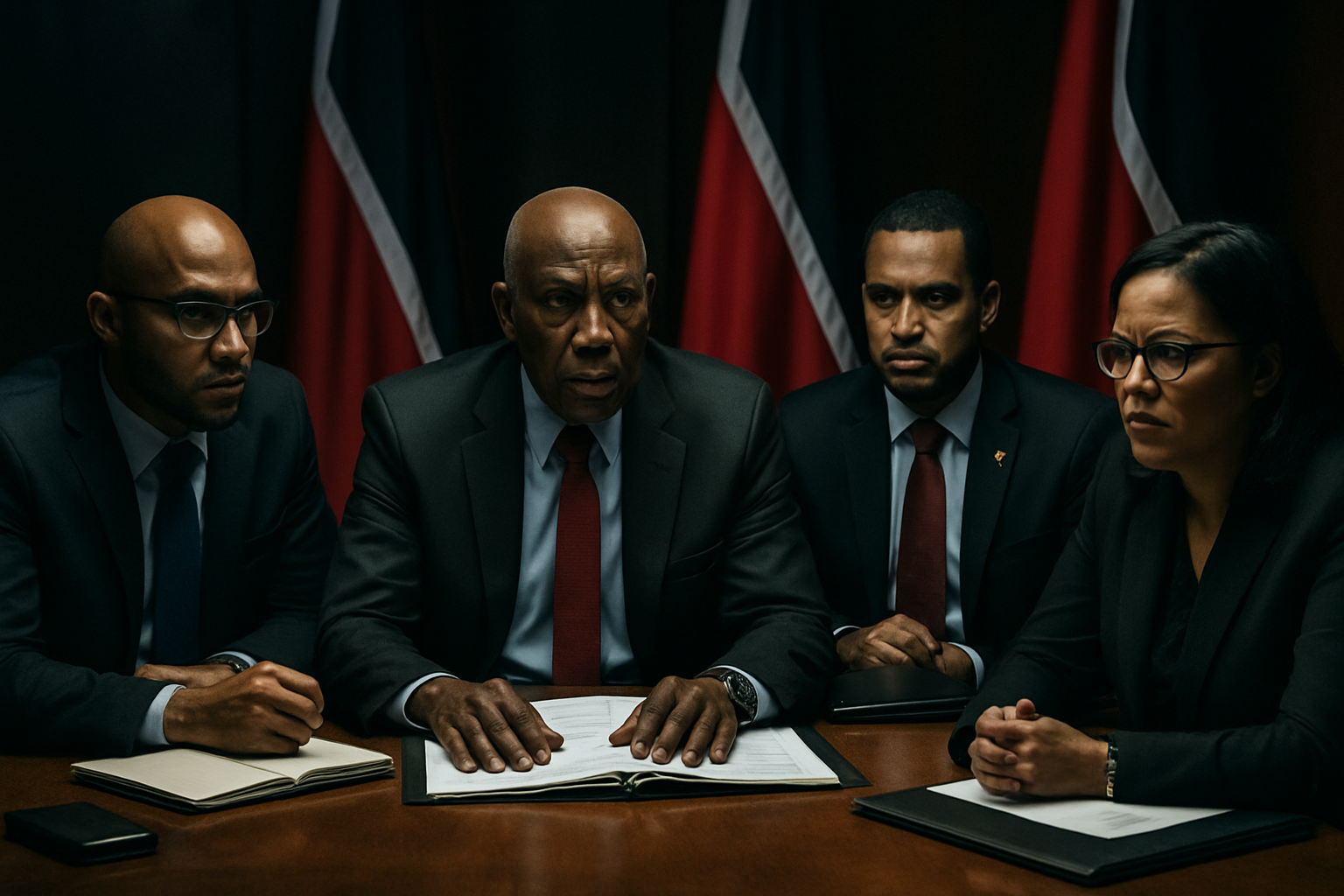
Trinidad and Tobago has declared a nationwide State of Emergency effective March 3, 2026, as Prime Minister Kamla Persad-Bissessar responds to escalating gang violence and credible threats against law enforcement and legal officials.
President Christine Kangaloo declared the State of Public Emergency following urgent advice from the National Security Council, marking the second such declaration under the UNC government within recent years. The previous state of emergency declared in July 2025 had expired on January 31, 2026.
Unprecedented Security Crisis
Attorney General John Jeremie announced the government had "no choice" but to advise the President to declare emergency powers, citing an escalation in gang violence, mass shootings, and credible threats to public safety. In a nine-minute address on state broadcaster TTT, Jeremie described recent days as witnessing "a number of violent criminal activities... carried out by members of organized criminal gangs" in what he called "the full gaze of a horrified population."
The Attorney General emphasized that criminal gangs had increased acts of violence "on a scale so extensive" that they resulted in significant threats to state institutions and public order. Intelligence briefings revealed specific threats targeting law enforcement personnel and members of the judiciary.
Emergency Powers and Regulations
The Emergency Powers Regulations, 2026, Legal Notice No. 40 of 2026, are now in force, granting sweeping powers that could affect social media use, protests, police searches, and detention procedures. While no curfew has been implemented at this time, the regulations contain broad language applicable to online platforms and public gatherings.
"It is an offence to endeavour—orally or otherwise—to influence public opinion in a manner likely to be prejudicial to public safety or public order."
— Emergency Powers Regulations, 2026
The regulations grant enhanced search and detention powers to security forces, with provisions for extended questioning and investigation of suspected criminal activities without traditional warrant requirements.
Political Opposition and Civil Society Response
Opposition People's National Movement (PNM) leader Penny Beckles delivered scathing criticism of the declaration, stating there is no crime plan by the Kamla Persad-Bissessar Government. Beckles argued the declaration of yet another State of Emergency confirmed "beyond any reasonable doubt that the UNC Government has completely failed in its ability to address crime in any meaningful ways."
The Opposition leader accused the government of intending to "erode the rights of law-abiding citizens and to govern the nation under a permanent SOE," calling on the Prime Minister to address citizens directly about the security situation.
The Communication Workers' Union (CWU) issued a statement expressing "grave concern" about the implications of the declared SOE, particularly regarding restrictions on movement and possible impacts on democratic expression. While supporting firm action to combat criminal activity, the union cautioned against using emergency powers to restrict citizens' constitutional right to peaceful protest.
Regional Context and International Implications
The declaration comes at a time of heightened regional security concerns, occurring just days after the Caribbean Community (CARICOM) 50th anniversary summit exposed deep divisions over security cooperation and external military operations. Prime Minister Persad-Bissessar had controversially defended U.S. military operations in Caribbean waters during the summit, drawing criticism from opposition parties and regional partners.
The emergency declaration also follows the expiration of enhanced security measures that had been in place since mid-2025, during which time criminal organizations appeared to have regrouped and expanded their operational capacity.
Historical Pattern of Emergency Declarations
This latest state of emergency continues a pattern of emergency declarations in Trinidad and Tobago when faced with severe spikes in criminal violence. Previous declarations have typically lasted several months, with mixed results in terms of long-term crime reduction.
The previous emergency period from July 2025 to January 2026 saw enhanced joint police-military operations, increased roadblocks, and expanded search powers. However, the current escalation suggests that criminal organizations adapted to those measures and resumed operations following the emergency's expiration.
Enhanced Security Operations
Under the emergency regulations, joint police and army patrols have been deployed across high-risk areas, with particular focus on territories known to be controlled by organized criminal groups. Security forces have been granted additional powers to conduct searches, establish checkpoints, and detain suspects for extended periods.
The declaration enables security forces to restrict movement in specific areas, control gatherings, and implement curfews if deemed necessary. While no nationwide curfew has been announced, local restrictions may be implemented in areas experiencing acute violence.
Economic and Social Impact
The state of emergency is expected to have significant impacts on daily life and economic activity. Previous emergency periods have seen disruptions to business operations, tourism activities, and social gatherings. The timing of the declaration during the traditional Carnival season aftermath may affect cultural and entertainment sectors still recovering from recent celebrations.
Legal experts note that emergency powers can significantly impact civil liberties, including freedom of movement, assembly, and expression. The regulations' broad language regarding social media and public statements has raised concerns among civil liberties advocates about potential restrictions on legitimate political discourse and journalism.
Public Safety Measures
Citizens are advised to carry identification documents at all times and expect enhanced security screening at public venues, transportation hubs, and government facilities. Security forces have been instructed to maintain visible presence in commercial districts, residential areas experiencing gang activity, and critical infrastructure locations.
The government has emphasized that law-abiding citizens should not fear the enhanced security measures, which are specifically targeted at dismantling criminal networks and restoring public order.
Looking Forward
The effectiveness of this latest state of emergency will likely be measured by its ability to deliver sustained reductions in violent crime rather than temporary suppression. Previous emergency periods have demonstrated the capacity to disrupt criminal operations in the short term, but achieving lasting improvements in public security requires comprehensive approaches addressing root causes of criminal activity.
The declaration represents a critical test of the government's security strategy and its relationship with both opposition parties and civil society organizations. Success will depend on balancing enhanced enforcement capabilities with respect for democratic principles and civil liberties that form the foundation of Trinidad and Tobago's constitutional democracy.
As the emergency measures take effect, the focus will be on whether security forces can effectively target criminal organizations while maintaining public trust and constitutional governance. The coming weeks will be crucial in determining whether this latest emergency declaration can break the cycle of escalating gang violence that has prompted repeated emergency responses.