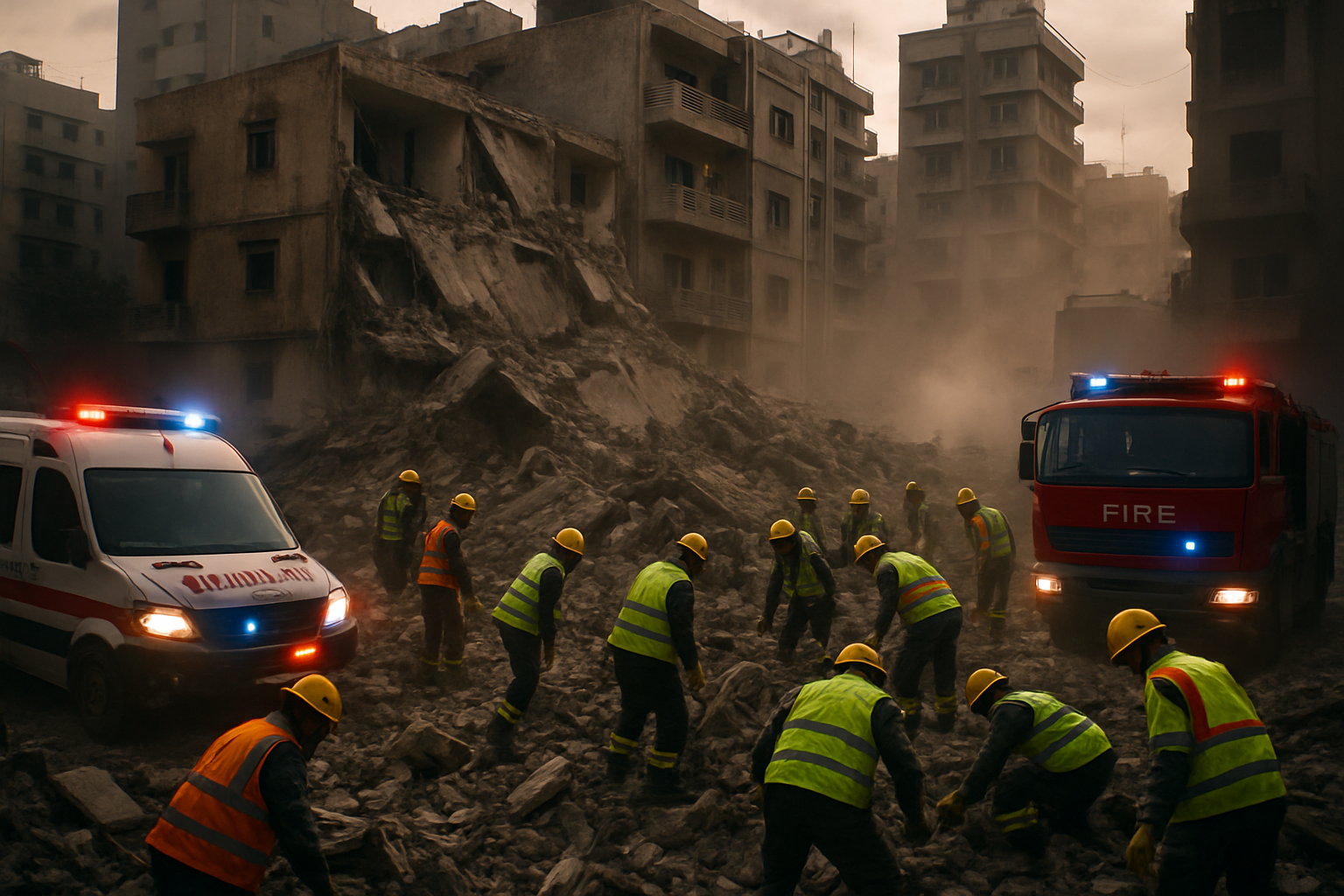
A five-story residential building collapsed in Tripoli's impoverished Bab al-Tabbaneh neighborhood on Sunday, February 8, 2026, killing at least five people and injuring several others as rescue teams continue searching through the debris for survivors.
The building collapse occurred on Syria Street in the Bab al-Tabbaneh district, described as the poorest area of Lebanon's second-largest city. Lebanese state media reported conflicting casualty figures throughout the day, with some sources initially reporting two deaths before the toll rose to five confirmed fatalities.
Lebanon's National News Agency reported "the collapse of an old building" in the neighborhood, prompting immediate evacuation of adjacent structures as security forces feared potential additional collapses. Emergency services have rescued at least eight people from the rubble, while search operations continue despite challenging conditions.
Rescue Operations Complicated by Fire
Rescue efforts have been complicated by a fire that broke out following the collapse, reportedly caused by gas cylinders within the structure. Emergency responders are working through dangerous conditions as they search for survivors, with the blaze adding urgency to the already critical situation.
According to Lebanese media reports, the victims were approximately 50 years old, highlighting the human cost of what appears to be another infrastructure failure in the economically struggling nation. Among those rescued was a child, underscoring the residential nature of the collapsed building.
Local authorities have cordoned off the area and established emergency protocols as specialized rescue teams equipped with heavy machinery work to clear debris. The presence of gas cylinders and the resulting fire have created additional hazards for rescue workers attempting to reach potential survivors trapped beneath the rubble.
Infrastructure Concerns in Lebanon's Second City
The collapse has renewed concerns about building safety standards and infrastructure conditions in Tripoli, Lebanon's second-largest city and one of its poorest urban areas. The incident represents the second such building collapse in recent weeks, according to state media reports, indicating a potentially systemic issue with structural safety in the region.
Bab al-Tabbaneh, where the collapse occurred, is known as one of Lebanon's most economically disadvantaged neighborhoods. The area has historically struggled with poverty, limited municipal resources, and aging infrastructure that often lacks proper maintenance due to financial constraints.
The fact that security staff immediately evacuated neighboring buildings suggests authorities are aware of widespread structural vulnerabilities in the area. This proactive approach, while necessary for public safety, also highlights the extent of infrastructure deterioration in Lebanon's urban centers.
Lebanon's Ongoing Infrastructure Crisis
This latest building collapse occurs against the backdrop of Lebanon's prolonged economic crisis, which has severely impacted the country's ability to maintain and upgrade its infrastructure. The nation has been grappling with financial collapse, political instability, and widespread shortages of basic services including electricity and fuel.
Lebanon's construction sector has been particularly affected by the economic downturn, with many buildings suffering from deferred maintenance due to lack of funding. The crisis has also led to shortages of construction materials and qualified inspectors, potentially contributing to deteriorating building safety standards across the country.
Urban planning experts have previously warned about the risks posed by aging buildings in densely populated areas like Tripoli, where rapid urbanization in previous decades often occurred without adequate oversight or safety standards.
Emergency Response and Investigation
Emergency services have established a command center near the collapse site, coordinating between fire departments, civil defense units, and medical teams. Ambulances have been stationed nearby to provide immediate treatment for any survivors extracted from the debris.
The Lebanese authorities have not yet announced the launch of a formal investigation into the cause of the collapse, though preliminary reports suggest structural failure of the aging building. International experience suggests such investigations typically examine factors including building age, maintenance history, construction quality, and recent weather conditions.
The timing of this incident, following recent winter weather across the region, raises questions about whether environmental factors may have contributed to the structural failure. Lebanon experienced severe storms in recent weeks as part of broader extreme weather patterns affecting the Eastern Mediterranean.
Regional Context and International Attention
The collapse has drawn attention from international media and humanitarian organizations monitoring Lebanon's ongoing crises. The incident highlights the intersection of economic hardship, infrastructure decay, and public safety in a country struggling to provide basic services to its population.
Building collapses have become increasingly common in economically stressed regions of the Middle East, where maintenance standards have declined due to financial constraints and regulatory challenges. The situation in Tripoli reflects broader urban safety concerns across Lebanon's major cities.
International development agencies working in Lebanon have previously identified infrastructure rehabilitation as a critical priority for the country's recovery, though funding limitations have constrained large-scale improvement projects.
Community Impact and Support
The collapse has sent shockwaves through the Bab al-Tabbaneh community, where residents are already facing significant economic hardships. Local witnesses described hearing a loud crash before seeing dust clouds rising from the building site, creating panic in the densely populated neighborhood.
Community members have gathered near the rescue site, with some offering assistance to emergency responders while others anxiously await news of missing neighbors and relatives. The incident has highlighted the vulnerability of residents living in aging structures without adequate safety oversight.
Local mosques and community centers have opened their doors to provide temporary shelter and support for displaced residents whose homes were evacuated as a precautionary measure following the collapse.
As rescue operations continue into the evening hours, Lebanon faces yet another reminder of its infrastructure challenges and the urgent need for comprehensive building safety reforms. The incident in Tripoli underscores the human cost of delayed maintenance and inadequate safety standards in the country's urban areas.