President Donald Trump has issued his most explosive ultimatum yet in the three-week U.S.-Iran war, demanding Tehran "FULLY OPEN, WITHOUT THREAT, the Strait of Hormuz, within 48 HOURS" or face American strikes that will "hit and obliterate their various POWER PLANTS, STARTING WITH THE BIGGEST ONE FIRST."
The unprecedented threat to target civilian energy infrastructure marks a dramatic escalation from conventional military operations to potential attacks on Iran's power grid, threatening to plunge the Islamic Republic into darkness as the crisis enters its most dangerous phase since the Cold War ended.
Iran's immediate response was equally stark. Military commanders via Fars News Agency declared that any infrastructure attack would trigger systematic regional retaliation targeting "ALL US/Israeli energy facilities, IT infrastructure, desalination plants throughout Middle East." The Revolutionary Guards maintain their position that "no red lines remain" in their ongoing "Operation True Promise 4" campaign.
Global Energy Crisis Reaches Critical Peak
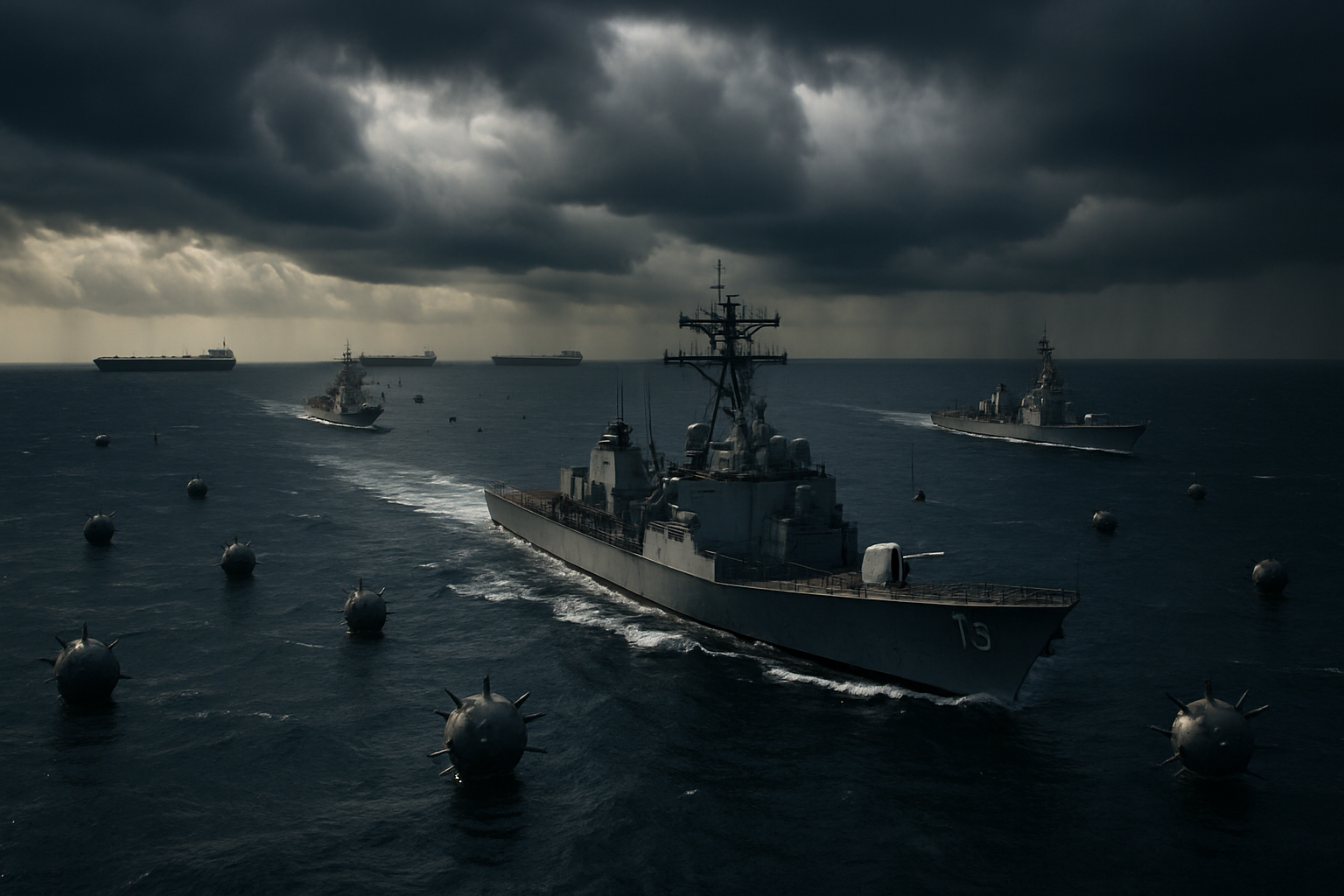
The ultimatum comes as oil prices have surged past $100 per barrel for the first time since 2022, with Brent crude reaching $119.50 and West Texas Intermediate recording an unprecedented 18.98% single-day jump to $108.15. Iran's deployment of 2,000-6,000 naval mines in the Strait of Hormuz has effectively closed the waterway that handles 40% of global seaborne oil transit.
The International Energy Agency has responded with its largest strategic petroleum reserve release in 50 years, deploying 400 million barrels from 32 countries. Japan is releasing 80 million barrels for the first time since the 2011 Fukushima disaster, highlighting the severity of the crisis for nations dependent on Middle Eastern energy supplies.
Natural gas prices have exploded by 24% in Europe and 78% in the United States, reaching €47.32/MWh—the highest level since February 2025. Qatar, which supplies approximately 20% of global LNG exports, has halted production at its Ras Laffan and Mesaid facilities following Iranian attacks.
"No country will be immune to the effects of this crisis if it continues to go in this direction. So there is a need for global efforts."
— Fatih Birol, International Energy Agency Chief
Aviation Industry Paralyzed
The conflict has created the most extensive aviation disruption since COVID-19, with over 18,000 flights cancelled worldwide. Eight Middle Eastern countries have simultaneously closed their airspace, creating what experts describe as an "aviation black hole" that severs critical Asia-Europe corridors.
Dubai International Airport, the world's busiest with 86 million annual passengers, remains shuttered due to missile damage. Major carriers including Emirates, Air France-KLM, and Wizz Air have suspended operations indefinitely, stranding hundreds of thousands of passengers globally.
Diplomatic Breakdown and Nuclear Stakes
The current military confrontation stems from the complete collapse of U.S.-Iran nuclear negotiations, despite achieving "broad agreement on guiding principles" in Geneva talks—the most progress since the 2018 JCPOA withdrawal. The fundamental deadlock remains unchanged: Iran excludes ballistic missiles and regional proxies as "red lines" while demanding nuclear-only discussions, whereas the U.S. insists on comprehensive agreements addressing missiles, armed groups, and human rights.
Iran continues enriching uranium at 60% purity with over 400 kilograms of weapons-grade material—sufficient for multiple nuclear weapons if weaponized. The crisis unfolds amid broader nuclear governance breakdown, with New START having expired in February 2026, marking the first time in over 50 years without U.S.-Russia nuclear constraints.
UN Secretary-General António Guterres has called this "the greatest test of multilateral cooperation in crisis management in the modern era," warning that nuclear risks are at their "highest in decades."
Operation Epic Fury: Historic Military Campaign
The U.S.-Israeli "Operation Epic Fury" represents the largest coordinated military operation since the 2003 Iraq invasion. Using a dual-carrier deployment of the USS Gerald R. Ford and USS Abraham Lincoln—approximately one-third of the U.S. Navy's active fleet—the operation has cost $11.3 billion in its first week alone.
The campaign has achieved several historic milestones, including the USS Charlotte submarine's sinking of Iranian frigate IRIS Dena near Sri Lanka, killing over 80 crew members—the first enemy vessel sunk by a U.S. submarine since World War II. The conflict has also marked the first attack on European territory since WWII, with Iranian drones striking RAF Akrotiri in Cyprus.
American casualties stand at three confirmed dead and 150 wounded, with eight in critical condition. Pentagon officials indicate operations are planned through September 2026, far beyond the initial four-to-six-week timeline outlined by the administration.
Regional Coalition Under Severe Strain
The unprecedented Saudi-UAE-Qatar-Egypt diplomatic coalition that initially supported peaceful resolution has fractured under Iranian retaliation targeting member territories. The UAE has suffered one civilian death in Abu Dhabi, Kuwait has experienced 32 injuries from airport strikes, and Qatar reported eight wounded despite successfully intercepting 65 missiles and 12 drones using Patriot systems.
Egyptian President Abdel Fattah el-Sisi has condemned attacks on "sisterly Arab countries," warning of "comprehensive chaos" if the conflict spreads further. The collapse of this regional consensus represents a significant blow to Middle Eastern stability.
Congressional Opposition Mounts
Trump faces unprecedented bipartisan opposition in Congress, with only 25% of Americans supporting the military operation—described by analysts as "almost unprecedented" unpopularity for early-stage military action. Senator Richard Blumenthal has expressed being "more concerned than ever" about potential ground troop deployment.
The Pentagon's request for over $200 billion in emergency war funding faces certain resistance from lawmakers demanding comprehensive strategy answers, cost justifications, and clear exit plans. Financial markets have emerged as what analysts describe as the "ultimate constraint" on prolonged conflict, with global stock crashes highlighting economic vulnerabilities.
Iranian Leadership Consolidates Under Fire
Following Supreme Leader Ali Khamenei's confirmed death on March 1, ending his 37-year rule, Iran has witnessed its first hereditary succession in the Islamic Republic's 47-year history. His son, Mojtaba Khamenei, has assumed leadership amid claims from Defense Secretary Pete Hegseth that the new leader has been "wounded and likely disfigured" by ongoing strikes.
The Revolutionary Guards have achieved unprecedented control over governance, marking a historic shift from clerical to military leadership during active warfare conditions. CIA assessments suggest this consolidation indicates a hardline military trajectory that reduces prospects for diplomatic resolution.
European Strategic Response
Despite comprehensive European rejection of Trump's requests for naval coalition support in the Persian Gulf, the Iranian attack on Cyprus has triggered unprecedented European naval coordination. HMS Dragon, Spanish frigates, and vessels from Italy, France, Netherlands, and Greece have deployed to protect Eastern Mediterranean approaches.
The European Union activated its ESTIA evacuation plan for Cyprus for the first time in the bloc's history, while conducting its largest evacuation operation since the Arab Spring, with 115,000 Australians trapped and 30,000 Germans stranded across the region.
Economic Ramifications Spread Globally
The conflict has triggered the worst global stock market crashes in years, with Pakistan's KSE-100 recording its largest single-day decline in history at 8.97%, while South Korea's KOSPI dropped 12% before circuit breakers activated. The Korean won has fallen to 17-year lows as foreign capital flees emerging markets.
Consumer impacts are severe worldwide: Swedish electricity has increased by 10-20 öre with gasoline up 1-2 kronor, Ireland faces heating oil approaching €2 per liter, and Pakistan has implemented wartime austerity measures including four-day government work weeks. Bangladesh has instituted fuel rationing affecting 170 million people.
Major corporations have postponed significant market activities, with PayPal delaying its $1.1 billion IPO indefinitely due to market volatility. Central banks including the European Central Bank and Bank of Japan are coordinating emergency liquidity measures to prevent financial contagion.
48-Hour Countdown: Point of No Return
Trump's ultimatum targeting civilian power infrastructure represents an unprecedented escalation beyond conventional military targeting. Iran has shown no indication of backing down from its Strait of Hormuz closure, with military commanders warning that all economic centers linked to the United States would become "legitimate targets" under their expanded rules of engagement.
Energy experts warn that oil prices approaching $150 per barrel could "bring down world economies," according to Qatar's Energy Minister Saad Al Kaabi. The single-point failure represented by the 21-mile-wide Strait of Hormuz has exposed fundamental vulnerabilities in global energy architecture that require decades of restructuring to address.
Template-Setting Crisis for 21st Century
The Trump-Iran confrontation represents what UN officials describe as the most dangerous international crisis since the Cold War's end, with implications extending decades beyond current events. The rapid transition from diplomatic breakthrough to military confrontation demonstrates the fragility of crisis management mechanisms in the multipolar era.
Success in containing the conflict could provide a framework for nuclear crisis resolution and strengthen non-proliferation norms globally. Failure may accelerate military solutions for international disputes, reshape Middle Eastern geopolitics for decades, encourage nuclear proliferation elsewhere, and fundamentally undermine diplomatic credibility worldwide.
The outcome of Trump's 48-hour ultimatum will likely determine whether this becomes a contained regional confrontation or escalates into the most dangerous international conflict since World War II, with implications for global energy security, nuclear governance credibility, and the post-WWII international order that has maintained relative stability for nearly eight decades.