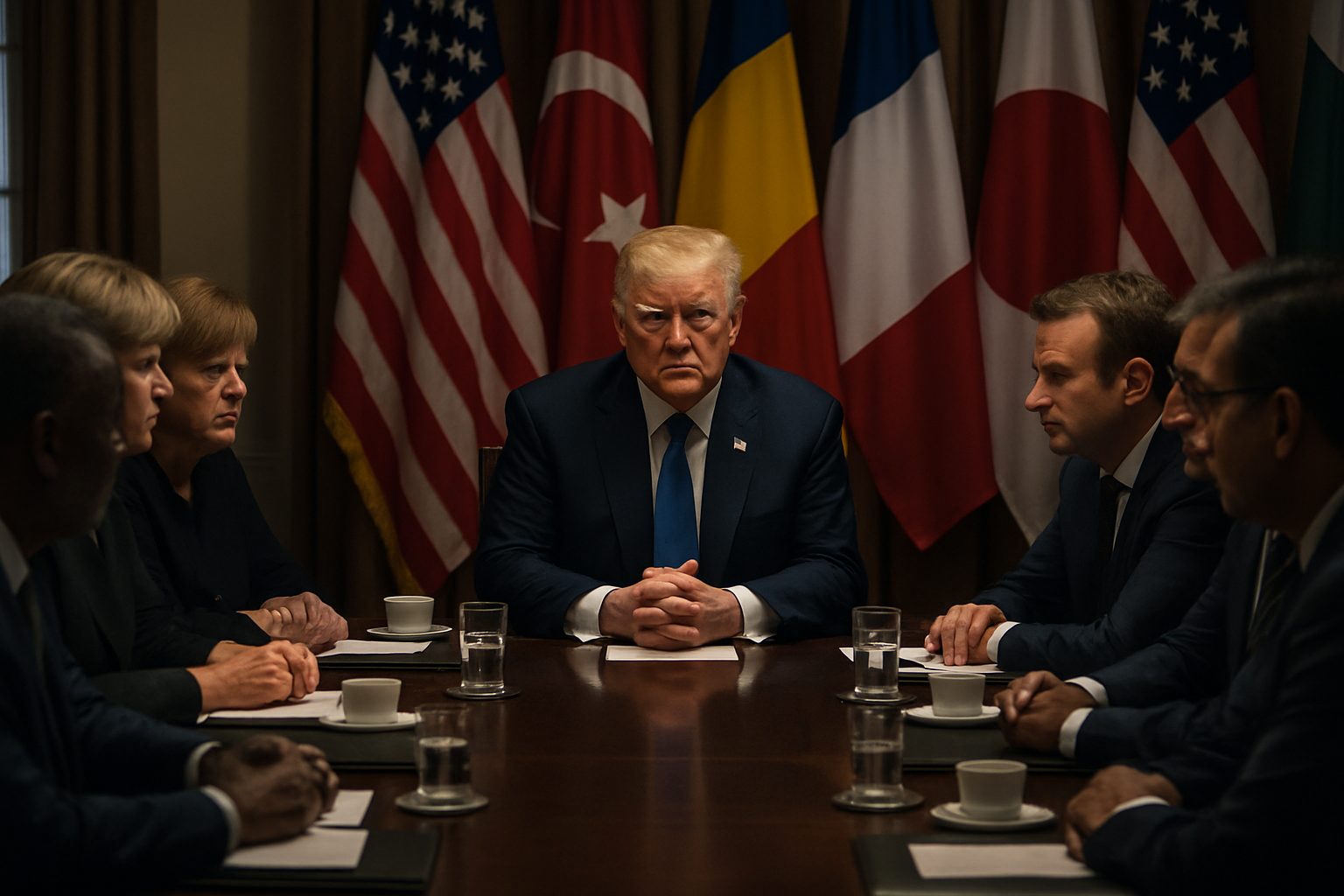
President Trump has announced the deployment of a second aircraft carrier to the Middle East while declaring that regime change in Iran would be "the best thing that could happen," marking a significant escalation in diplomatic tensions despite ongoing nuclear negotiations between Washington and Tehran.
The deployment of the USS Gerald R. Ford, the world's largest aircraft carrier, to join the USS Abraham Lincoln in the Arabian Sea represents the most substantial U.S. naval buildup in the Middle East in recent years. This unprecedented dual-carrier strike force, positioned approximately 800 kilometers from Iran's coast, demonstrates the Trump administration's commitment to maintaining maximum pressure while pursuing diplomatic engagement.
Dual-Track Strategy: Military Deterrence and Diplomatic Engagement
Trump's explicit regime change comments, made aboard Air Force One while confirming the carrier deployment, represent the most direct call for toppling Iran's clerical establishment since his return to office. "Change in power in Iran would be the best thing that could happen," the President stated, while simultaneously expressing optimism about ongoing nuclear talks.
This dual-track approach continues despite recent diplomatic progress. Following February 7 talks in Muscat, Oman, both sides described a "positive atmosphere," with Iranian Foreign Minister Abbas Araghchi and U.S. Special Envoy Steve Witkoff agreeing to continue negotiations. However, fundamental disagreements persist over the scope of any potential agreement.
"We have the best thing that could happen to Iran would be regime change. But if we make a deal, that would be good too."
— Donald Trump, U.S. President
Regional Coalition Building and International Support
Despite escalating military rhetoric, an unprecedented regional coalition has emerged supporting diplomatic engagement. Saudi Arabia, the UAE, Qatar, and Egypt have all endorsed the negotiation framework, representing a remarkable consensus among traditionally opposing Middle Eastern powers.
Oman's neutral mediation has proven crucial, leveraging its historical role in the 2015 JCPOA negotiations. The Gulf nation's Sultan Haitham bin Tariq has provided essential diplomatic infrastructure for structured dialogue between the adversaries.
This regional investment in preventing military confrontation reflects broader concerns about energy security, with the Persian Gulf handling 40% of global oil transit. Military incidents, including the recent F-35C shootdown of an Iranian Shahed-139 drone near the USS Abraham Lincoln, have already pushed oil prices higher by over $1 per barrel.
Nuclear Program Status and Negotiation Challenges
Iran continues enriching uranium at 60% purity, significantly above the 3.67% JCPOA limit and approaching the 90% weapons-grade threshold. Intelligence reports suggest Iran possesses sufficient enriched uranium for multiple weapons if weaponized, creating urgency for diplomatic breakthrough.
The scope of negotiations remains the fundamental obstacle to progress. Iran maintains that ballistic missiles and regional proxy activities are "red lines" that must be excluded from nuclear-only talks. In contrast, U.S. Secretary of State Marco Rubio insists any comprehensive agreement must address missiles, armed groups, and human rights violations.
Abbas Araghchi's recent declaration that Iran will "never abandon uranium enrichment even if war is imposed" signals hardening positions despite diplomatic engagement. This defiance comes despite severe domestic pressures, including over 42,000 protest arrests and crushing economic sanctions.
Israeli Coordination and Security Concerns
President Trump's February 11 meeting with Israeli Prime Minister Netanyahu emphasized coordination on Iran strategy. Israel maintains that any nuclear agreement must include comprehensive security guarantees, particularly regarding ballistic missile limitations and ending Iranian support for Hamas, Hezbollah, and Houthi forces.
Netanyahu's office has stated that "all negotiations must include limiting ballistic missiles, ending support for Iranian axis," viewing nuclear-only agreements as insufficient for addressing existential security threats from Iran's integrated missile and proxy network.
International Context and Nuclear Governance Crisis
The Iran crisis unfolds against a backdrop of unprecedented nuclear governance challenges. The New START treaty between the U.S. and Russia expired February 5, marking the first time in over 50 years without binding nuclear arms control between superpowers. This coincides with China's rapid nuclear expansion and broader multilateral arms control breakdown.
UN Secretary-General António Guterres has warned that nuclear weapon use risks are "higher than at any time in decades," emphasizing the critical importance of diplomatic solutions to prevent nuclear proliferation.
Military Preparations and Strike Scenarios
Pentagon officials confirm preparations for "potentially weeks-long operations against Iran" if Trump orders military action. Strike scenarios range from targeted nuclear facility attacks to broader campaigns against Revolutionary Guard infrastructure, with expectations of Iranian retaliation creating escalatory cycles.
The dual-carrier deployment provides multiple strike capabilities, enhanced defensive coverage, and sustained 24/7 readiness for extended operations beyond previous confrontation models. Iran has responded by sealing entrances to its Isfahan nuclear facility amid fears of U.S.-Israeli strikes.
Economic Pressure and Sanctions Strategy
The Trump administration maintains its "maximum pressure" campaign through economic coercion. Executive orders threatening 25% tariffs on countries trading with Iran demonstrate continued sanctions enforcement alongside diplomatic engagement.
This economic warfare extends beyond traditional bilateral sanctions to encompass third-country relationships, creating legal challenges under WTO rules and straining allied relationships. The broad enforcement mechanisms reflect the administration's determination to maintain leverage during negotiations.
Coming Weeks: Critical Test of Diplomatic Innovation
The framework established through Omani mediation represents genuine progress despite substantive disagreements on scope and substance. However, hardline positions on both sides, continued military incidents, and domestic political pressures complicate the diplomatic path forward.
Success could provide a template for 21st-century nuclear crisis resolution and prevent regional war with global implications. Failure may accelerate military solutions that could destabilize the Persian Gulf and undermine diplomatic credibility for addressing territorial disputes and nuclear proliferation challenges worldwide.
The stakes extend far beyond bilateral U.S.-Iran relations, affecting regional security architecture, global nuclear governance, and international law enforcement mechanisms. The coming weeks will determine whether innovative diplomatic solutions can bridge decade-old challenges or whether the region moves toward military confrontation that could reshape Middle Eastern geopolitics for decades.
Strategic Assessment
Trump's regime change rhetoric combined with unprecedented naval deployment signals potential policy evolution from nuclear-focused negotiations to broader Iranian government transformation objectives. This represents the most significant test of power projection and diplomatic innovation in modern nuclear crisis management.
The administration's ability to balance military deterrence with credible diplomatic engagement will determine not only the immediate crisis outcome but also establish precedents for managing nuclear challenges in an era of great power competition and institutional change.