President Donald Trump's administration faced intensifying international scrutiny in early February 2026 as key policy decisions and diplomatic statements sparked controversy across multiple fronts, from ending a government shutdown to defending Russian actions in Ukraine.
Government Shutdown Resolution and Budget Victory
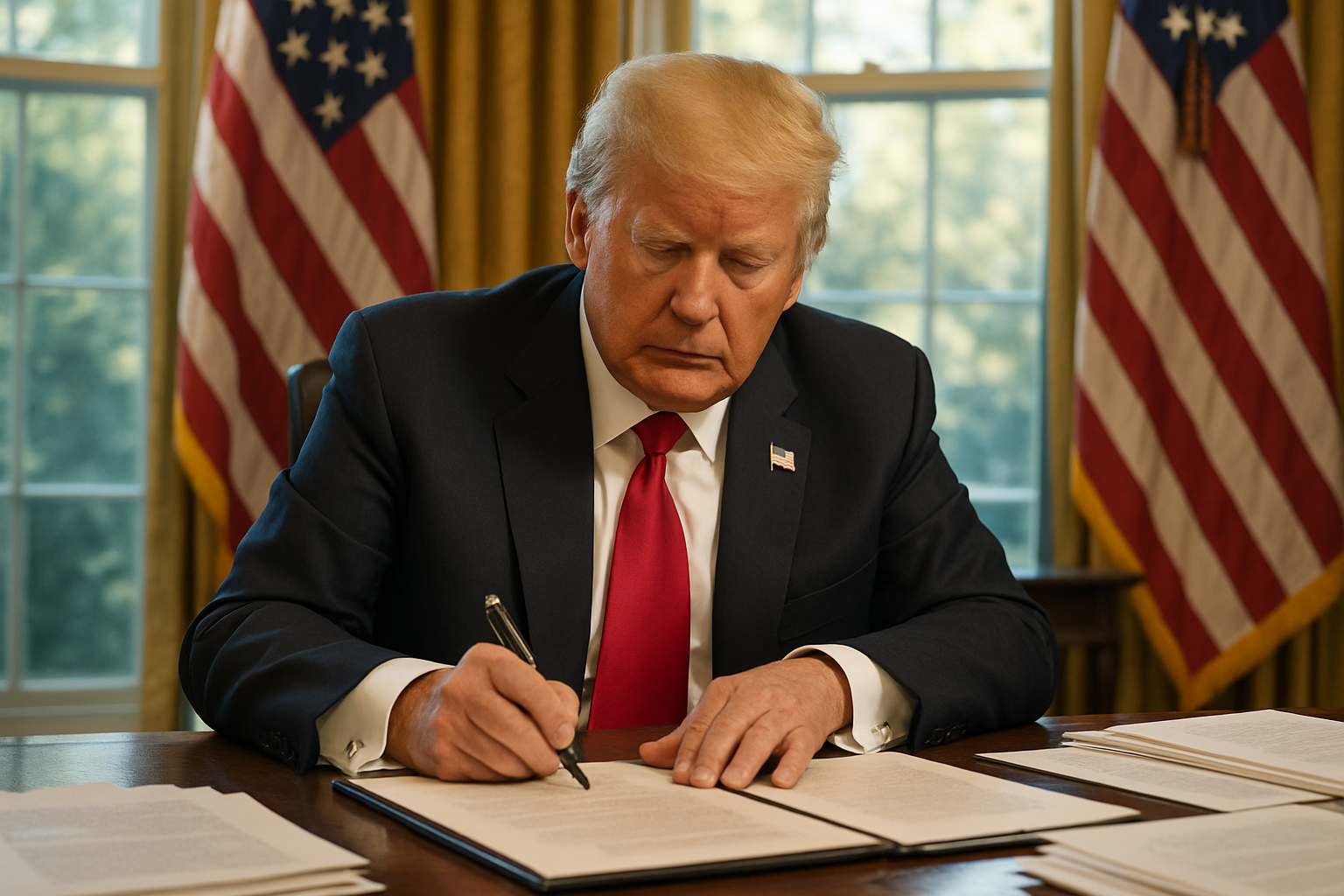
On Tuesday evening, February 3, President Trump signed a sweeping $1.2 trillion spending package, ending a four-day partial government shutdown that had paralyzed federal operations. The House of Representatives passed the legislation with a narrow 217-214 vote, marking a significant legislative achievement for the administration.
"This bill is a great victory for the American people," Trump declared upon signing the measure, which funds most government operations through September 30, 2026. However, the deal only provides temporary funding for the Department of Homeland Security through February 13, setting the stage for another potential confrontation over immigration enforcement policies.
The shutdown was triggered by Democratic demands for accountability measures following the fatal shootings of two U.S. citizens, Alex Pretti and Renee Nicole Good, by ICE agents during enforcement operations in Minneapolis. In response to the crisis, DHS Secretary Kristi Noem announced mandatory body camera requirements for all ICE agents in Minneapolis operations, effective February 2.
Controversial Defense of Putin's Actions
In a move that drew international criticism, Trump publicly defended Russian President Vladimir Putin regarding what he characterized as an "energy truce" in Ukraine. Speaking to reporters, Trump stated that Putin "agreed and kept his word" about not striking Ukrainian cities for a week, despite massive Russian attacks on energy infrastructure that left over 1,170 buildings in Kyiv without heating during extreme winter conditions.
The defense came as Russia launched what Ukrainian energy company DTEK described as the "most powerful blow" to the power grid in 2026, breaking what Trump had claimed was an informal agreement to avoid energy targets ahead of trilateral peace talks scheduled for February 5-6 in Abu Dhabi.
The attacks occurred during temperatures as low as minus-30°C, affecting eight Ukrainian regions and forcing emergency warming centers to activate across the country. NATO Secretary General Mark Rutte made a surprise visit to Kyiv to address the Ukrainian Parliament, condemning the attacks as a "bad signal" before negotiations.
Human Rights Watch Warning
Adding to the administration's challenges, Human Rights Watch issued a stark warning that Trump was transforming the United States into an authoritarian state. In its annual report, the New York-based organization argued that democracy and human rights were under attack "from all directions" since Trump's return to the White House.
The report highlighted concerns about the intensification of authoritarian tendencies in the administration's approach to governance, citing various policy initiatives and enforcement actions that the organization characterized as threats to democratic institutions and civil liberties.
"Democracy and human rights are under attack from all directions."
— Human Rights Watch Annual Report
International Context and Diplomatic Pressures
These developments occurred against the backdrop of complex international negotiations and diplomatic initiatives. The administration was simultaneously managing crisis talks on Ukraine, preparing for the February 5-6 Abu Dhabi trilateral negotiations between Ukraine, Russia, and the United States, led by Special Envoy Steve Witkoff.
The timing of Trump's Putin defense proved particularly controversial as it coincided with one of the most devastating Russian attacks on Ukrainian civilians in 2026. The assault targeted energy infrastructure during extreme winter conditions, resulting in widespread power outages and forcing hundreds of thousands of Ukrainian families to seek emergency shelter.
Legislative Challenges Ahead
House Speaker Mike Johnson successfully navigated the complex political dynamics surrounding the spending bill, despite facing defections from 21 Republican members who voted against the measure. The bipartisan passage was achieved with support from 21 Democratic members, highlighting the delicate balance required for major legislative achievements.
The temporary nature of DHS funding through February 13 sets up another potential battle over immigration policy, particularly given the ongoing controversies surrounding ICE enforcement operations and the administration's broader immigration agenda.
Economic and Political Implications
The government shutdown's resolution allowed federal operations to resume, but not before causing delays in key economic reports, including the Labor Department's postponement of the January jobs report. The four-day closure underscored the political tensions surrounding immigration enforcement and the administration's approach to federal law enforcement accountability.
International media coverage of the shutdown was extensive, with outlets portraying it as another example of Washington dysfunction at a time when American leadership was being tested on multiple global fronts, from Ukraine to ongoing diplomatic initiatives with various international partners.
Looking Forward
As the Trump administration moves deeper into February 2026, multiple challenges remain on the horizon. The upcoming Abu Dhabi peace talks represent a critical test of American diplomatic leadership, while domestic pressures around immigration policy and federal spending continue to create potential flashpoints with Congress.
The administration's handling of international human rights concerns, particularly in light of the Human Rights Watch report, will likely face continued scrutiny from both domestic and international observers as Trump's second term progresses.
The convergence of these various pressures - from budget negotiations to international diplomacy to human rights concerns - illustrates the complex environment in which the administration must operate as it seeks to implement its policy agenda while managing multiple crises simultaneously.