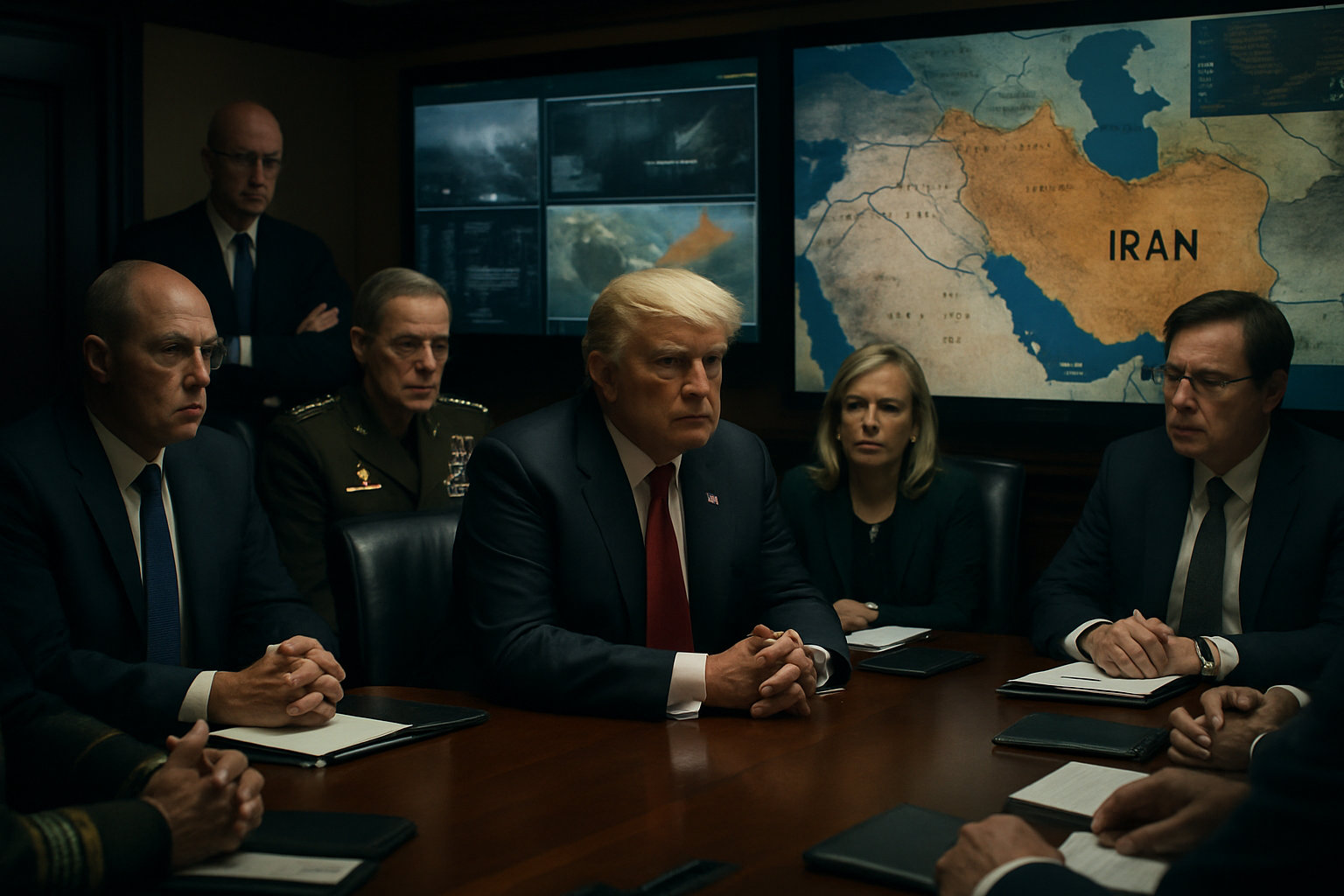
The Trump administration is confronting a series of complex foreign policy challenges that span from ongoing military tensions with Iran to diplomatic assurances regarding the 2026 World Cup, while facing mounting congressional scrutiny over international relations strategies.
Iran Relations and Military Posture
The relationship between the United States and Iran continues to dominate international headlines, with the Trump administration maintaining a complex diplomatic and military stance. Recent developments have shown both diplomatic engagement and military preparedness as parallel tracks in U.S. foreign policy.
According to multiple international sources, the administration has been managing what experts describe as one of the most dangerous international crises since the Cold War. The situation has involved unprecedented military deployments, including dual-carrier operations in the Middle East, representing the largest U.S. naval presence in the region since 2003.
FIFA World Cup 2026 Diplomatic Assurances
In a significant diplomatic development, FIFA President Gianni Infantino announced that President Trump has provided assurances regarding Iran's participation in the 2026 World Cup, which will be co-hosted by the United States, Mexico, and Canada.
"During our conversation, President Trump has reiterated that the Iranian team is welcome, without doubt, to compete in the tournament in the United States,"
— Gianni Infantino, FIFA President
The World Cup assurance comes at a time when broader U.S.-Iran relations remain tense, highlighting the administration's approach of separating sporting events from political disputes. The tournament is scheduled to run from June 11 to July 19, 2026, and Iran's participation had been uncertain due to ongoing geopolitical tensions.
Congressional Political Dynamics
Meanwhile, domestic political developments continue to shape the administration's approach to international relations. Congressional races are heating up, with Trump endorsements playing a significant role in Republican primaries across the country.
In Georgia, Trump-backed candidate Clay Fuller is advancing in the race to replace Marjorie Taylor Greene in the U.S. House of Representatives. The race reflects the broader influence of Trump endorsements in shaping the Republican Party's congressional composition and, by extension, its foreign policy positions.
International Relations Complexity
The administration's foreign policy approach demonstrates a multifaceted strategy that combines military deterrence with selective diplomatic engagement. This dual-track approach has been evident in various international situations, from Middle East tensions to hemispheric relations.
Recent controversial incidents have also highlighted the administration's challenges in managing public perception of its international policies. Reports of diplomatic protocol issues and public relations controversies have added complexity to the administration's foreign policy messaging.
Economic and Energy Implications
The administration's foreign policy decisions carry significant economic implications, particularly in energy markets. Global oil prices have been affected by Middle East tensions, with the Strait of Hormuz—through which 40% of global oil transit passes—remaining a critical concern for international energy security.
These economic dimensions of foreign policy have become increasingly important as the administration seeks to balance national security objectives with economic stability both domestically and internationally.
Diplomatic Framework Evolution
The administration has shown a willingness to engage in diplomatic processes while maintaining military preparedness. This approach has involved multiple international mediators and venues, from Oman to Geneva, demonstrating the complexity of modern international relations.
Regional coalitions have played an increasingly important role, with unprecedented consensus among Middle Eastern nations supporting diplomatic processes over military confrontation in various scenarios.
Looking Forward
As the Trump administration continues to navigate these complex international challenges, the intersection of military preparedness, diplomatic engagement, and domestic political considerations remains central to U.S. foreign policy strategy. The success of these approaches will likely have long-term implications for American international relations and global stability.
The administration's handling of simultaneous crises—from Iran relations to World Cup diplomacy—will serve as a template for future administrations dealing with the complexities of 21st-century international relations in an increasingly multipolar world.