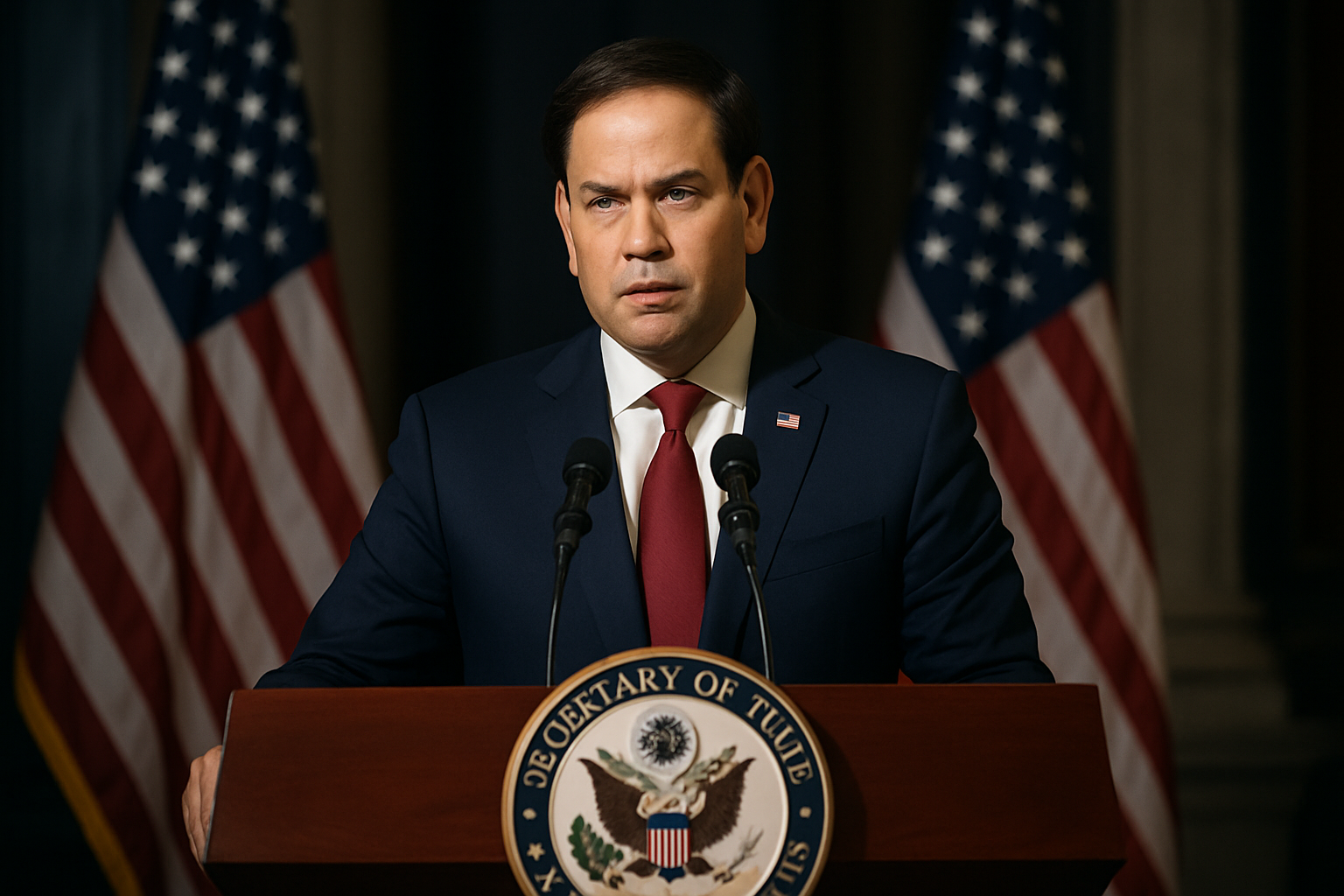
US Secretary of State Marco Rubio declared Friday that the United States could achieve its objectives against Iran without deploying ground troops, expecting operations to conclude within weeks despite recent military buildups in the region.
Speaking to reporters in France following discussions with G7 foreign ministers, Rubio outlined the Trump administration's strategy for addressing what officials describe as Iran's missile capabilities, drone production facilities, naval forces, and air defense systems. The announcement comes as the administration faces increasing scrutiny over its rapidly evolving Iran policy and mounting international tensions.
Military Strategy and Timeline
Rubio emphasized that the US military deployment, including the unprecedented dual-carrier force of USS Gerald R. Ford and USS Abraham Lincoln representing approximately one-third of the active US Navy fleet, was intended to provide President Trump with operational flexibility rather than indicate immediate military action.
"We are ahead of schedule on most of them, and we can achieve them without any ground troops, without any," Rubio stated, referring to the administration's stated objectives in the region.
The Secretary's comments reflect a significant strategic messaging shift from earlier administration statements that had prepared for "potentially weeks-long operations" ranging from nuclear facilities to Revolutionary Guard infrastructure campaigns. The current position suggests a more targeted approach focused on degrading Iran's military capabilities while avoiding the massive ground deployment that characterized previous Middle Eastern conflicts.
Diplomatic Context and Historical Precedent
The current crisis represents the culmination of months of diplomatic tensions that began with promising nuclear negotiations in Geneva. In February 2026, Iranian Foreign Minister Abbas Araghchi announced a "broad agreement on guiding principles" with US negotiators - the most significant diplomatic progress since the JCPOA collapse in 2018.
However, fundamental disagreements over scope proved insurmountable. Iran maintained that ballistic missiles and regional proxy activities were "red lines" that should be excluded from nuclear-only talks, while the US, led by Secretary Rubio, insisted on comprehensive agreements addressing missiles, armed groups, and human rights issues.
The breakdown of these talks, despite unprecedented regional support from Saudi Arabia, UAE, Qatar, and Egypt, marked a critical turning point in Trump administration policy from nuclear-focused diplomacy to what officials now describe as comprehensive political transformation objectives.
International Reactions and Alliance Strain
The administration's Iran strategy has created significant diplomatic challenges with traditional allies. European partners have expressed concerns about the unilateral nature of recent actions, with several countries refusing to provide the level of support requested by Washington.
Trump's threats against European allies, including warnings that failure to help reopen the Strait of Hormuz would be "very bad for the future of NATO," have highlighted growing transatlantic tensions over Middle East policy. The administration's approach has effectively sidelined European diplomatic efforts while demanding military support for operations they did not approve.
Particularly notable is the strain with Vice President JD Vance, who according to sources, has been notably silent during recent escalations and is reportedly skeptical of expanded military engagements abroad. This internal tension reflects broader concerns within the administration about the scope and duration of potential operations.
Congressional and Domestic Oversight
The announcement comes amid intensifying Congressional scrutiny of the administration's Iran policy. Bipartisan lawmakers have demanded detailed explanations of strategy, costs, and the risk of ground troop deployment following what critics describe as shifting justifications for military action.
Democratic senators have voiced particular alarm after classified briefings, with Senator Richard Blumenthal stating he is "more concerned than ever" about the potential for boots on the ground. The unpopularity of potential Iran conflict has been described by analysts as "almost unprecedented" in early stages, with support spanning traditional political divisions.
Financial markets have emerged as what some observers call the "ultimate constraint" on conflict escalation, with oil prices surging past $80 per barrel and widespread disruption to global supply chains following the closure of the Strait of Hormuz, which handles 40% of global oil transit.
Nuclear Dimensions and Global Implications
The Iran crisis unfolds against a backdrop of unprecedented nuclear governance challenges. The New START treaty expired in February 2026, marking the first time in over 50 years without US-Russia nuclear constraints, while China expands its nuclear arsenal and Iran continues uranium enrichment at 60% purity - approaching weapons-grade levels.
Intelligence assessments confirm Iran possesses sufficient enriched uranium for multiple weapons if weaponized, creating urgent timeline pressures that complicate both diplomatic and military options. The administration's approach to these nuclear dimensions will likely serve as a template for 21st-century crisis resolution, with implications extending far beyond the immediate regional context.
Regional Impact and Energy Security
The administration's Iran strategy has created the most significant global energy crisis since the 1970s oil shocks. The temporary closure of the Strait of Hormuz has disrupted supply chains worldwide, affecting not only petroleum products but also natural gas supplies to Europe and critical shipping routes for manufactured goods.
Regional allies who had previously supported diplomatic solutions now find themselves managing the consequences of military escalation they had hoped to prevent. The unprecedented consensus among Middle Eastern powers that had backed the Geneva negotiations has been severely strained by the rapid transition from diplomacy to military action.
Looking Forward
Secretary Rubio's assurance that objectives can be achieved without ground troops represents an attempt to address growing domestic and international concerns about mission scope. However, the administration's evolving rhetoric from nuclear negotiations to regime change objectives raises questions about the ultimate goals of current policy.
The success or failure of this approach will likely influence international relations for decades, establishing precedents for how nuclear crises are managed in an increasingly multipolar world. As the administration continues to outline its strategy, the challenge remains balancing stated objectives with the complex realities of Middle Eastern geopolitics and alliance relationships.
The coming weeks will prove decisive in determining whether the Trump administration's Iran strategy achieves its stated goals of degrading Iranian capabilities while maintaining regional stability, or whether the current approach accelerates toward broader military confrontation with unpredictable consequences for global security and economic stability.