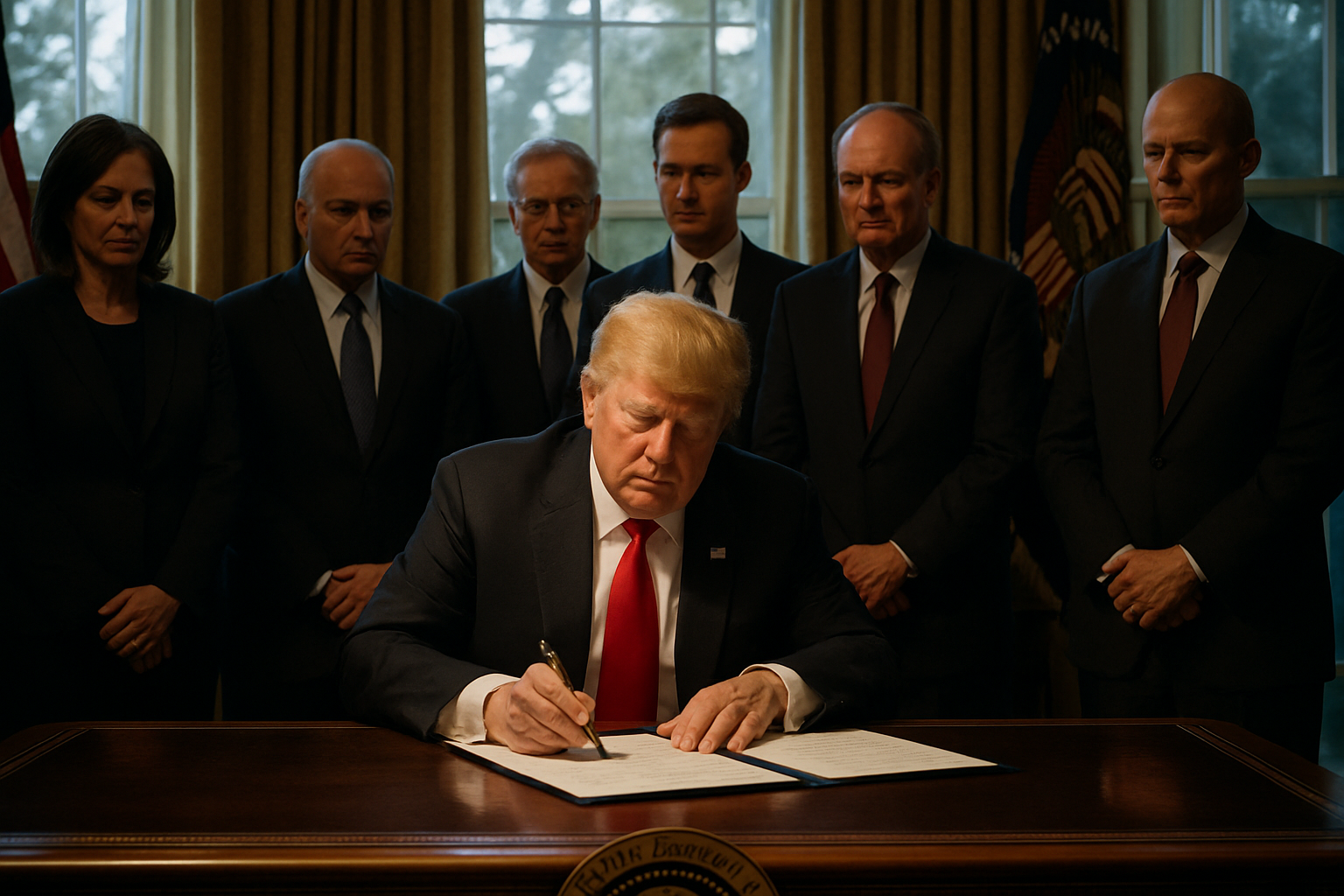
President Donald Trump's administration has implemented a series of unprecedented policy changes spanning domestic governance and international diplomacy, including the historic decision to place Trump's signature on U.S. currency and potential ICE deployment at airports during an ongoing government shutdown.
Presidential Signature on Currency Marks Historic First
The U.S. Treasury Department announced Thursday that President Trump's signature will appear on all new U.S. paper currency, marking an unprecedented break from tradition. This move represents the first time a sitting president's signature has appeared on American currency, as traditionally only the signatures of the Treasury Secretary and Treasurer appear on bills.
According to international media coverage, this development is being viewed as "another way Trump is breaking with tradition" and "the latest example of Trump literally stamping his name on U.S. institutions." The announcement has drawn attention from global observers as an indication of the administration's willingness to depart from established governmental norms.
"This is a premiera for a sitting president."
— Swedish News Analysis, SVT Nyheter
Government Shutdown Creates Airport Security Crisis
Simultaneously, the Trump administration is grappling with a 41-day government funding shutdown that has left Transportation Security Administration (TSA) workers facing their second missed paycheck on March 27. The prolonged shutdown stems from Congressional Democrats' demands for ICE accountability reforms following the fatal Minneapolis shootings of Alex Pretti and Renee Nicole Good in January 2026.
In response to mounting airport delays and security concerns, Trump has threatened to deploy Immigration and Customs Enforcement (ICE) agents to U.S. airports to replace TSA security personnel. This unprecedented proposal would substitute immigration enforcement officers for specialized aviation security personnel, raising significant concerns among security experts.
The crisis has created extraordinary operational challenges across the nation's airports, with passengers experiencing extended wait times and airlines facing potential operational disruptions. International media outlets are covering the situation as evidence of American governmental dysfunction during a critical period.
Expert Concerns Over ICE-TSA Substitution
Aviation security experts have questioned the preparedness of ICE agents for airport security duties, noting fundamental differences in training focuses. While ICE specializes in immigration enforcement, TSA personnel undergo months of specialized aviation security training focused on threat identification and passenger screening protocols.
Polling data indicates that two-thirds of Americans believe ICE has "gone too far" in enforcement operations, adding public sentiment concerns to the logistical challenges of the proposed deployment.
International Diplomacy: Iran Peace Talks Continue
Against this backdrop of domestic policy upheaval, the Trump administration continues managing complex international negotiations, particularly regarding Iran. The president has confirmed ongoing peace talks while maintaining maximum pressure campaigns.
Recent diplomatic efforts have included a 10-day pause on attacks against Iranian energy facilities, with Trump claiming that talks with Iran are progressing "very well." This represents a continuation of the administration's dual-track approach combining military deterrence with diplomatic engagement.
The Iran negotiations occur within the broader context of global nuclear governance challenges, including the recent expiration of the New START treaty and ongoing concerns about nuclear proliferation in a multipolar world order.
Congressional Response and Political Implications
Congressional Democrats have maintained their position requiring comprehensive ICE reforms before approving funding to end the government shutdown. House Speaker Mike Johnson's ICE reform debates have stalled amid the funding crisis, representing an escalation of the administration's pressure tactics in federal negotiations.
The situation demonstrates how immigration policy disputes can cascade across multiple government functions, affecting millions of Americans through airport security disruptions and federal worker impacts.
Historical Precedent Questions
Legal and governmental experts note that there is no historical precedent for using immigration agents for airport security functions, raising questions about federal agency specialization and the boundaries of executive authority during funding crises.
These developments may establish precedents for future federal funding disputes and limitations on executive pressure tactics in congressional negotiations, with implications extending beyond the current administration.
Economic and International Impact
The ongoing government dysfunction has economic implications stretching beyond immediate federal operations. The aviation sector faces hundreds of millions in potential losses due to extended delays and operational uncertainties.
International observers are monitoring these developments closely, particularly given their occurrence during sensitive diplomatic negotiations involving Iran and other global partners. The crisis raises questions about American governmental stability during crucial international negotiations requiring sustained diplomatic attention.
Looking Ahead: Resolution Requirements
Crisis resolution likely requires significant compromises from both sides, including ICE accountability measures sought by Democrats and border security funding priorities emphasized by the administration.
The convergence of domestic policy innovations, governmental funding crises, and international diplomatic challenges represents a critical test of American institutional resilience during a period of intense political division.
As the shutdown enters its sixth week with both sides entrenched, the administration's policy innovations continue reshaping traditional governmental operations while managing complex global relationships that require sustained diplomatic engagement and institutional stability.