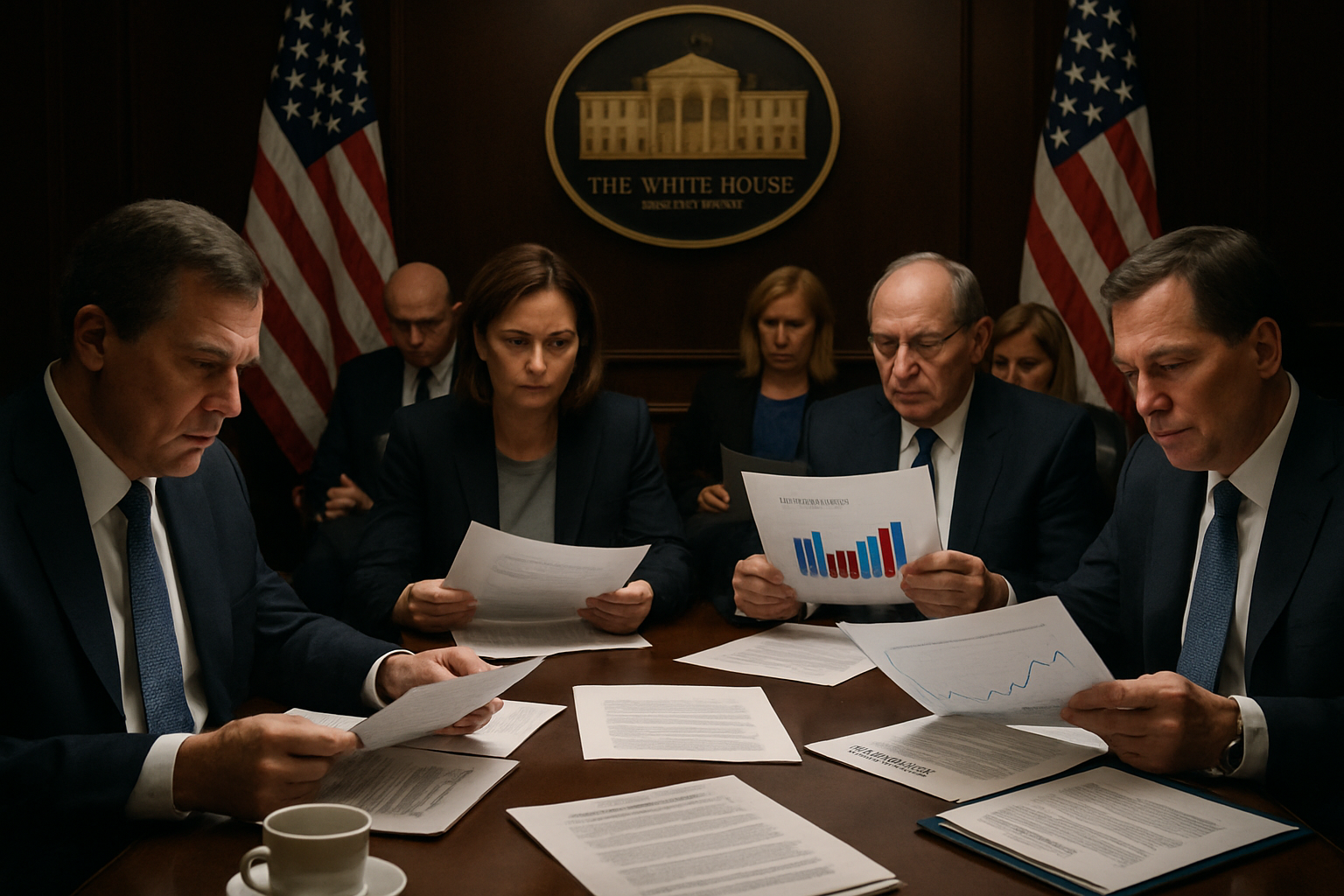
The Trump administration announced a series of significant policy changes on March 6, 2026, including the establishment of a tariff refund system, authorization of Venezuelan gold trade, and commitments to quadruple defense production, marking a pivotal moment in the president's second term amid unprecedented constitutional challenges.
The most immediate development came from U.S. Customs and Border Protection (CBP), which confirmed it is preparing a comprehensive system within 45 days to process refunds on President Trump's tariffs that were struck down as illegal by the Supreme Court. The announcement by CBP official Brandon Lord came during federal trade court proceedings aimed at establishing a settlement process for returning $166 billion in tariff payments to approximately 330,000 importers.
Supreme Court Ruling Creates Unprecedented Refund Challenge
This development follows the historic February 21 Supreme Court ruling that struck down Trump's global tariff program in a devastating 6-3 decision. Chief Justice John Roberts applied the "major questions doctrine," declaring that the International Emergency Economic Powers Act (IEEPA) "does not authorize president to impose tariffs" without congressional authorization for actions of "vast economic and political significance."
The ruling represented the first major defeat of Trump's economic agenda in his second term and created the most serious executive-judicial confrontation since Watergate. Trump's immediate response was to escalate to 15% global tariffs using Section 122 of the Trade Act of 1974, while calling the justices "disgrace to our nation" and "disloyal to Constitution" in an unprecedented attack on the judiciary.
"U.S. Customs told the trade court it aims for a streamlined process in 45 days to return importers' money without requiring individual lawsuits."
— CBP Official Brandon Lord
Venezuela Gold Trade Authorization Signals Diplomatic Shift
In a separate major policy development, the U.S. Treasury Department issued a license on March 6 authorizing transactions with Minerven, Venezuela's state-owned gold mining company. This represents the most recent signal of the Trump administration's intention to exercise greater control over Venezuela's natural resources while opening new trade opportunities.
The license was issued following a high-level meeting this week between U.S. Interior Secretary Doug Burgum and Venezuelan interim President Delcy Rodríguez in Caracas. The authorization specifically permits the sale of Venezuelan gold to U.S. companies while maintaining prohibitions on gold sales to Russia, Iran, North Korea, and Cuba.
This development represents a significant evolution in U.S.-Venezuela relations, building on the comprehensive energy cooperation agreements signed in February 2026 that saw U.S. oil imports from Venezuela surge 60% from 498,000 to 800,000 barrels daily. The U.S. has effectively displaced China as Venezuela's top oil customer following the removal of Nicolás Maduro in January 2026.
Defense Production Quadrupling Commitment
President Trump announced following a White House meeting with major defense industry leaders that U.S. defense companies have agreed to quadruple production of precision-guided weapons. The commitment came after what Trump described as a "fruitful" meeting with the nation's largest defense contractors.
According to sources familiar with the discussions, the production increase specifically targets precision-guided weapons systems amid growing global tensions and the ongoing Iran crisis. The announcement follows Trump's deployment of dual aircraft carriers - USS Gerald R. Ford and USS Abraham Lincoln - to the Middle East, creating the largest U.S. naval presence in the region in years.
The defense production announcement comes as Congress intensifies scrutiny of Trump's Iran war strategy, with bipartisan lawmakers demanding answers on costs, exit strategies, and potential ground troop deployment following Operation Epic Fury, the largest coordinated U.S.-Israeli military operation since the 2003 Iraq invasion.
Immigration Crackdown Continues Under New Leadership
The policy announcements coincided with Trump's continued immigration enforcement push, now under new leadership following his dismissal of Homeland Security Secretary Kristi Noem on March 6. Trump named Oklahoma Senator Markwayne Mullin as her replacement, effective March 31.
Noem's firing followed mounting bipartisan criticism over controversial immigration enforcement operations, including fatal Minneapolis shootings by ICE agents that resulted in 700 agents being withdrawn from Minnesota. The administration implemented significant policy changes including mandatory body cameras for ICE agents and acknowledgment of the need for a "softer touch" in enforcement.
Trump reassigned Noem as "Special Envoy for The Shield of the Americas," a new Western Hemisphere security initiative, while congressional Democrats continue threatening DHS funding blocks unless "drastic changes" are implemented in immigration enforcement practices.
Constitutional Crisis Deepens Congressional Divisions
The policy announcements come against the backdrop of unprecedented constitutional challenges to Trump's authority. The House of Representatives had already passed legislation 219-211 ending Canada tariffs with six Republican defections - the first significant bipartisan rebuke of Trump's trade policies in his second term.
House Speaker Mike Johnson unsuccessfully attempted to prevent the floor vote, highlighting deep caucus divisions over Trump's use of executive authority for trade policy. The Supreme Court's subsequent ruling vindicated congressional concerns about overreach while creating urgent pressure for the 150-day Section 122 tariff limit that requires congressional approval for extension.
Federal courts have mounted systematic resistance across multiple policy areas, with judges blocking TPS termination for 350,000 Haitians, requiring ICE warrants unless flight risk exists, and ordering restoration of a Philadelphia slavery exhibit while invoking George Orwell's "1984" against what they characterized as historical revisionism.
International Reactions and Global Implications
The policy changes drew varied international reactions, with European officials expressing concerns about American institutional stability during complex diplomatic negotiations involving Ukraine, Iran, and the expired New START nuclear treaty. The European Parliament is preparing to suspend EU-US trade agreement implementation for the first time due to institutional concerns about policy predictability.
China welcomed the Supreme Court's tariff ruling as vindication before Trump's scheduled Beijing visit March 31-April 2, while announcing zero-tariff access for 53 African countries beginning May 1 - the most comprehensive China-Africa trade expansion in modern history.
The Venezuela gold authorization represents part of Trump's broader "Corolario Trump" strategy - a 21st-century update to the Monroe Doctrine combining military pressure, economic incentives, and selective engagement to counter Chinese influence in the Western Hemisphere.
Economic Context and Market Reactions
Despite extensive tariff policies, the U.S. trade deficit reached $901.5 billion annually in December 2025, essentially unchanged from pre-tariff levels, demonstrating the structural nature of trade imbalances beyond tariff adjustments. However, January 2026 employment remained strong with 130,000 jobs added versus 55,000 forecasted, and unemployment declining to 4.3%.
The Supreme Court ruling initially boosted markets with the Nasdaq gaining 0.90% to 22,886.07 and S&P 500 rising 0.69%, though gains moderated following Trump's announcement of replacement 15% tariffs. Oil prices increased over $1 per barrel on geopolitical tensions in the Middle East and Strait of Hormuz concerns.
Small businesses celebrated potential relief from import cost pressures, though the complex refund process faces massive administrative challenges given the approximately $200 billion in tariffs collected since Trump's return to office.
Looking Ahead: Critical Tests for Democratic Institutions
The convergence of these policy changes represents the most comprehensive test of American democratic institutional resilience during Trump's second term. The 45-day timeline for tariff refund implementation, the 150-day countdown for congressional tariff approval, and ongoing legal challenges across multiple policy fronts create unprecedented pressure on governmental systems.
The success or failure of these policy implementations will establish crucial precedents for executive power limitations, congressional oversight effectiveness, and judicial review credibility that will influence American governance for generations. International observers are closely monitoring these developments as template-setting moments for democratic responses to executive power challenges worldwide.
As the administration navigates these multiple fronts - from constitutional crises to international negotiations to defense production scaling - the coming months will determine whether Trump's second-term agenda can overcome institutional resistance while maintaining democratic norms and international partnerships essential for global stability.