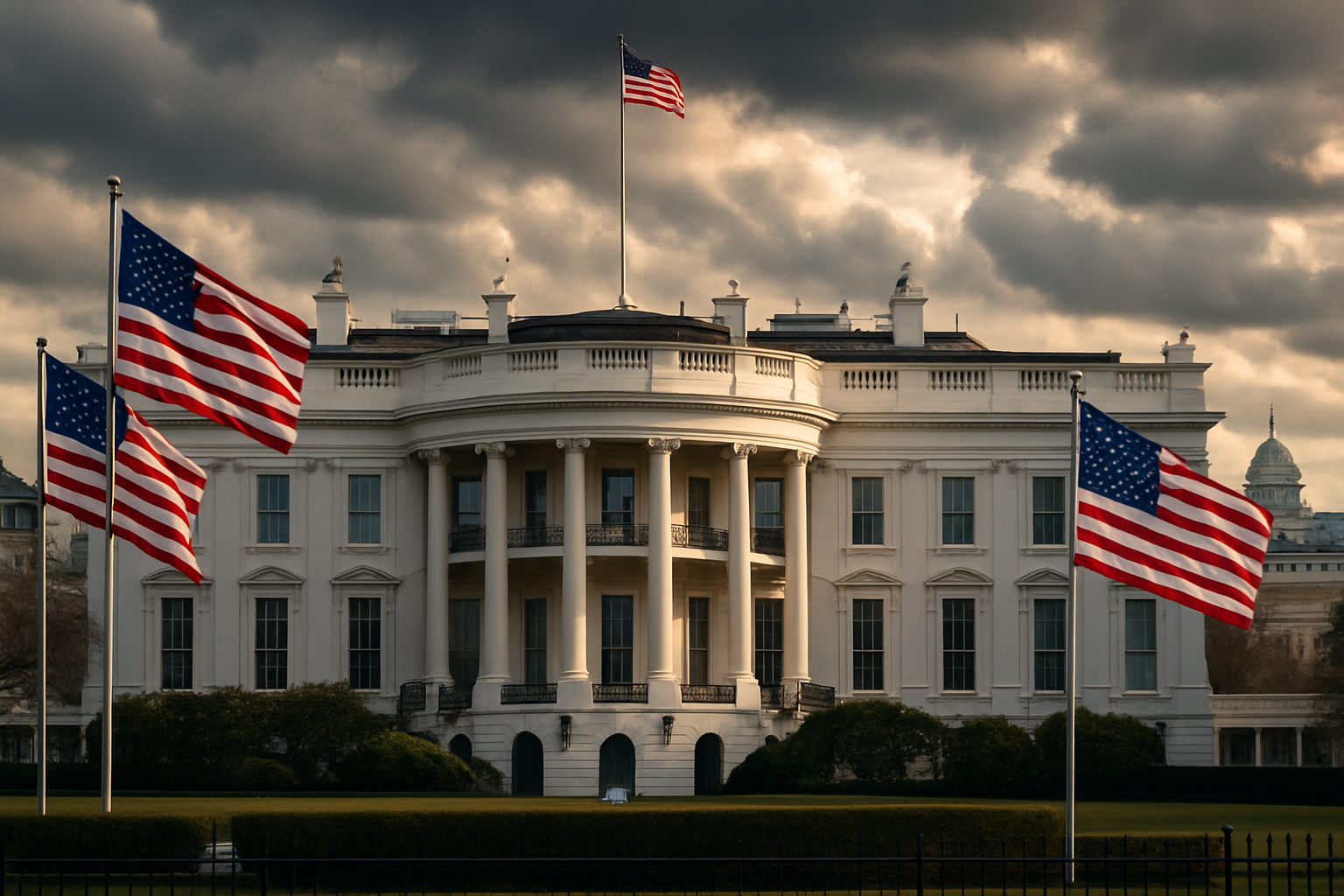
The Trump administration executed a comprehensive policy transformation on February 13, 2026, implementing the largest environmental deregulation in American history while simultaneously scaling back controversial steel and aluminum tariffs that had strained relationships with key allies.
The administration's dual-track approach demonstrates President Trump's willingness to dramatically reshape federal policy while responding to mounting domestic political pressure, particularly from within his own Republican Party where six House members defected to join Democrats in opposing his Canada tariff policies.
Historic Environmental Deregulation
In what the White House described as the "largest deregulatory action in American history," the Environmental Protection Agency under Administrator Lee Zeldin formally revoked the Obama-era 2009 "endangerment finding" that classified greenhouse gases as threats to public health and welfare. This foundational scientific determination had provided the legal basis for virtually all federal climate regulations spanning vehicles, power plants, and industrial operations.
The decision eliminates the federal government's primary authority to regulate emissions across the entire U.S. economy, affecting emission standards for vehicle and engine models from 2012 through 2027. Trump characterized climate science as the "biggest scam in history" and dismissed previous climate regulations as a "catastrophic con job" during the announcement.
"The administration says the move saves $1.3 trillion in regulatory costs while freeing legacy automakers like Ford and GM from EV compliance mandates that have cost billions in investments."
— EPA Administrator Lee Zeldin, White House Press Briefing
The comprehensive scope of the rollback represents the most significant environmental policy reversal in modern American history, occurring during what scientists confirmed as the 18th consecutive month out of the past 19 exceeding 1.5°C above pre-industrial levels. This timing underscores the stark disconnect between accelerating climate science and federal policy direction.
Tariff Policy Reversal Under Pressure
Simultaneously, Trump administration officials confirmed plans to scale back tariffs on steel and aluminum products following mounting pressure from both domestic industries and congressional Republicans. The reversal comes after Department of Commerce and U.S. Trade Representative studies revealed that tariffs were significantly raising costs for American consumers, particularly affecting food packaging and manufacturing sectors.
Officials cited concerns that rising consumer prices could become a decisive factor in upcoming congressional elections, with voters across the country expressing anxiety about cost of living increases. A recent Reuters/Ipsos poll showed only 30 percent of Americans approve of Trump's overall economic approach, reflecting growing unease with trade policy impacts on household budgets.
The decision affects thousands of applications globally, with particular implications for key trading partners. The policy shift demonstrates how domestic political calculations can override international trade strategy, especially when economic impacts reach American consumers directly through higher prices on everyday goods.
Congressional Republican Defections
The policy adjustments occur amid unprecedented challenges to Trump's authority from within his own party. The Republican-controlled House of Representatives passed legislation 219-211 aimed at ending Trump's tariffs on Canada, marking the first significant bipartisan rebuke of his trade policies in his second term.
Six Republicans defected to join nearly all Democrats in opposing the Canadian tariffs, with many citing concerns about the economic impact on their districts. House Speaker Mike Johnson unsuccessfully attempted to prevent the vote from reaching the floor, highlighting growing tensions within the Republican caucus over Trump's aggressive use of trade tools.
"The measure seeks to end Trump's use of national emergency authority as justification for imposing punitive tariffs on Canadian goods, testing the balance between executive authority and congressional oversight in trade policy."
— Congressional Trade Analysis, House Foreign Affairs Committee
International Reactions and Implications
European officials have expressed serious concerns about both the climate regulation rollbacks and the unpredictable nature of American trade policy. The environmental deregulation creates a stark contrast with the European Union's commitment to achieving a 90% reduction in greenhouse gas emissions by 2040, as recently approved by the European Parliament with 413 votes in favor.
German media outlets have characterized the American approach as undermining international climate cooperation at a critical moment when global temperatures continue reaching record highs. Chinese officials noted that the U.S. regulatory rollback could reduce American competitiveness in clean energy technologies, sectors where China has established significant advantages.
Former President Barack Obama condemned the climate decision as leaving Americans "less safe, less healthy," calling it a "gift to billionaire polluters." International climate scientists have warned of a dangerous disconnect between policy reversals and the urgency of climate action needed to prevent catastrophic warming.
Economic and Political Calculations
The administration's policy shifts reveal the complex political calculations facing Trump as he navigates between ideological commitments and electoral pressures. The environmental rollbacks fulfill campaign promises to his conservative base while potentially exposing Republicans to criticism in competitive districts where voters are increasingly concerned about climate impacts.
Conversely, the tariff adjustments represent a pragmatic response to economic data showing consumer price impacts that could damage Republican prospects in upcoming elections. The Federal Reserve Bank of New York studies cited by administration officials demonstrated clear connections between tariffs and increased costs for American families.
The automotive industry faces particular uncertainty following the climate regulation rollbacks, having invested billions in clean technology compliance based on federal standards that have now been eliminated. This creates a complex patchwork where Democratic-led states maintaining their own emission standards will continue requiring compliance, while federal coordination has been removed.
Legal and Constitutional Challenges
Environmental groups and Democratic-led states are expected to pursue immediate court challenges to the EPA decision, arguing that the agency failed to consider current scientific evidence of climate change acceleration. The original endangerment finding was established following the 2007 Supreme Court ruling in Massachusetts v. EPA, which required the agency to make a scientific determination about greenhouse gas dangers.
The current conservative-majority Supreme Court may prove more receptive to arguments about regulatory overreach than previous challenges to environmental regulations. However, legal experts note that completely overturning established scientific findings faces significant procedural and evidentiary hurdles in federal court.
The congressional challenges to tariff policy test constitutional boundaries between executive authority and legislative oversight in trade matters. While Trump retains veto power over the Canadian tariff legislation, the symbolic value of institutional opposition establishes precedent for future confrontations over presidential use of emergency powers for economic objectives.
Regional and Global Implications
The policy changes create significant implications for America's relationships with key allies and competitors. Canada, as America's most integrated economic partner sharing the world's longest peaceful border, faces particular challenges from continued trade uncertainty despite congressional opposition to tariffs.
The environmental rollbacks eliminate decades of federal progress on climate action, creating what experts describe as a "natural federalism experiment" where state and local action must compensate for absent federal leadership. California's Advanced Clean Cars II program and similar state initiatives will continue, but the loss of federal coordination significantly weakens national emissions reduction effectiveness.
International trade partners now face increased uncertainty about American policy predictability, potentially affecting long-term investment and partnership decisions. European officials have privately expressed concerns about the precedent of using trade measures for diplomatic pressure against allies, viewing it as undermining established international economic frameworks.
Looking Forward
The success or failure of these policy shifts will significantly influence both domestic politics and international relations throughout Trump's second term. The environmental rollbacks represent the most comprehensive test of whether state and local climate action can provide sufficient progress without federal coordination and support.
The tariff adjustments, while addressing immediate political pressures, may signal a broader willingness to modify trade policies based on domestic economic impacts rather than purely strategic considerations. This could affect ongoing negotiations with other trading partners and influence business investment decisions based on perceived policy stability.
Coming months will determine whether these policy reversals represent sustainable long-term strategies or tactical adjustments to immediate political pressures. The international community continues monitoring American policy predictability as a crucial factor in global cooperation on climate change, trade relationships, and broader strategic partnerships essential for addressing 21st-century challenges.