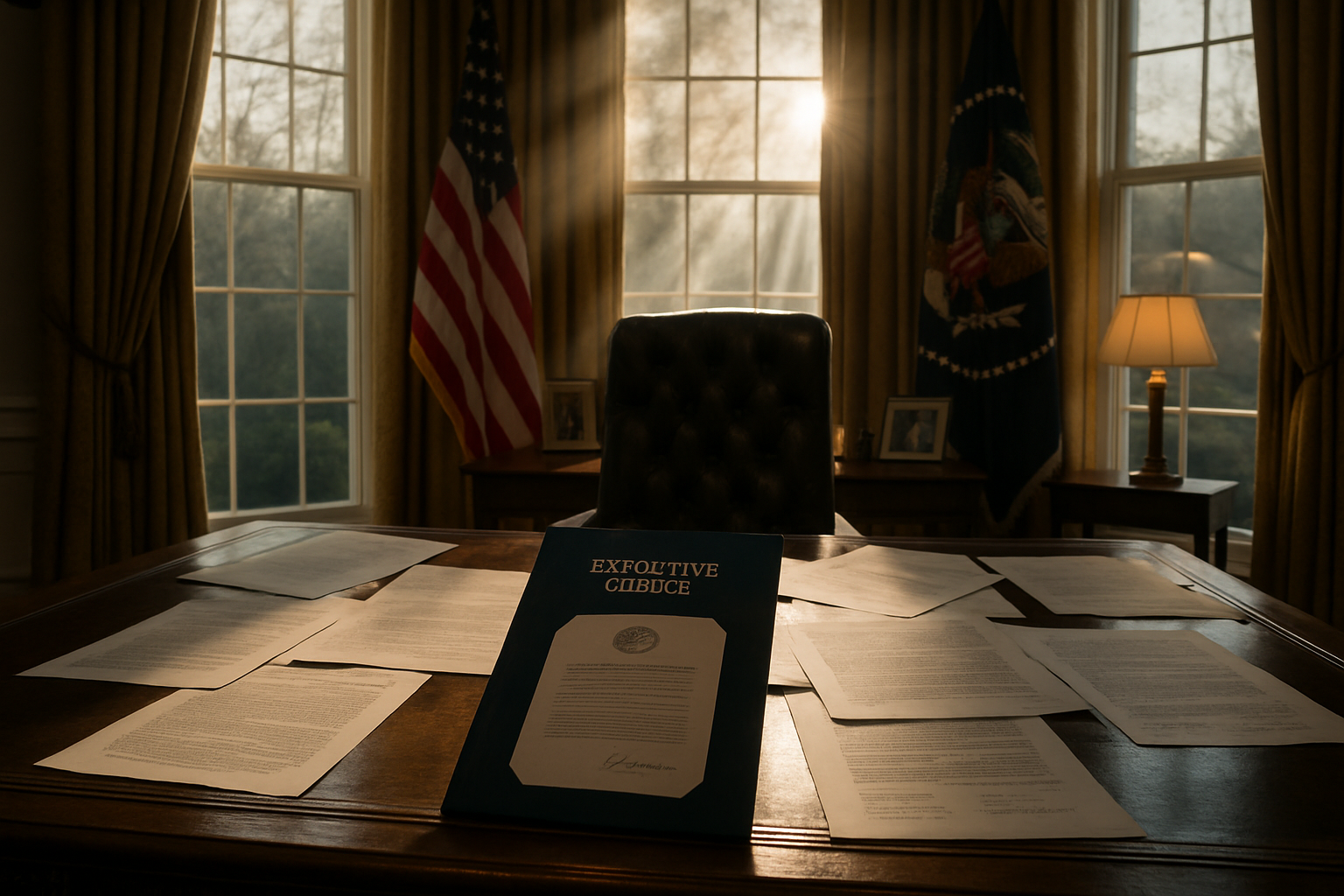
The U.S. Justice Department has dropped its legal bid to revive President Donald Trump's executive orders targeting four prominent law firms, marking another significant policy reversal as the administration faces mounting constitutional challenges across multiple fronts.
The decision to abandon enforcement against the law firms comes as Trump faces the most serious institutional pushback of his second presidency, including a devastating Supreme Court defeat on global tariffs and growing federal court resistance to his immigration and environmental policies.
Legal Battle Abandonment
According to sources close to the matter, the Justice Department has ceased its efforts to implement Trump's executive orders against four major law firms over their past legal work, diversity policies and political ties. The move represents a rare retreat from the administration's aggressive use of executive power to target perceived political opponents.
The targeted firms had challenged the executive orders in federal court, arguing they violated due process rights and represented an unprecedented weaponization of federal authority against private legal practices. Legal experts had warned that the orders could have created a dangerous precedent for government intimidation of the legal profession.
Constitutional Crisis Deepens
The policy reversal occurs amid the Trump administration's most challenging period since returning to office. The Supreme Court delivered a devastating 6-3 ruling in February striking down Trump's global tariff program under the International Emergency Economic Powers Act (IEEPA), with Chief Justice John Roberts applying the "major questions doctrine" to limit presidential emergency powers.
Trump's immediate response to escalate tariffs to 15% using alternative legal authorities created what constitutional scholars describe as the most serious executive-judicial confrontation since Watergate. The president's unprecedented attack on the Supreme Court justices, calling them "disgrace to our nation" and "disloyal to Constitution," has raised concerns about democratic institutional integrity.
"This represents a fundamental test of whether 21st-century American democratic institutions can withstand direct challenges to their authority from the executive branch."
— Constitutional Law Expert
Federal Court Resistance Pattern
Beyond the Supreme Court defeat, Trump faces systematic resistance from federal judges across the country. Federal Judge Brian Murphy in Massachusetts ruled the administration's "third country deportation" policy unlawful, violating due process rights. The policy had allowed DHS to send undocumented immigrants to any willing country regardless of connections, language, family ties, or social connections.
Judge Ana Reyes blocked termination of Temporary Protected Status for 350,000 Haitians, citing "racial animus." An Oregon judge required ICE to obtain warrants unless immigrants posed flight risks. Multiple civil rights lawsuits challenge the administration's visa suspensions affecting 75 countries.
In Philadelphia, a federal judge ordered the restoration of a slavery exhibit that Trump had removed, invoking George Orwell's "1984" to criticize the administration's attempt to "rewrite history." The judge stated the "government claims it alone has the power to erase, alter, remove and hide historical accounts."
International Diplomatic Complications
The policy reversals come as Trump navigates complex international crises. German media reports that Friedrich Merz, Germany's likely next chancellor, met with Trump in the Oval Office amid escalating tensions over Iran policy. The meeting occurred as Trump pursues a "dual-track" approach combining military pressure with diplomatic engagement.
French analysts describe the Trump administration as "hoping to essentially do away with the rule of law and democracy in the US," highlighting international concerns about American institutional stability. The criticism reflects growing European skepticism about U.S. policy predictability during crucial diplomatic negotiations.
Congressional Resistance Grows
Trump also faces unprecedented congressional pushback from his own party. The House passed legislation 219-211 to end Canada tariffs with six Republican defections—the first significant bipartisan rebuke of Trump's trade policies in his second term. Speaker Mike Johnson's unsuccessful attempt to prevent the vote highlights growing Republican anxiety about unpredictable executive actions.
The 150-day limit on Trump's replacement tariffs under Section 122 of the Trade Act creates urgent pressure for congressional approval, setting up a potential showdown over executive authority versus legislative oversight.
Environmental and Civil Rights Challenges
Environmental groups have launched coordinated legal challenges against EPA Administrator Lee Zeldin's revocation of Obama-era climate regulations, describing it as the "largest deregulatory action in American history." The timing is particularly sensitive as the world experiences its 18th consecutive month of temperatures exceeding 1.5°C above pre-industrial levels.
Civil rights organizations continue challenging the administration's immigration policies, with polling showing two-thirds of Americans believe ICE has "gone too far" in enforcement. The death of two individuals in ICE operations has intensified scrutiny of the administration's enforcement methods.
Economic Reality Check
Despite Trump's aggressive trade policies, the U.S. trade deficit reached $901.5 billion annually in December 2025, essentially unchanged from previous levels. This demonstrates the structural nature of trade imbalances beyond tariff solutions, undermining a key justification for the administration's confrontational trade approach.
The Supreme Court's tariff ruling could require billions in refunds to importers who paid approximately $200 billion since Trump's return to office, creating massive administrative challenges for federal agencies.
Historical Significance
Constitutional scholars characterize the current period as a watershed moment in American governance, testing the fundamental balance between presidential power and constitutional limitations. The abandonment of the law firm legal battles, while seemingly minor compared to other challenges, reflects the administration's recognition that some executive actions cannot withstand constitutional scrutiny.
The cumulative effect of these policy reversals and legal defeats represents the most significant institutional check on Trump's agenda since his return to office. Success or failure in navigating these challenges will establish precedents for executive power limitations affecting future administrations for generations.
As the administration approaches midterm elections with declining approval ratings and growing institutional opposition, the decision to retreat from the law firm battles may signal a broader strategic recalibration—or simply tactical exhaustion in the face of overwhelming legal and political resistance.