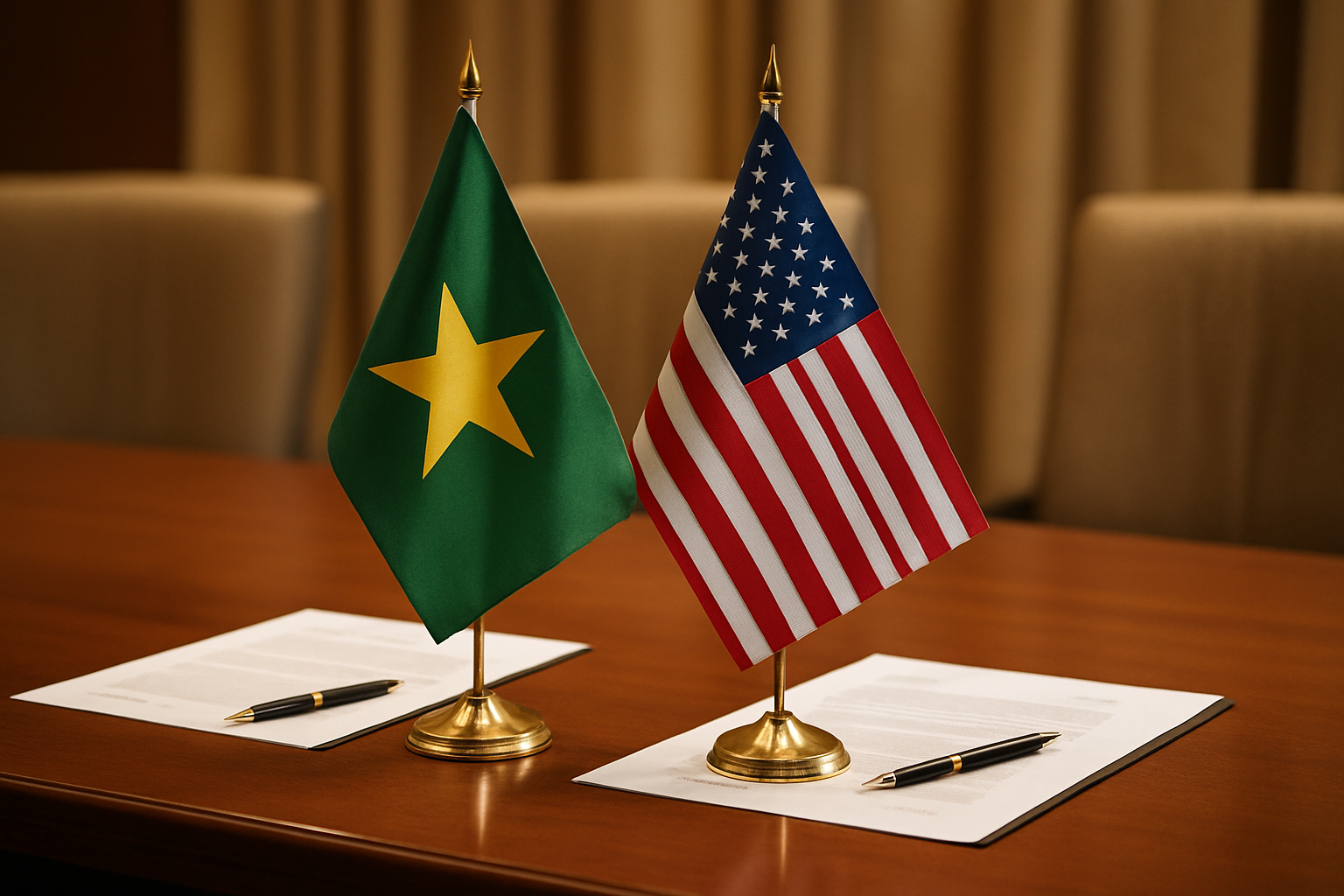
President Donald Trump has signed into law legislation reauthorizing the African Growth and Opportunity Act (AGOA), extending the crucial trade preference program through December 31, 2026, with retroactive effect to September 30, 2025.
The extension comes as a relief to African nations that had faced uncertainty about the future of the trade program, which provides duty-free access to U.S. markets for thousands of products from eligible sub-Saharan African countries. The decision represents a significant policy shift from Trump's earlier campaign rhetoric, where he had suggested major modifications to existing international trade agreements.
Last-Minute Congressional Action
Trump signed the legislation on Tuesday, February 4, 2026, after Congress passed the extension with bipartisan support. The short-term nature of the extension, lasting only through the end of 2026, reflects ongoing debates about the program's effectiveness and future direction.
The retroactive provision ensures continuity of benefits for African exporters who may have faced uncertainty during the gap period between the previous authorization's expiration on September 30, 2025, and the new extension taking effect.
African Nations Welcome Extension
Lesotho was among the first countries to publicly welcome the AGOA extension, though officials noted the temporary nature of the agreement extends only through December. The southern African nation has been one of the program's significant beneficiaries, particularly in textile exports to the United States.
Mozambique also responded positively to the renewal, with local media describing it as a resumption of the crucial trade partnership between the United States and sub-Saharan Africa. The extension provides breathing room for bilateral economic relationships that have faced pressure from competing global trade dynamics.
Economic Impact and Trade Benefits
AGOA, originally enacted in 2000, has been instrumental in promoting economic growth and development across Africa. The program provides qualifying sub-Saharan African countries with duty-free access to U.S. markets for more than 1,800 products, in addition to the 5,000+ products eligible under the Generalized System of Preferences.
Key sectors that benefit from AGOA include textiles and apparel, agricultural products, and various manufactured goods. Countries like Kenya, South Africa, Ghana, and Ethiopia have built significant export industries around AGOA preferences, creating thousands of jobs and generating billions in trade revenue.
Textile Industry Lifeline
The textile and apparel sector has been particularly dependent on AGOA benefits. Countries like Lesotho, Madagascar, and Kenya have developed substantial manufacturing capabilities to serve the U.S. market, often competing directly with Asian producers thanks to the duty-free advantage.
The extension ensures these industries can continue operations without the uncertainty that had loomed over investment decisions and long-term contracts with U.S. buyers.
Policy Reversal from Campaign Promises
The AGOA extension marks a notable departure from Trump's earlier campaign stance, where he frequently criticized existing trade agreements and promised to renegotiate or terminate deals he viewed as disadvantageous to American interests.
During his first presidency, Trump had expressed skepticism about various trade preferences and had threatened to review AGOA's effectiveness. However, the decision to extend the program suggests recognition of its strategic importance in maintaining U.S. influence in Africa amid growing competition from China and other global powers.
Geopolitical Considerations
The extension comes at a time when the United States is actively competing with China for influence across the African continent. Beijing has invested heavily in African infrastructure and trade relationships through initiatives like the Belt and Road Initiative, making American trade preferences increasingly important as a tool of soft power.
U.S. policymakers have recognized that AGOA serves not only economic purposes but also strategic interests in maintaining partnerships with African nations. The program helps demonstrate American commitment to African economic development at a time when other global powers are increasing their presence on the continent.
Concerns About Short-Term Nature
While African nations have welcomed the extension, many have expressed concerns about its limited duration. The December 31, 2026, expiration date means uncertainty will return within the next year, potentially affecting long-term investment decisions and strategic planning by both African exporters and U.S. importers.
Trade experts argue that the frequent need for AGOA reauthorization creates instability in trade relationships and hampers the program's ability to drive sustained economic development. Many African governments and U.S. business groups have called for longer-term certainty to maximize the program's benefits.
Future of U.S.-Africa Trade Relations
The AGOA extension provides a bridge while the Trump administration develops its broader Africa policy. The temporary nature of the extension suggests that longer-term decisions about the program's future structure and scope may come later in 2026.
Some policy analysts expect the administration to use the extension period to evaluate AGOA's effectiveness and potentially negotiate modifications or improvements to the program. This could include updates to eligibility criteria, product coverage, or performance requirements for participating countries.
Regional Reactions and Implementation
African regional organizations and individual governments have generally responded positively to the extension, viewing it as recognition of the importance of U.S.-Africa economic partnerships. However, some have called for greater predictability in future renewals to support long-term economic planning.
The implementation of the retroactive provisions will require coordination between U.S. trade authorities and African exporters to ensure that any disrupted trade flows can be restored and that businesses can reclaim benefits that may have been affected during the authorization gap.
As the program moves forward through 2026, both American and African stakeholders will be watching closely for signals about the administration's long-term vision for trade relationships with the continent and whether future extensions might provide greater certainty for this crucial economic partnership.