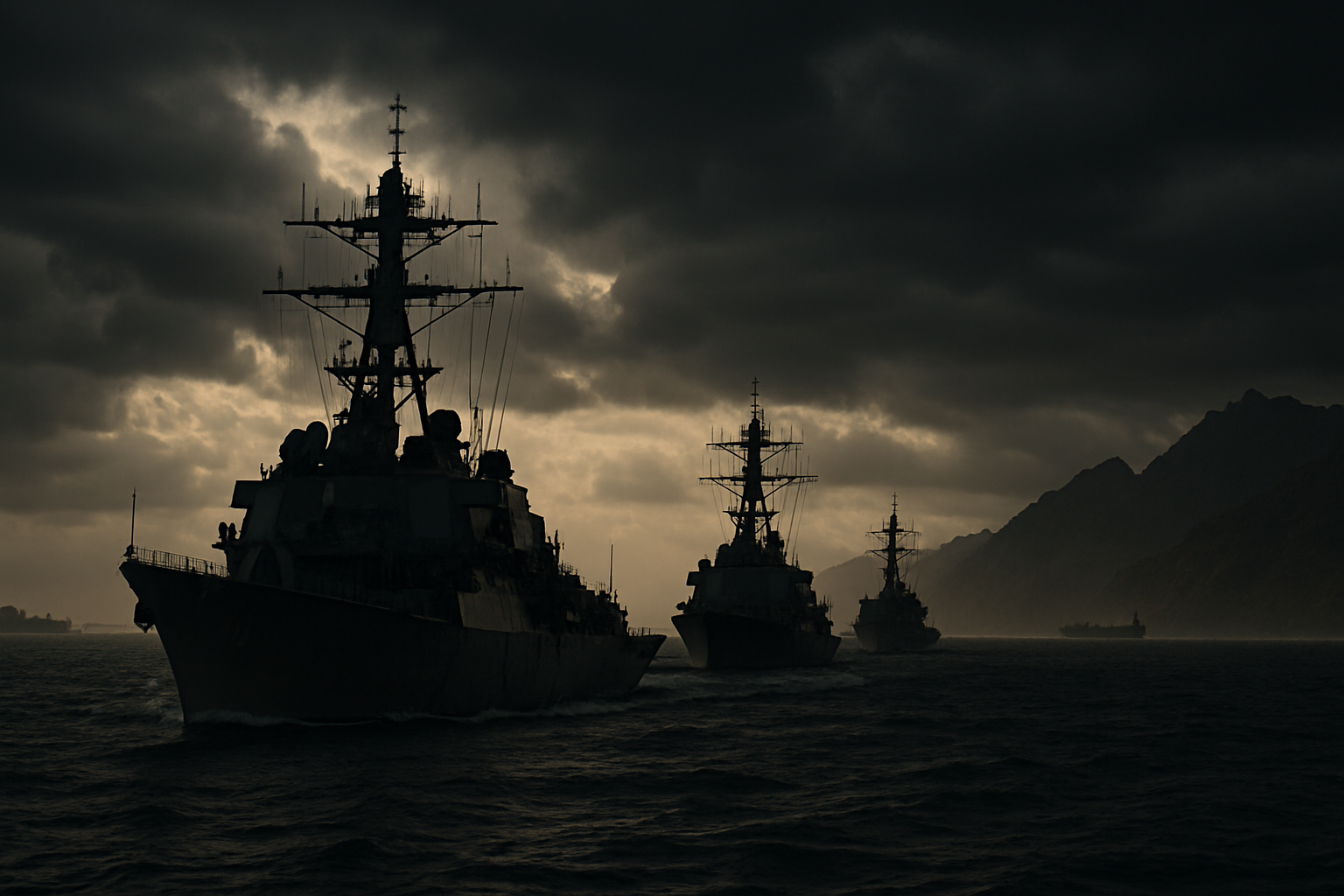
President Donald Trump announced a comprehensive US naval blockade of all Iranian ports in the strategic Strait of Hormuz starting Monday at 10 AM Eastern Time, after high-stakes Pakistan-mediated peace talks collapsed following 21 hours of intensive negotiations in Islamabad.
The announcement, made via Truth Social with Trump declaring "Any Iranian who fires at us, or at peaceful vessels, will be BLOWN TO HELL!" marks the collapse of the most direct US-Iran diplomatic engagement in decades and threatens to reignite the world's most dangerous geopolitical crisis since the Cold War.
Oil Markets in Turmoil
Global oil prices immediately spiked over 7% in overnight trading, with Brent crude jumping to over $102 per barrel as markets reacted to the threat against the world's most critical energy chokepoint. The Strait of Hormuz handles approximately 40% of global seaborne oil transit through its narrow 21-mile waterway.
Asian stock markets opened sharply lower, with early futures trading suggesting significant losses across global financial markets. The announcement reversed months of relative stability following previous ceasefire agreements and threatens to return energy markets to crisis levels not seen since early 2026.
"Iran has shown complete bad faith in these negotiations. They came to the table with impossible demands while continuing their nuclear weapons program,"
— President Donald Trump, Truth Social
Pakistan-Mediated Talks Collapse
The dramatic escalation comes after Vice President JD Vance led a high-level US delegation to Islamabad for what Pakistani officials described as "make-or-break" negotiations. The talks, mediated by Pakistani Prime Minister Shehbaz Sharif and military leadership, represented the culmination of Pakistan's unprecedented diplomatic initiative that had previously achieved a temporary ceasefire.
According to sources familiar with the negotiations, talks broke down over Iran's nuclear program, with the US demanding firm commitments against nuclear weapons development while Iran maintained its right to 60% uranium enrichment. Iranian officials possess an estimated 400+ kilograms of weapons-grade uranium material, enough for multiple nuclear weapons according to former IAEA inspectors.
A critical complicating factor was the "Lebanon loophole" - Israeli Prime Minister Netanyahu's explicit exclusion of Lebanon from previous ceasefire arrangements, which led to continued Israeli strikes that killed over 254 people in a single day during the negotiations. Iran demanded comprehensive enforcement across all fronts, creating an unbridgeable gap in positions.
Iran's Defiant Response
Iran's Revolutionary Guard Corps (IRGC) immediately responded with defiance, claiming "complete control" over the Strait of Hormuz and threatening to create a "deadly whirlpool" for any military vessels that approach the strategic waterway.
Iranian Foreign Minister Abbas Araghchi dismissed the blockade threats as coming from a "delusional US president," while parliamentary officials warned that any naval blockade would be considered an act of war under international law.
Iran has previously deployed an estimated 2,000-6,000 naval mines throughout the strait during earlier phases of the conflict, effectively demonstrating its ability to disrupt global energy supplies when threatened.
Congressional Opposition Mounts
The blockade announcement faces immediate Congressional pushback, with support for military operations against Iran at historically low levels of approximately 25%. Senator Richard Blumenthal expressed being "more concerned than ever" about the possibility of ground troops deployment.
The previous "Operation Epic Fury" military campaign cost $11.3 billion in its first week alone, with Pentagon operations initially projected through September - far beyond Trump's original 4-6 week timeline. Financial markets are being described by analysts as the "ultimate constraint" on prolonged military confrontation.
Regional Coalition Under Strain
The collapse threatens the unprecedented Middle Eastern coalition of Saudi Arabia, UAE, Qatar, and Egypt that had supported diplomatic solutions. These nations have maintained unity despite Iranian retaliatory attacks during previous escalations, including casualties in Abu Dhabi, Kuwait, and Qatar.
Egyptian President Abdel Fattah el-Sisi's previous warnings about "comprehensive chaos" spreading to "sisterly countries" appear increasingly prophetic as the diplomatic window closes.
European Security Implications
The crisis has already demonstrated global reach, with Iranian drones striking RAF Akrotiri in Cyprus - marking the first attack on European territory since World War II. This prompted an unprecedented naval coalition response featuring British, Spanish, Italian, French, Dutch, and Greek vessels.
However, European allies have largely resisted Trump's demands for broader military support in securing the Strait of Hormuz, with German Defense Minister Boris Pistorius questioning what "a handful of frigates could do that the powerful US Navy cannot."
Nuclear Governance Crisis
The escalation occurs against the backdrop of a broader nuclear governance crisis. The New START treaty between the US and Russia expired in February 2026 - the first time in over 50 years without nuclear constraints between the superpowers. Combined with China's nuclear expansion and Iran's advancing program, UN Secretary-General António Guterres has warned of nuclear risks at their "highest level in decades."
Economic Ripple Effects
Beyond immediate oil price impacts, the blockade threatens to reverse recent consumer relief initiatives across the globe. Bangladesh had been reviewing fuel rationing for 170 million people, Pakistan was considering reversing wartime austerity measures, and European households were anticipating energy cost reductions - all now in jeopardy.
The shipping industry, which had been mobilizing over 150 stranded tankers worth billions in cargo, now faces the prospect of returning to crisis-level disruptions that previously paralyzed global supply chains.
Template for 21st Century Crisis Management
Pakistan's mediation effort, while ultimately unsuccessful, demonstrated the potential for middle-power diplomacy to bridge major adversary divides when traditional mechanisms fail. The "message relay system" that facilitated indirect US-Iran communication when direct talks were impossible provides a template for future crisis management.
China's "full support" for Pakistan's initiative and Germany's acknowledgment of "positive signs" had signaled international momentum for diplomatic solutions - momentum now potentially lost to military confrontation.
The collapse represents what UN Secretary-General Guterres has called the "greatest test of multilateral cooperation and crisis management of the modern era," with implications extending far beyond the immediate region to affect global energy security, nuclear governance credibility, and international law enforcement mechanisms for decades to come.
As markets brace for renewed volatility and world leaders assess their options, the coming hours will determine whether diplomatic innovation can prevent a return to the world's most dangerous crisis since the Cold War, or whether military solutions will reshape 21st-century international relations for generations.