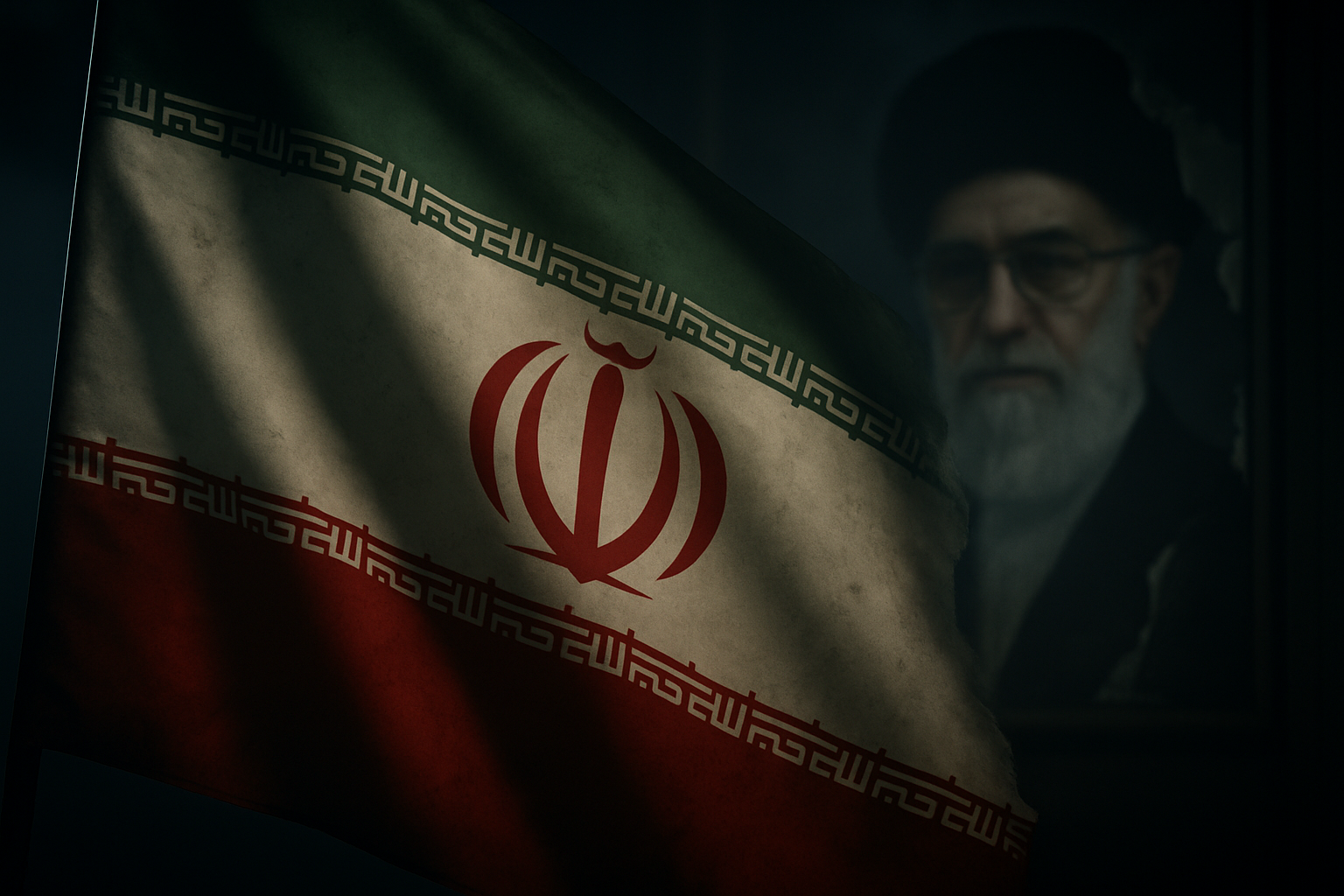
President Donald Trump announced Saturday that Iran's Supreme Leader Ayatollah Ali Khamenei has been killed in coordinated US-Israeli military strikes, marking what could be the most significant development in Middle Eastern geopolitics in decades, though Iranian officials have categorically denied the claims.
In a series of posts on Truth Social, Trump declared that Khamenei, "one of the most evil people in history, is dead," describing the reported killing as "justice for the Iranian people and for the victims of his gang of criminals." The announcement came hours after Israeli officials suggested the 86-year-old leader had been killed in what they termed "Operation Epic Fury" - the most ambitious coordinated US-Israeli attack on Iran in decades.
However, Iran's Fars news agency swiftly denied the claims, with sources close to Khamenei's office dismissing Trump's announcement as "psychological warfare." Iranian state media reported that the Supreme Leader remains "steadfast and firm in commanding the field," though contact with senior leadership was reportedly lost during the strikes.
Conflicting Reports and Information Warfare
The death claims emerged from multiple Israeli sources throughout Saturday, with Prime Minister Benjamin Netanyahu stating there were "growing signs" that Khamenei was "no more" after strikes destroyed his Tehran compound. An unnamed senior Israeli official told Reuters that intelligence had "recovered his body from a destroyed compound," though no visual evidence has been provided.
Iranian Foreign Minister Abbas Araghchi firmly rejected the reports, telling media that the Supreme Leader was "still alive as far as I know," while acknowledging that "one or two commanders" had been killed in the strikes. The conflicting accounts highlight the challenges of verification during active military operations and the role of information warfare in modern conflicts.
The absence of official confirmation from either the US government or Iranian authorities, despite the scale of claims, suggests the unverified nature of the reports. Iran has imposed strict communications control in Tehran, with mobile services disrupted and roads blocked, making independent verification extremely difficult.
Operation Epic Fury: The Largest Attack Since 2003
The reported assassination occurred during "Operation Epic Fury," a massive coordinated military campaign launched by the United States and Israel following the complete breakdown of nuclear negotiations. The operation represents the largest US-Israeli military action in the Middle East since the 2003 Iraq invasion, involving an unprecedented dual-carrier deployment of the USS Gerald R. Ford and USS Abraham Lincoln.
According to Israeli Defense Minister Israel Katz, the strikes targeted key Iranian leadership, military installations, and nuclear facilities. Multiple explosions were reported across Tehran, with Iranian state media confirming "heavy smoke rising over the capital." The operation followed Trump's historic 10-day ultimatum warning that "bad things will happen" if Iran failed to reach a nuclear agreement.
The timing proved devastating for diplomatic efforts, coming despite the most significant progress in US-Iran nuclear talks since the 2018 JCPOA collapse. Geneva negotiations had achieved a "broad agreement on guiding principles," but fundamental disagreements over Iran's ballistic missile program and regional proxy forces proved insurmountable.
Family Casualties Confirmed
While Khamenei's fate remains disputed, multiple sources confirmed that several members of the Supreme Leader's family were killed in the strikes. Iranian media reported the deaths of Khamenei's daughter, son-in-law, and granddaughter in Saturday morning attacks. Sky News, citing Iran's Fars news agency, confirmed the family casualties, describing the strikes as occurring "during broad daylight when full of young schoolgirls" - a reference to a separate attack on an elementary school in Minab that killed 53-85 students and staff.
The family casualties, if confirmed, would represent a significant escalation in targeting Iranian leadership's personal circles, marking a departure from previous military engagement protocols. President Masoud Pezeshkian condemned the school attack as a "barbaric crime," while the family deaths intensified calls for retaliation.
Iranian Retaliation and Regional Escalation
Iran responded immediately with what the Islamic Revolutionary Guard Corps termed "the first wave" of retaliatory strikes across the Gulf region. The IRGC declared that "no red lines remain," making all US and Israeli assets "legitimate targets." The retaliation affected multiple countries:
- UAE: One civilian killed in Abu Dhabi from missile debris, with Dubai's Fairmont Palm hotel catching fire
- Kuwait: Airport struck by drones, causing employee injuries at Ali Al Salem Base
- Qatar: Al Udeid Base attacked, missiles intercepted by Patriot systems
- Bahrain: Fifth Fleet headquarters targeted, residential buildings hit in Manama
The Iranian response disrupted the unprecedented regional coalition of Saudi Arabia, UAE, Qatar, and Egypt that had been supporting diplomatic efforts. Egyptian President Abdel Fattah el-Sisi condemned attacks on "sisterly Arab countries," warning of "comprehensive chaos" spreading across the region.
Global Aviation Crisis and Economic Impact
The military escalation triggered a massive aviation crisis, with Iran, Iraq, Israel, UAE, and Qatar closing their airspace to civilian traffic. Major carriers including Emirates, Air France-KLM, Wizz Air, and Bulgaria Air suspended Middle East operations, affecting hundreds of thousands of passengers worldwide.
Oil prices rose immediately on concerns over the Strait of Hormuz, through which 40% of global oil transit flows. The crisis extends far beyond the Middle East, disrupting critical Europe-Asia transportation hubs and raising global energy security concerns.
International Response and UN Emergency Session
The international community responded with alarm to the rapid diplomatic breakdown and military escalation. The UN Security Council scheduled an emergency session following requests from France, China, Russia, Colombia, and Bahrain. Russia condemned what Moscow termed "reckless actions by Washington and West Jerusalem" as violations of international law.
Multiple European governments issued immediate travel warnings and authorized embassy evacuations. Sweden and Serbia ordered their citizens to leave Iran immediately, citing "extremely uncertain" security conditions. The US authorized non-essential embassy personnel to depart Israel, with Ambassador Mike Huckabee advising staff to leave "today."
Nuclear Diplomacy's Collapse
The military escalation represents the dramatic collapse of the most promising US-Iran diplomatic opening in years. Despite achieving a "broad agreement on guiding principles" through Switzerland-Oman mediation, fundamental scope disagreements proved insurmountable. Iran excluded ballistic missiles and regional proxies as "red lines," demanding nuclear-only talks, while the US insisted on comprehensive agreements including missiles, armed groups, and human rights.
Iran had been enriching uranium to 60% purity - approaching the 90% weapons-grade threshold - with intelligence assessments suggesting sufficient material for multiple weapons if weaponized. The collapse of negotiations occurred against the backdrop of the New START treaty's expiration on February 5, marking the first time in over 50 years without US-Russia nuclear constraints.
Trump's Regime Change Appeal
In his announcement, Trump made his most explicit appeal for regime change, directly addressing the Iranian people to "take back their country." The President described the reported killing as "the single greatest chance for the Iranian people to take back their Country," representing a significant evolution from nuclear-focused negotiations to comprehensive political transformation objectives.
Reports from multiple cities indicated that Iranians took to the streets to celebrate the death claims, with residents coming to windows to applaud and play music. However, the regime maintains significant security apparatus control, with over 42,000 arrests since 2022 protests and continued crackdowns on dissent.
Historical Significance and Future Implications
If confirmed, Khamenei's death would mark the end of an era in Middle Eastern geopolitics. The Supreme Leader had ruled Iran since 1989, transforming the Islamic Republic into a regional power with extensive influence across the Middle East through proxy forces and nuclear development. His reported death creates an immediate succession crisis, with no clear indication of who would assume control.
The crisis represents a template-setting moment for 21st-century conflict resolution, demonstrating the fragility of modern crisis management in a multipolar era. The rapid transition from diplomatic framework to military confrontation raises questions about the viability of diplomatic solutions for complex nuclear and regional security challenges.
Verification Challenges and Information War
The conflicting claims highlight the verification challenges during active military operations and the role of information warfare in modern conflicts. Iran's strict communications control, disrupted mobile services in Tehran, and loss of contact with senior leadership during strikes make independent verification extremely difficult.
The absence of visual evidence or official US-Israeli confirmation, despite Reuters reports citing unnamed senior Israeli officials, suggests the claims remain unverified. International human rights organizations are demanding investigations into potential Geneva Conventions violations, particularly regarding the targeting of civilian educational infrastructure in the Minab school attack.
As the situation continues to unfold, the international community faces urgent challenges preventing further escalation while addressing the underlying issues that led to this dramatic diplomatic breakdown. The stakes encompass regional war prevention, global energy security, nuclear governance credibility, and the future of international law enforcement mechanisms in the 21st century.