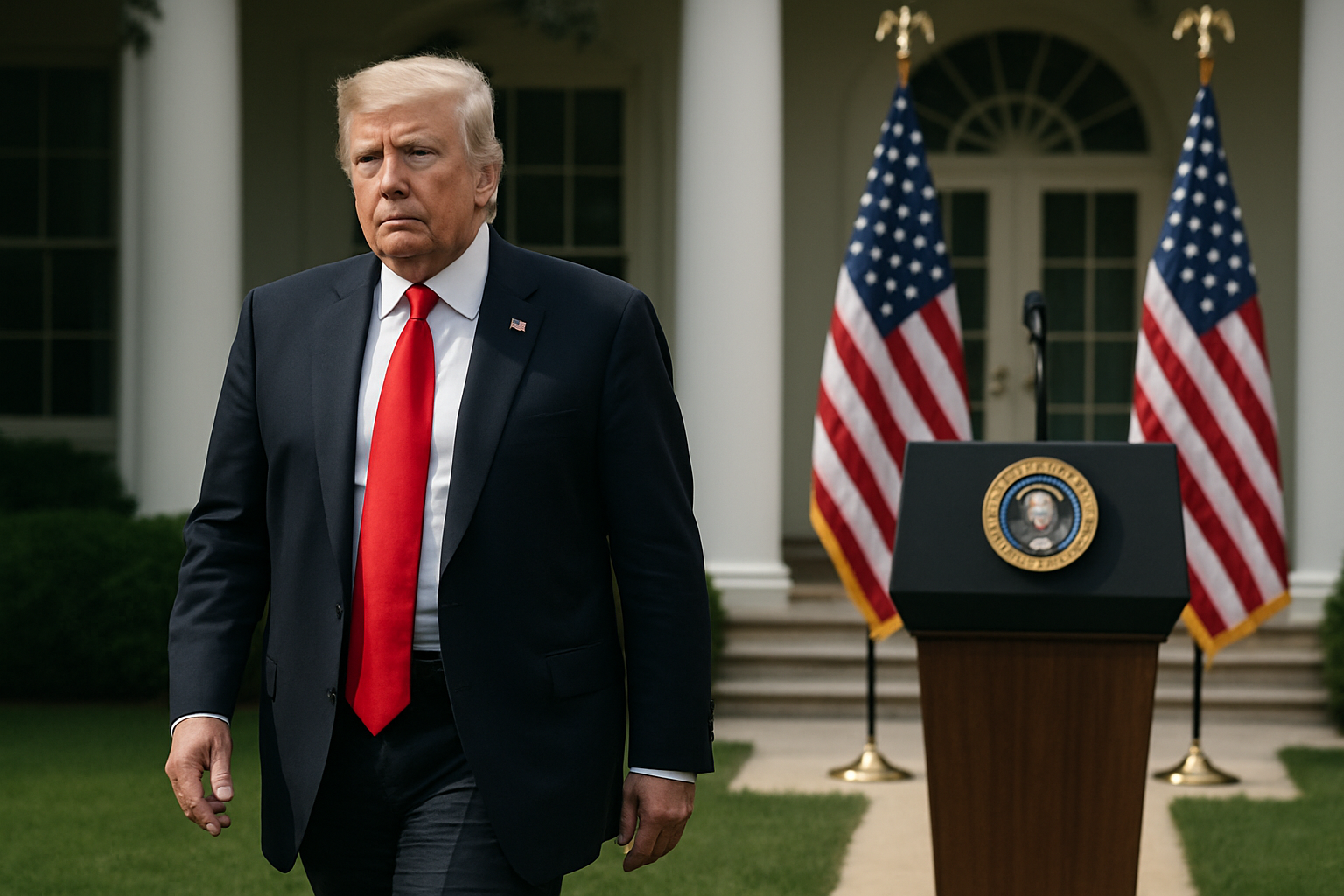
President Donald Trump announced Friday his intention to visit Venezuela in a historic diplomatic breakthrough, while simultaneously authorizing five major Western oil companies to resume operations in the South American nation, marking the most dramatic shift in US-Venezuela relations since the 2019 diplomatic break.
The announcement came during a White House press briefing where Trump declared "I will visit Venezuela," though he acknowledged no specific timeline has been set for what would be the first visit by a US president to Venezuela since 1997. The president also confirmed Washington's recognition of Acting President Delcy Rodríguez as the legitimate leader of Venezuela's interim government following the January 2026 removal of Nicolás Maduro.
Comprehensive Energy Partnership Authorization
The Treasury Department issued licenses Friday authorizing five major oil companies—Chevron, BP, Shell, Eni, and Repsol—to expand operations in Venezuela under a comprehensive energy cooperation framework. The authorization represents the complete reversal of Trump's own 2019 oil embargo on Venezuela, which Energy Secretary Chris Wright declared has "essentially ended."
Venezuelan oil exports have already surged 60% from 498,000 to 800,000 barrels daily since January, with the United States displacing China as Venezuela's top customer. Chevron has more than doubled its Venezuelan shipments, while the US has released 40 million barrels from strategic reserves to facilitate the partnership.
"We are working on a very rapid agenda to consolidate binational cooperation," declared Venezuelan Vice President Delcy Rodríguez, who has emerged as the interim government's key diplomatic figure.
— Delcy Rodríguez, Acting President of Venezuela
Historic Diplomatic Breakthrough
The developments represent the culmination of unprecedented high-level diplomatic engagement between Washington and Caracas. Energy Secretary Wright conducted a groundbreaking February 12-13 visit to Venezuela, becoming the highest-ranking US official to visit the country since Maduro's removal. Wright toured Chevron-PDVSA facilities in the Orinoco Belt alongside Acting President Rodríguez, signing a comprehensive energy cooperation agreement at Miraflores Palace.
The diplomatic breakthrough builds on Secretary of State Marco Rubio's three-phase reconstruction plan for Venezuela: stabilization, economic recovery through sanctions relief, and democratic transition. High-level meetings between Rodríguez and US Chargé d'Affaires Laura Dogu at Miraflores Palace have represented the highest US-Venezuela diplomatic contact since relations were severed in 2019.
Aviation and Medical Cooperation
Beyond energy cooperation, American Airlines has formally requested US authorization to resume flights from Miami to Caracas and Maracaibo, anticipating no "energy or environmental problems" for the services. The request reflects growing confidence in Venezuela's stability under the interim government.
Humanitarian cooperation has also accelerated, with over six tons of medical supplies arriving in Venezuela from the United States. Venezuelan diplomatic representative Félix Plasencia confirmed the medical supplies will be distributed to the country's network of outpatient hospitals, addressing critical healthcare needs that developed during the economic crisis.
Political Prisoner Amnesty Progress
The interim government has demonstrated its commitment to democratic reforms through an ambitious political prisoner amnesty program. Over 400 political prisoners have been released since January 2026, including prominent opposition figures and human rights activists. The releases are part of a comprehensive amnesty law covering political offenses from 1999-2026, representing the most ambitious political reconciliation effort in recent Latin American history.
However, the amnesty process has faced procedural challenges, with the National Assembly postponing final approval due to disagreements over Article 7, which some Chavista legislators want to require prisoners to acknowledge alleged crimes as a condition for release. Opposition leaders have rejected this requirement, arguing the detainees were innocent victims of political persecution.
Regional and International Implications
The dramatic shift in US-Venezuela relations is reverberating throughout Latin America and beyond. The Dominican Republic has reopened commercial relations and air traffic with Venezuela, while Brazil and the European Union have expressed cautious support for the democratic transition. The rapid normalization contrasts sharply with the maximum pressure campaign that characterized US policy during the Maduro era.
China, which had been Venezuela's primary oil customer under Maduro, now faces reduced influence as Venezuela reorients toward US markets. The energy partnership creates a template for "bilateral energy diplomacy" that the Trump administration views as a model for countering Chinese influence throughout Latin America.
Military Background and Security Cooperation
Trump's announcement comes one day after he paid tribute to US military personnel involved in the January 3, 2026 operation that led to Maduro's capture. Speaking at a military base in North Carolina, Trump declared "I am proud to be your commander" while addressing soldiers who participated in the mission that fundamentally altered Venezuela's political trajectory.
The operation, which resulted in Maduro and his wife Cilia Flores being detained in New York federal custody on drug trafficking charges, created the opening for the current diplomatic breakthrough. The interim government under Rodríguez has cooperated extensively with US justice investigations, including the recent detention of Maduro associate Alex Saab at Helicoide prison.
Economic Recovery Challenges
Despite the diplomatic progress and oil export surge, Venezuela continues to face significant economic challenges. Oil production remains at only 700,000 barrels daily compared to the historical peak of 3 million barrels. The country continues to experience hyperinflation, infrastructure decay, power outages, and fuel shortages that require sustained international investment and technical assistance.
Wright acknowledged these challenges during his visit, promising a "dramatic increase" in Venezuelan production capacity while emphasizing the need for American technical assistance and institutional capacity building. The success of the partnership will depend on massive supply chain restructuring and energy infrastructure modifications.
Congressional Response
The administration's Venezuela policy shift has generated mixed reactions on Capitol Hill. Republicans generally support the reset as a strategic victory against Chinese influence, while Democrats have introduced transparency legislation demanding accountability for Venezuelan oil sales. Some lawmakers have expressed concerns about the rapid reversal of maximum pressure policies without guarantees of sustained democratic reforms.
The House passed legislation 219-211 to end Canada tariffs with six Republican defections, marking the first significant bipartisan rebuke of Trump's trade policies in his second term. The Venezuela policy could face similar legislative challenges if the democratic transition stalls or human rights concerns resurface.
Future Prospects
Trump's planned Venezuela visit would represent a remarkable diplomatic achievement if successfully executed. No US president has visited Venezuela since Bill Clinton in 1997, and such a visit would symbolically cement the transformation of bilateral relations from confrontation to strategic partnership.
The success of the energy cooperation framework will likely determine the sustainability of the broader relationship. Venezuela's ability to significantly increase oil production while maintaining democratic reforms will serve as a critical test of whether economic incentives can produce lasting political change.
The template established in Venezuela could influence US policy toward other Latin American nations, particularly those where Chinese influence has grown significantly. The combination of targeted pressure followed by comprehensive partnership offers a potential model for future diplomatic interventions in the region.
Looking Ahead
As Venezuela continues its democratic transition under international scrutiny, the coming months will prove decisive for the durability of US-Venezuela cooperation. The amnesty law's final passage, the completion of political prisoner releases, and the success of energy sector reconstruction will all serve as benchmarks for genuine reform versus cosmetic changes.
Trump's eventual visit to Venezuela would cap one of the most dramatic diplomatic reversals in recent American foreign policy history. From maximum pressure to strategic partnership, the transformation demonstrates the Trump administration's willingness to rapidly adapt policies when circumstances change and opportunities for American interests emerge.
The international community continues to monitor Venezuela's progress as a potential template for resolving similar crises elsewhere. Success in Venezuela could provide a model for diplomatic solutions in other challenging relationships, while failure might reinforce skepticism about the sustainability of rapid policy reversals in international relations.