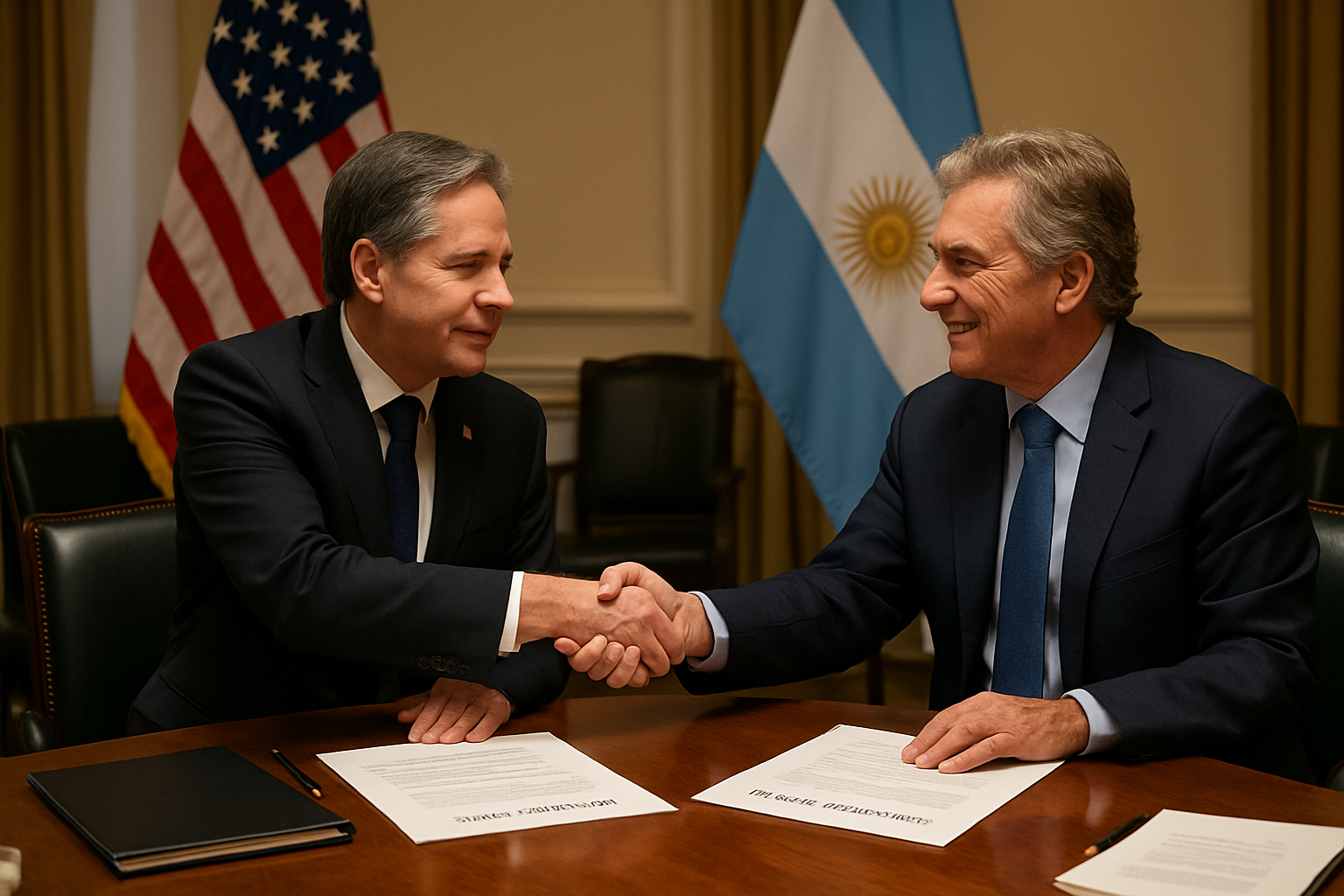
President Donald Trump signed a groundbreaking executive order quintupling United States beef imports from Argentina, marking a historic expansion of bilateral trade relations that could generate an estimated $800 million in additional external sales for Argentina.
The executive order, which increases Argentine beef import quotas from 20,000 to 100,000 tons annually—a dramatic 500% increase—represents the centerpiece of a comprehensive trade agreement finalized February 5, 2026, between the Trump administration and Argentine President Javier Milei's government.
Unprecedented Market Access for Argentine Beef
Argentine Foreign Minister Pablo Quirno announced the agreement provides "unprecedented" agricultural market access to the United States, positioning Argentina as a key Trump administration partner in South America. The deal is part of a broader bilateral trade framework that eliminates over 1,600 US tariffs on Argentine goods while removing 220+ Argentine levies on US products.
According to sources from Argentina's Foreign Ministry, the beef import expansion could generate approximately $800 million in additional external sales, building on Argentina's record-breaking 2025 performance when beef exports reached $3.7 billion in revenues with a 35.6% price increase per ton.
"This agreement consolidates our regional leadership and provides Argentine beef with unprecedented access to the US market."
— Foreign Minister Pablo Quirno
American Cattle Ranchers Voice Opposition
The dramatic import quota expansion has triggered fierce opposition from American cattle ranchers, who called the decision "a slap in the face" during an ongoing crisis in the US cattle industry. Ranchers argue the increased imports will accelerate US cattle inventory reduction at a time when the industry faces drought, rising feed costs, and market volatility.
The timing of the agreement is particularly sensitive as the US cattle industry navigates significant challenges, including climate-related pressures and economic uncertainties that have already reduced domestic cattle inventories. Industry representatives have called for protection rather than increased competition from foreign suppliers.
Strategic Partnership Beyond Agriculture
The beef import expansion is embedded within a comprehensive bilateral framework that extends far beyond agricultural trade. The agreement includes strategic cooperation on critical minerals, particularly lithium—where Argentina holds substantial reserves—Port of Rosario expansion provisions, and enhanced intellectual property protections.
Cabinet Chief Manuel Adorni and Foreign Minister Pablo Quirno outlined the agreement's scope at a press conference, confirming the deal will be sent to Congress for legislative approval. The framework covers six key sectors: automobiles, technology, and pharmaceuticals flowing from the US to Argentina, while critical minerals and agricultural products move in the opposite direction.
Trump Administration's Bilateral Trade Strategy
The Argentina agreement follows Trump's pattern of pursuing bilateral trade deals, building on the successful US-India agreement that reduced tariffs from 50% to 18%. The approach represents a shift from multilateral frameworks toward direct partnerships that Trump argues better serve American interests.
President Trump has positioned the Argentina deal as part of a broader strategy to counter Chinese influence in Latin America while securing reliable supply chains for critical materials. The agreement's lithium cooperation provisions are particularly significant, given China's current dominance in global critical minerals production and refining.
Economic Context and Market Response
Argentina's economy under President Javier Milei has pursued aggressive free-trade reforms, with this US agreement representing a major achievement for his administration. Financial markets responded positively, with bonds and stocks rebounding while country risk remained stable near 520 points.
However, challenges remain. Central Bank economists project 22.4% annual inflation for 2026, more than doubling the government's 10.1% forecast. The trade agreement's success will depend on effective implementation amid ongoing economic transition and the need for Congressional ratification.
Implementation Challenges and Quality Standards
Argentine producers must meet rigorous US quality standards to take advantage of the expanded import quotas. The agreement includes monitoring and adjustment mechanisms with phased implementation designed to allow market adaptation on both sides.
Analysts predict competitive dynamics between domestic and export markets in Argentina, given reduced local production trends. The substantial increase in US market access could reshape Argentina's beef industry structure and pricing mechanisms.
Regional Implications for Latin America
The agreement establishes Argentina as a key US agricultural partner, potentially influencing hemispheric trade dynamics and encouraging similar bilateral arrangements throughout Latin America. The success of the Trump-Milei partnership could serve as a template for other regional countries seeking enhanced US market access.
The deal also represents a significant geopolitical development, demonstrating how economic partnerships can advance broader strategic objectives including supply chain security and regional influence competition with China.
Congressional Approval Process
Implementation of the comprehensive trade agreement requires Congressional approval, which the Milei administration expects to pursue in the coming weeks. The beef import expansion, as an executive order, can proceed immediately, but the broader framework needs legislative ratification.
Success in Congress would mark a major victory for both Trump's bilateral trade approach and Milei's free-market reform agenda, setting the stage for deeper US-Argentina cooperation across multiple sectors including energy, technology, and defense.
The historic agreement positions Argentina as a crucial partner in Trump's efforts to reshape global supply chains while providing Argentina with unprecedented access to the world's largest economy, representing a potential transformation of bilateral relations that could define hemispheric trade patterns for years to come.