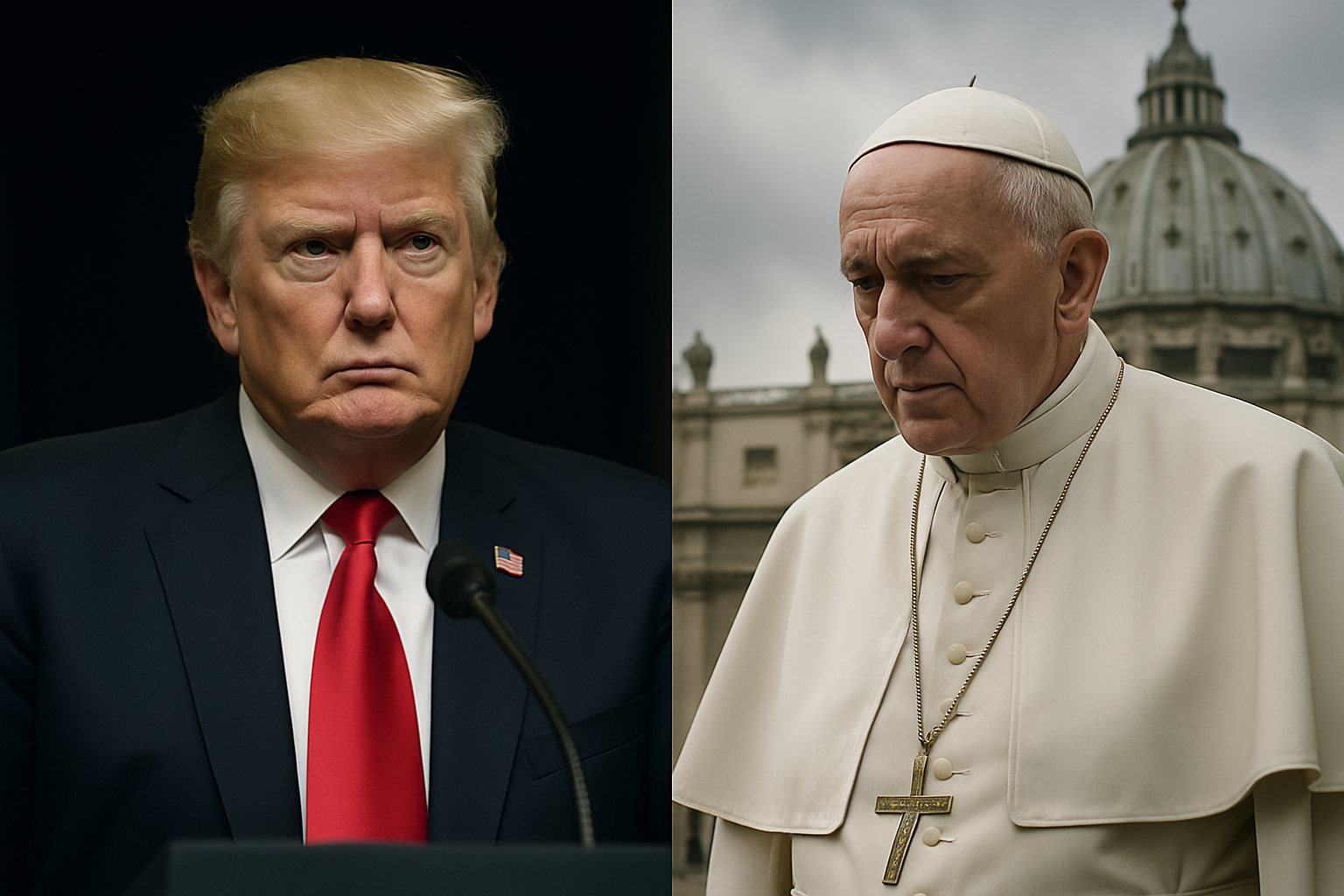
President Donald Trump launched an extraordinary and unprecedented attack on Pope Leo XIV on Sunday night, calling the first American pontiff "weak on crime" and "terrible for foreign policy" in response to the Pope's sharp criticism of the ongoing Iran war.
The unprecedented confrontation between the American president and the American-born Pope represents the most serious diplomatic clash between the White House and Vatican in modern history, occurring at the height of the most dangerous international crisis since the Cold War.
Speaking to reporters at Joint Base Andrews, Trump declared he was "not a big fan of Pope Leo," escalating to social media with even harsher language: "Pope Leo is WEAK on Crime, and terrible for Foreign Policy. I don't want a Pope who thinks it's OK for Iran to have a Nuclear Weapon."
Pope's Iran War Condemnation
The clash erupted after Pope Leo XIV delivered his strongest condemnation yet of the Iran conflict during Saturday's Mass at St. Peter's Basilica, telling worshippers: "Enough of the idolatry of self and money! Enough of the display of power! Enough of war!" The 70-year-old pontiff has emerged as an increasingly vocal critic of Trump's foreign policy, particularly regarding the Middle East crisis.
During his Palm Sunday address in March, the Pope declared that God rejects prayers from leaders with "hands full of blood," marking a dramatic escalation in his criticism of military action. His Easter vigil condemned the "delusion of omnipotence" that he said was fueling the US-Israeli war in Iran.
Unprecedented Presidential Attack
Trump's response represents the most direct attack by an American president on a Pope in modern history. "I'm not a big fan of Pope Leo. He's a very liberal person, and he's a man who doesn't believe in stopping crime," Trump told reporters, accusing the pontiff of "toying with a country that wants a nuclear weapon."
In a subsequent Truth Social post, Trump demanded the Pope "stop catering to the Radical Left" and criticized what he called the Vatican's interference in American foreign policy. The president's language marked a dramatic reversal from his initial enthusiasm when Cardinal William Levada became the first American Pope in 2025.
"I don't want a Pope who thinks it's OK for Iran to have a Nuclear Weapon. Pope Leo is WEAK on Crime, and terrible for Foreign Policy."
— Donald Trump, President of the United States
Global Context of Crisis
The confrontation occurs amid the most severe international crisis since the Cold War, with Operation Epic Fury having cost $11.3 billion in its first week alone. Over 18,000 flights have been cancelled worldwide, oil prices have surged past $100 per barrel, and the Strait of Hormuz remains closed, affecting 40% of global oil transit.
The conflict has already claimed European territory for the first time since World War II, with Iranian drones striking RAF Akrotiri in Cyprus. Congressional opposition to the war has reached historic levels, with only 25% American support for the military action.
Vatican's Moral Authority
Vatican sources indicate Pope Leo XIV has deliberately chosen "moral authority over diplomatic comfort," marking a fundamental shift in papal diplomacy. The American Pope's direct approach contrasts sharply with traditional Vatican diplomatic protocols, positioning the Holy See as an uncompromising voice for peace.
The confrontation has drawn support from Democratic leaders, with Senate Democratic leader Chuck Schumer calling Trump's attack on the Pope "deeply disturbing." Catholic bishops across the United States expressed dismay at the president's language toward the head of their church.
Monsignor Coakley stated he was "heartbroken by such denigratory words" against the pontiff, while Jesuit priest James Martin described the attack as "anti-Christian."
International Reactions
European leaders have referenced the Pope's peace appeals in their own diplomatic statements, with Italian President Sergio Mattarella emphasizing the importance of "peaceful coexistence." The Vatican's moral platform appears to be influencing international affairs through spiritual and diplomatic channels.
Eight Arab nations have issued a joint condemnation supporting the Vatican's position on religious freedom violations during the conflict, creating unprecedented diplomatic consensus that transcends traditional regional divisions.
Historical Significance
This represents the first time an American president has directly confronted the first American Pope, creating a unique dynamic in both American politics and Vatican diplomacy. The confrontation occurs as Pope Leo XIV prepares for his historic Africa tour from April 13-23, including the first papal visit to Algeria in Catholic history.
Catholic community reactions have been mixed, with many American Catholics who previously supported Trump expressing discomfort at his attack on their spiritual leader. The situation creates complex dynamics for the estimated 52 million Catholic voters in the United States.
Stakes Beyond Current Crisis
Vatican experts describe this as a "fundamental challenge to Church moral authority in international affairs." The Pope's willingness to directly confront American power represents a defining moment for Vatican diplomacy in the 21st century, testing whether ancient spiritual traditions can provide contemporary guidance to a world seeking peace.
The confrontation extends beyond the immediate Iran crisis, establishing precedents for how religious authority interacts with political power in an increasingly multipolar world. Success in maintaining moral independence could strengthen the Vatican's global influence for decades.
Looking Forward
As the Iran crisis continues with Pakistan attempting mediation, the Trump-Pope confrontation adds another layer of complexity to international diplomacy. The president's explicit rejection of papal peace appeals signals a hardening of American positions despite growing international isolation.
The first American Pope's confrontation with an American president represents a watershed moment that will define both Vatican diplomacy and American foreign policy credibility for years to come. With global stakes at their highest since the Cold War, the world watches as moral authority challenges political power in an unprecedented test of leadership in crisis.