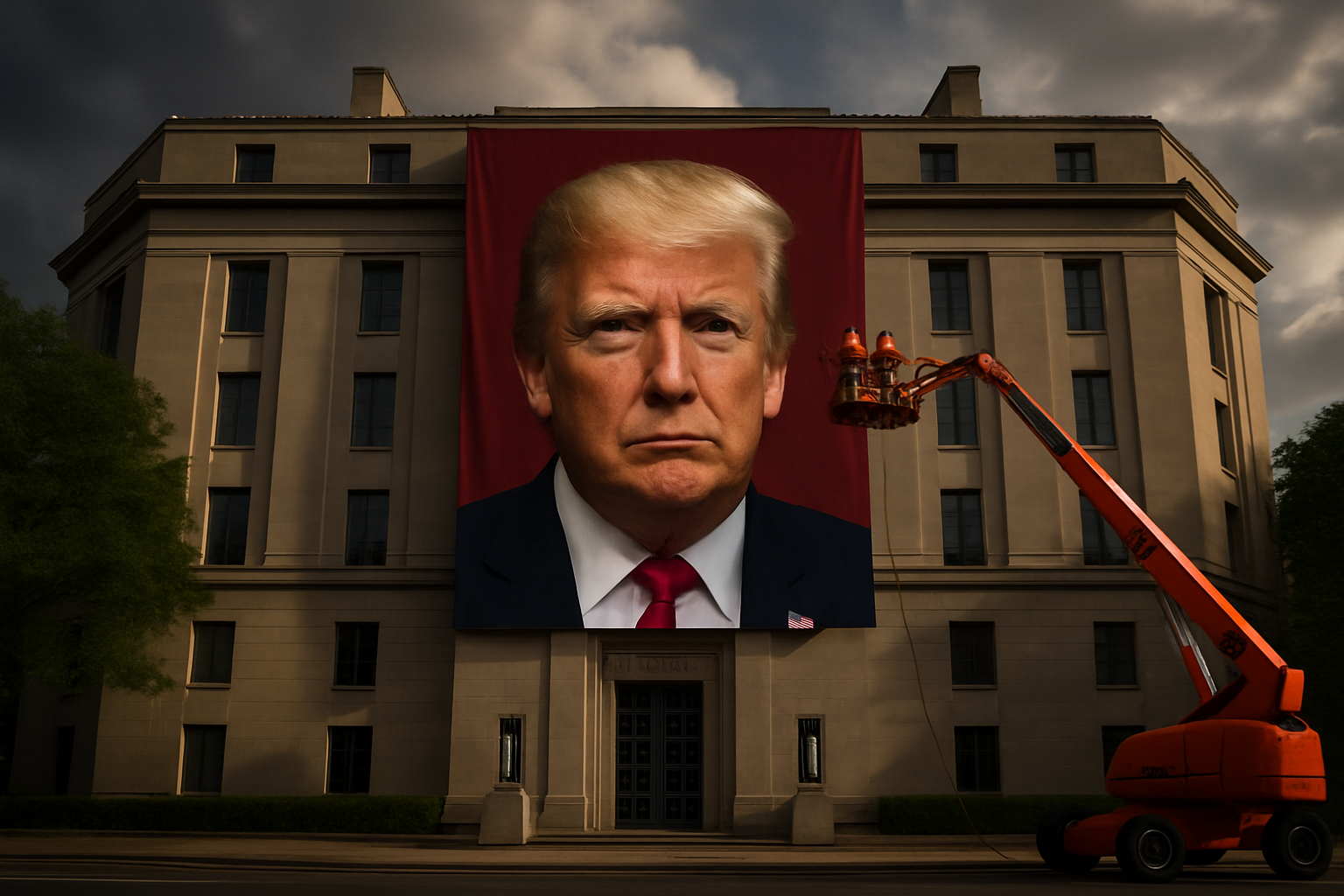
A large banner featuring President Donald Trump's face was hung on the exterior of the U.S. Justice Department headquarters building in Washington, D.C., on Thursday, February 19, 2026, in what observers describe as an unprecedented display of presidential authority over the law enforcement agency.
Workers on an aerial lift were photographed installing the banner on the facade of the Justice Department building, marking what appears to be the first time in the agency's history that a sitting president's image has been prominently displayed on its headquarters. The installation occurred amid ongoing tensions between the Trump administration and the department over various legal matters.
Symbolic Display of Power
The banner installation represents what legal analysts describe as a highly unusual visual assertion of executive power over the Justice Department, an agency that traditionally maintains independence from direct political influence. The timing of the display coincides with several high-profile legal proceedings and investigations involving the administration.
The image selection and placement on the building's exterior facade ensures maximum visibility for both government personnel and the public, sending a clear message about the president's relationship with the department. The professional installation suggests this was an officially sanctioned display rather than an unauthorized action.
Historical Context and Precedent
Federal buildings typically display official government symbols, seals, and flags rather than individual portraits of sitting officials. The Justice Department headquarters has historically maintained a neutral appearance, reflecting the agency's role as an independent law enforcement body within the executive branch.
Constitutional scholars note that while the president serves as the chief executive with authority over federal agencies, such overt displays of personal imagery on law enforcement buildings are unprecedented in modern American governance. The move raises questions about the balance between executive authority and institutional independence.
"This represents a significant departure from traditional norms governing the relationship between the presidency and federal law enforcement agencies."
— Constitutional Law Expert
Agency Operations Continue
Despite the symbolic display, Justice Department operations reportedly continue as normal, with staff members conducting their regular duties. The banner's presence has not disrupted day-to-day activities within the building, though it has generated considerable discussion among personnel and visitors.
The installation appears to be part of broader efforts by the Trump administration to assert greater control over federal agencies, particularly those involved in law enforcement and regulatory functions. This visual demonstration adds another dimension to ongoing discussions about executive power and agency independence.
Public and Political Reactions
The banner display has generated mixed reactions across the political spectrum, with supporters viewing it as an appropriate assertion of executive authority, while critics express concern about the blurring of lines between political leadership and law enforcement independence.
Government ethics experts are examining whether the display raises any regulatory or ethical issues regarding the use of federal property for what could be perceived as political purposes. The banner's content, size, and duration of display are all factors being considered in these assessments.
International Attention
The unusual display has also attracted international media coverage, with foreign observers noting the departure from typical American governmental traditions. The image has been widely circulated in international news outlets, contributing to global discussions about American political culture and institutional norms.
Diplomatic analysts suggest that such visible demonstrations of executive power may influence international perceptions of American governance structures and the independence of U.S. law enforcement agencies.
Looking Forward
The duration of the banner's display remains unclear, as does whether similar installations are planned for other federal buildings. The Justice Department has not issued any official statements regarding the banner or its significance.
This development adds to ongoing conversations about the relationship between political leadership and federal agencies, particularly in an era of heightened political polarization. The visual nature of this display ensures it will remain a topic of discussion as long as it remains visible on the building.
As this story continues to develop, observers from across the political and legal spectrum will be watching for any additional changes to federal building displays or policies governing such installations. The precedent set by this banner may influence future decisions about the visual representation of executive power in federal buildings.