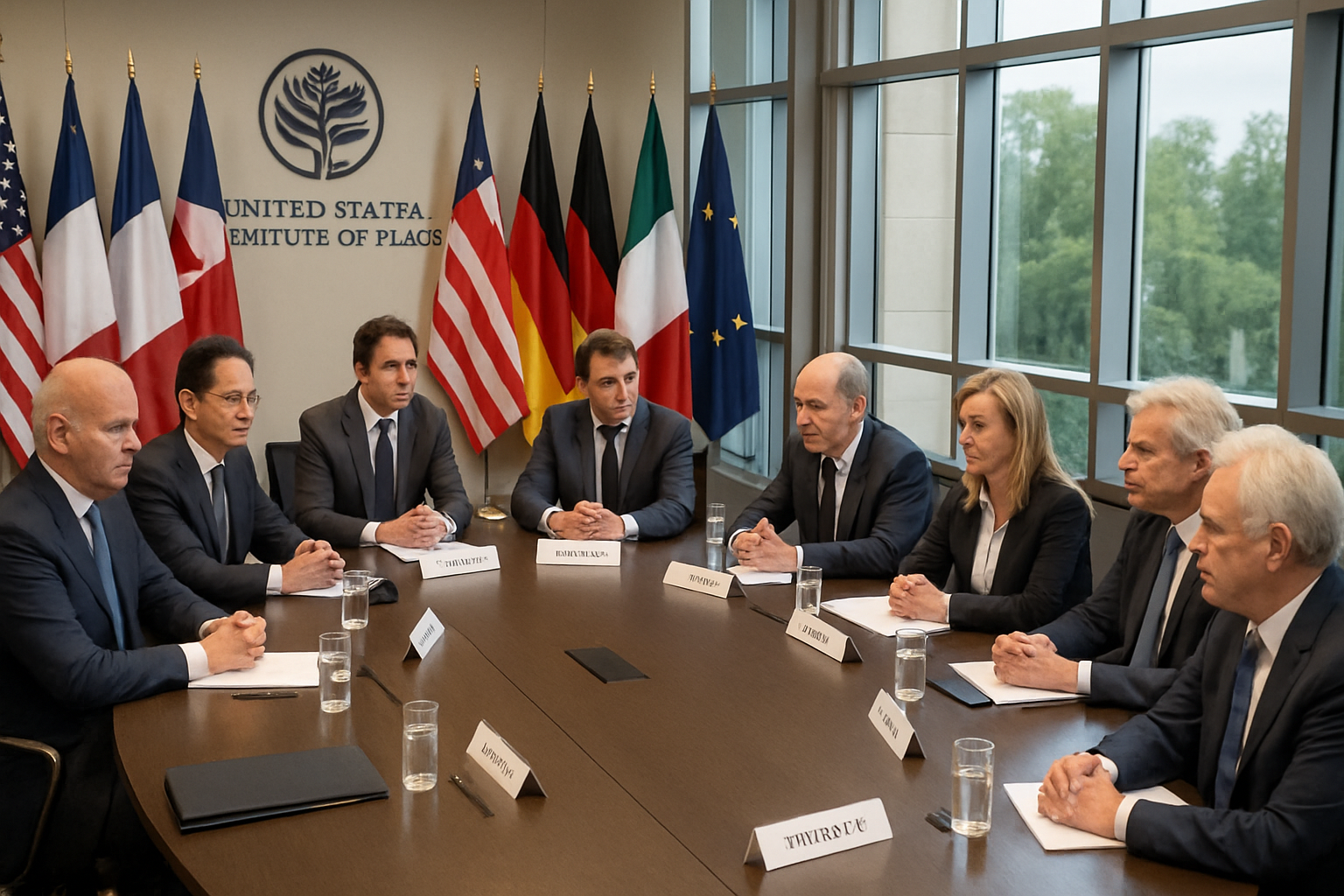
The White House is planning the first leaders' meeting for President Donald Trump's "Board of Peace" on February 19 at the U.S. Institute of Peace in Washington, marking the formal launch of an ambitious international initiative aimed at Gaza reconstruction and global conflict resolution.
The summit, which will also serve as a major fundraising conference for Gaza reconstruction, represents the transformation of Trump's conceptual "Peace Council" into what the White House now calls an "active international organization" with 27 member nations already committed to participation.
International Coalition Takes Shape
Hungarian Prime Minister Viktor Orban confirmed Saturday that he will attend the inaugural meeting, stating he had received a direct invitation from Trump to participate in the Washington gathering. The announcement comes as the administration finalizes invitation lists for what sources describe as the most significant multilateral peace initiative launched by a U.S. president in decades.
The Board of Peace, which Trump first announced in late January during the World Economic Forum in Davos, has rapidly evolved from a theoretical proposal into a concrete diplomatic framework. Trump signed the Council's charter at Davos, declaring that "The Council will do a great job in Gaza" and establishing the foundation for this week's summit.
"The Council will do a great job in Gaza. We're moving from the language of diplomacy to the business of peace."
— President Donald Trump, World Economic Forum Davos
$1 Billion Gaza Reconstruction Focus
The February 19 meeting will center on mobilizing international funding for Gaza's massive reconstruction needs, with sources indicating the administration is targeting over $1 billion in initial commitments. The initiative comes as Gaza faces a humanitarian crisis of unprecedented scale, with infrastructure devastated and over 2.3 million residents in need of basic services.
The timing is strategically significant, as the meeting is scheduled one day after Israeli Prime Minister Benjamin Netanyahu's planned meeting with Trump at the White House on February 18. This sequencing suggests careful coordination between the bilateral Israeli-U.S. discussions and the broader multilateral peace efforts.
Recent developments in Gaza have added urgency to the reconstruction efforts. The Rafah crossing with Egypt reopened on February 2 after nearly two years of closure, but operations remain severely limited. Only 27 Palestinians crossed on the opening day versus the planned 200 daily quota, with continued restrictions hampering humanitarian access for the territory's residents.
Revolutionary Diplomatic Approach
The Board of Peace represents a departure from traditional diplomatic frameworks, adopting what Trump administration officials describe as a "business approach" to international conflict resolution. Unlike conventional UN or regional organization structures, the Board operates as a chair-led initiative with Trump maintaining direct executive authority over proceedings.
The Washington venue at the U.S. Institute of Peace, recently rebranded as the Donald Trump Institute of Peace, symbolizes this new approach to international mediation. The facility provides a neutral ground for what administration officials hope will become a regular forum for addressing global conflicts beyond the Gaza crisis.
The initiative builds on recent diplomatic successes, including the ongoing Ukraine-Russia-U.S. trilateral peace talks that achieved a historic prisoner exchange in Abu Dhabi on February 5. That breakthrough, involving 314 prisoners of war, demonstrated the potential for sustained diplomatic engagement to produce concrete humanitarian results even amid active military operations.
Global Conflict Resolution Framework
While Gaza reconstruction serves as the immediate focus, the Board of Peace is designed as a broader mechanism for addressing international conflicts. The 27 member nations represent diverse regions and political systems, providing what Trump envisions as a more agile alternative to existing multilateral institutions.
The initiative reflects Trump's belief that traditional diplomatic channels have proven insufficient for resolving modern conflicts. By establishing a leader-driven format with direct presidential involvement, the administration aims to cut through bureaucratic obstacles that often stymie international peace efforts.
European responses have been mixed, with some allies expressing support for innovative approaches to conflict resolution while others voice concerns about undermining established international frameworks. The initiative comes at a time of significant global tension, with conflicts in Ukraine, the Middle East, and other regions testing traditional diplomatic mechanisms.
Implementation Challenges and Opportunities
The success of the February 19 summit will depend largely on the administration's ability to secure meaningful financial commitments from participating nations. Gaza's reconstruction needs are estimated in the tens of billions of dollars, requiring sustained international cooperation beyond initial fundraising efforts.
The timing also presents both opportunities and challenges. Recent diplomatic momentum from the Ukraine peace talks and improved regional coordination on Gaza ceasefire monitoring create a favorable environment for international cooperation. However, ongoing military tensions and political divisions among potential participants could complicate consensus-building efforts.
Intelligence sources suggest that behind-the-scenes negotiations have already begun on specific reconstruction projects, including infrastructure rebuilding, healthcare system restoration, and economic development initiatives. The administration is reportedly coordinating with regional partners to ensure reconstruction efforts complement broader Middle East stability objectives.
Long-term Strategic Implications
The Board of Peace initiative represents more than an immediate response to the Gaza crisis. It signals Trump's intention to establish new paradigms for international conflict resolution that could outlast his current term and provide frameworks for addressing future global challenges.
The February 19 summit will test whether this innovative approach can mobilize international resources effectively while maintaining the political unity necessary for sustained peace-building efforts. Success could establish a new model for international cooperation, while failure might reinforce skepticism about alternatives to traditional diplomatic channels.
The meeting occurs against the backdrop of broader diplomatic initiatives, including ongoing Iran-U.S. nuclear negotiations and the expiration of the New START treaty between the United States and Russia. These parallel developments underscore the complexity of the current international security environment and the potential significance of new diplomatic mechanisms.
As the February 19 date approaches, the international community will be watching to see whether Trump's "business of peace" can deliver tangible results for Gaza's reconstruction while establishing credible frameworks for addressing the numerous conflicts that continue to threaten global stability.