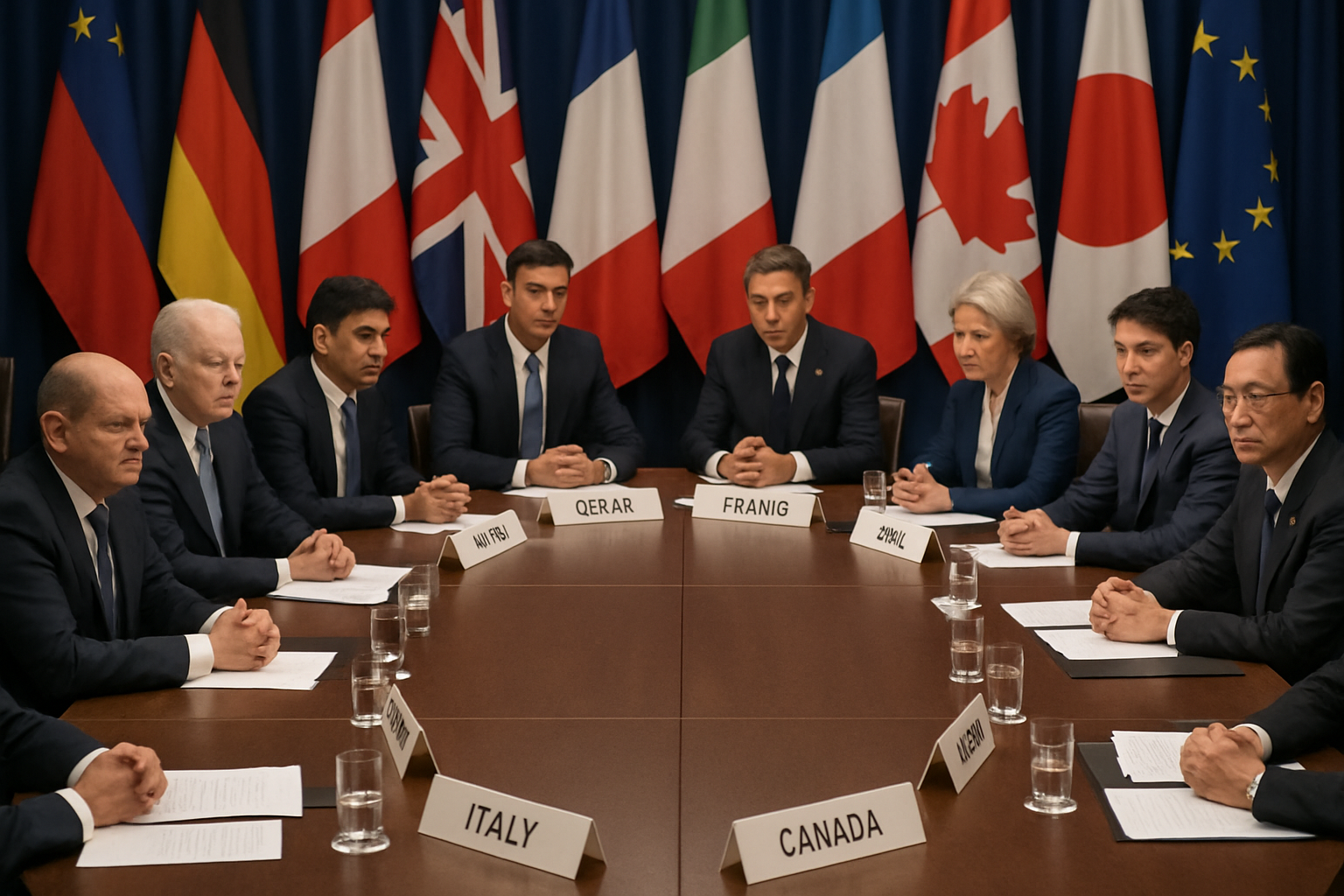
President Donald Trump's inaugural Board of Peace meeting concluded with an unprecedented $7 billion commitment from member nations for Gaza reconstruction, marking the largest international financial pledge in Gaza's history, though implementation faces severe obstacles from systematic ceasefire violations and Hamas's categorical rejection of disarmament.
The historic February 19, 2026 summit at the Donald Trump Institute of Peace in Washington brought together representatives from 27 member nations in what Trump described as a "business approach" to conflict resolution, departing from traditional UN frameworks with direct presidential executive authority.
Historic Financial Commitment Secured
The $7 billion pledge represents a milestone in international Gaza assistance, with Trump announcing that FIFA alone will contribute $75 million for football-related reconstruction projects, including 50 mini-football fields and five larger facilities. According to sources from multiple attending nations, the fund will support both humanitarian aid and long-term reconstruction efforts for Gaza's 2.3 million residents.
"This is the largest commitment we've ever seen for Gaza reconstruction," confirmed a senior diplomatic source familiar with the proceedings. The pledge comes alongside commitments for thousands of International Stabilization Force personnel from five nations, including Morocco, which agreed to contribute troops to the international force.
High-Profile Attendance and Notable Absences
Key attendees included Hungarian Prime Minister Viktor Orbán, Vietnamese Communist Party General Secretary To Lam, and Pakistan Prime Minister Shehbaz Sharif. Albania's Prime Minister Edi Rama notably used his speaking time to raise concerns about Kosovo Liberation Army leaders facing war crimes trials, creating an unexpected diplomatic sidebar.
However, significant absences highlighted international divisions over Trump's parallel diplomatic approach. The Vatican declined participation through Cardinal Pietro Parolin, who emphasized that "the UN should manage crisis situations." Major European powers Germany, France, and the UK were notably absent, creating what sources described as a diplomatic rift within the EU.
The European Union itself faced internal controversy when Commissioner Dubravka Šuica attended without proper authorization from member states, prompting emergency Brussels meetings and public criticism from French Foreign Minister Jean-Noël Barrot.
Severe Implementation Obstacles
Despite the historic financial commitment, the initiative faces formidable challenges on the ground. Gaza Government Media Office has documented over 1,600 systematic ceasefire violations since the October 2025 truce, resulting in 573+ Palestinian deaths during what was supposed to be a peace period.
The Rafah crossing, crucial for reconstruction supplies and humanitarian aid, operates under severe restrictions with only 27 Palestinians crossing daily versus the agreed quota of 200. Hamas has condemned what it calls "systematic harassment" by Israeli security forces, with 20,000 Palestinians still awaiting medical evacuation.
"Where is the ceasefire?" questioned Dr. Mohamed Abu Selmiya, Director of Al-Shifa Hospital, highlighting the disconnect between international peace efforts and ground realities.
— Dr. Mohamed Abu Selmiya, Al-Shifa Hospital Director
Hamas Rejects Disarmament Requirements
Perhaps the most significant obstacle to implementation comes from Hamas's categorical rejection of disarmament demands. In a February 8 statement in Doha, Hamas leader Khaled Meshaal declared that armed resistance would continue "while occupation exists," describing it as a "fundamental right under international law."
Israeli sources estimate that Hamas maintains approximately 20,000 fighters, challenging traditional post-conflict reconstruction models that typically require demilitarization before international aid deployment. This fundamental disagreement threatens the viability of the entire reconstruction framework.
Parallel West Bank Crisis Complicates Efforts
The Board of Peace initiative unfolds against the backdrop of Israel's most comprehensive West Bank land registration since 1967. Israeli Finance Minister Bezalel Smotrich has openly stated that these policies will "continue to kill the idea of a Palestinian state," while Energy Minister Eli Cohen acknowledged implementing "factual sovereignty."
This parallel crisis has prompted condemnation from 85 UN member states and an unprecedented joint statement from eight Arab nations, including Saudi Arabia, Jordan, Egypt, UAE, Qatar, Indonesia, Pakistan, and Turkey. The coordination represents unusual diplomatic consensus across traditional regional divisions.
International Institutional Concerns
European officials privately expressed concerns about the Board of Peace potentially undermining established UN frameworks. Lithuania raised "fundamental questions" about the initiative, while Albania defended its participation citing a "special relationship with the US."
The approach represents what Trump characterizes as "business diplomacy" – a departure from traditional multilateral frameworks in favor of leader-driven direct engagement. Success could provide a template for 21st-century conflict resolution, while failure might undermine confidence in alternative diplomatic approaches.
Humanitarian Crisis Deepens
While international pledges mount, Gaza's humanitarian situation continues deteriorating. The Gaza Civil Defense has completely shut down due to fuel shortages, hampering emergency response capabilities. A recent Lancet study revealed that Gaza's actual death toll has been systematically undercounted by approximately 35%, with casualties potentially exceeding 75,000 people.
The timing coincides with Ramadan observance, with Israeli authorities limiting Al-Aqsa Mosque access to 10,000 worshippers and banning iftar meal distribution in mosque courtyards, adding religious and cultural dimensions to the humanitarian crisis.
Strategic Implications for Global Diplomacy
The Board of Peace initiative occurs within a broader context of diplomatic innovation, coinciding with Iran nuclear talks, Ukraine-Russia negotiations, and the expiration of the New START treaty – the first time in over 50 years without US-Russia nuclear constraints.
Stakes extend beyond Gaza to fundamental questions about international cooperation in a multipolar world. The initiative tests whether economic incentives and leader-driven diplomacy can overcome deep-rooted political and security challenges that have stymied traditional institutional approaches.
Looking Forward: Implementation Challenges
As the $7 billion commitment moves toward implementation, several critical factors will determine success. The systematic ceasefire violations must be addressed, humanitarian access through crossings like Rafah must be guaranteed, and some accommodation must be reached regarding security arrangements that satisfy both international requirements and Palestinian political realities.
The involvement of international stabilization forces from multiple countries, combined with police training support from Egypt and Jordan, represents an innovative approach to post-conflict security arrangements. However, success depends on creating stable conditions that currently do not exist.
With over 400 EU diplomats demanding increased pressure on Israeli authorities and European coalition petitions exceeding 400,000 signatures, international attention remains focused on whether this unprecedented financial commitment can translate into meaningful progress for Gaza's beleaguered population.
The coming weeks will prove decisive in determining whether Trump's "business approach" to Middle East peace can succeed where traditional diplomatic frameworks have struggled, or whether the fundamental obstacles that have perpetuated this conflict for decades will once again prove insurmountable despite historic international financial commitment.