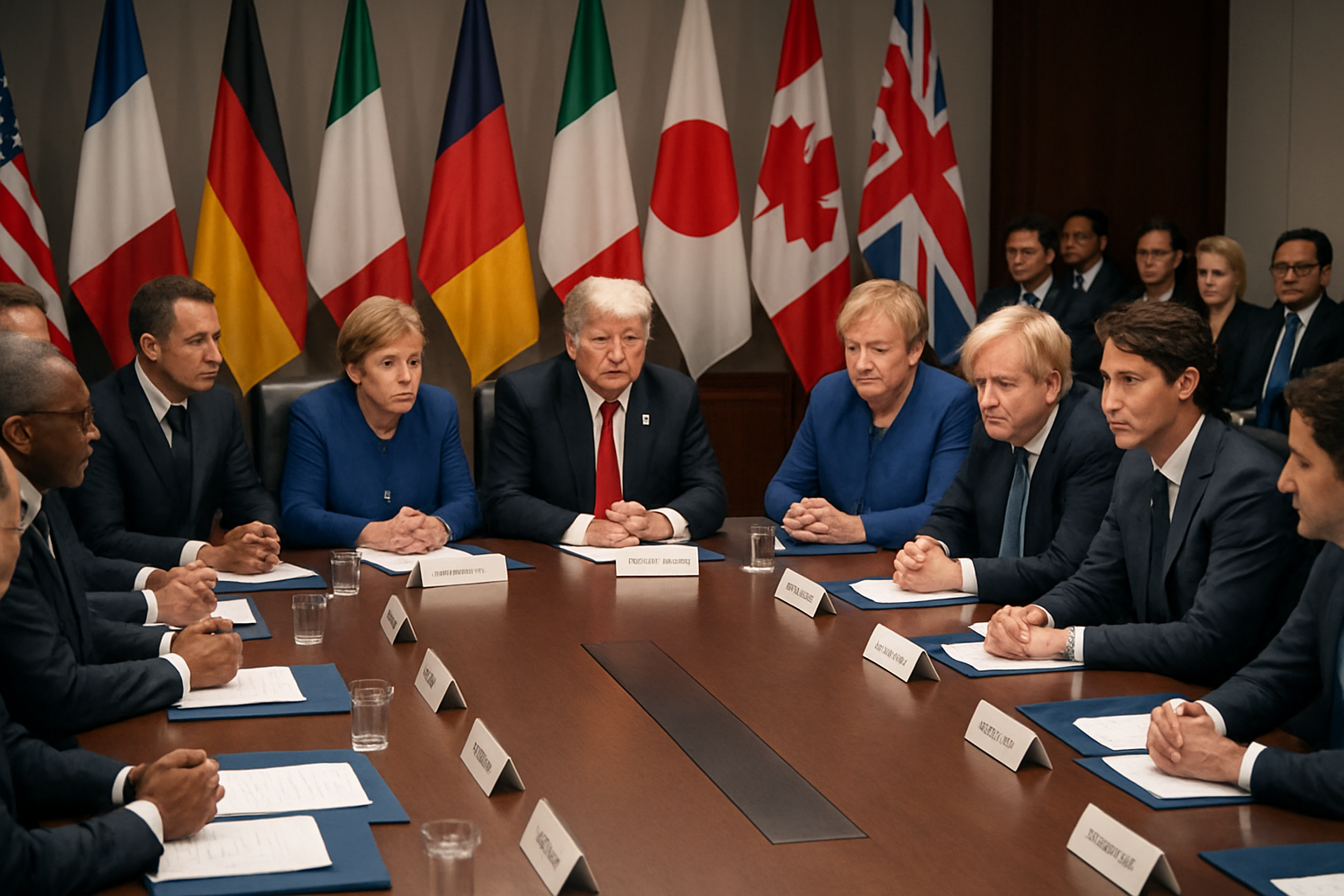
President Donald Trump is set to host the inaugural meeting of his Board of Peace initiative on February 19, 2026, at the newly renamed Donald Trump Institute of Peace in Washington, with member states pledging over $5 billion for Gaza reconstruction and humanitarian efforts alongside thousands of personnel for an international stabilization force.
White House Press Secretary Karoline Leavitt confirmed on Wednesday that more than 20 countries would participate in the groundbreaking summit, representing Trump's "business approach" to conflict resolution that deliberately departs from traditional UN frameworks. The President will chair the opening session before departing for a visit to Georgia.
Unprecedented Financial Commitments and International Participation
The Board of Peace initiative, which Trump signed into existence during his January 23 visit to Davos, Switzerland, has secured commitments from 27 member nations. Hungarian Prime Minister Viktor Orbán's attendance has been confirmed, while several European nations will participate as observers, including Italy's Prime Minister Giorgia Meloni, Cyprus President Nikos Christodoulides, and Romania's President Nicușor Dan.
According to multiple diplomatic sources, the financial pledges exceed $5 billion specifically earmarked for Gaza reconstruction efforts, representing one of the largest international reconstruction commitments in recent history. Beyond monetary contributions, member states have also committed to providing thousands of personnel for what officials describe as an "International Stabilization Force" for Gaza deployment.
"This represents a dramatically different approach to peace-building than we've seen in decades. The business model applied to conflict resolution could provide a template for international engagement moving forward."
— Senior European Diplomatic Source
Notable Absences and Diplomatic Tensions
The initiative faces significant diplomatic challenges, with several key players declining participation. Cardinal Pietro Parolin announced that the Vatican would not participate, citing "critical issues" and emphasizing that "the UN should manage crisis situations." Mexico's President Claudia Sheinbaum also declined, citing her country's Palestine recognition policy.
The timing of the summit has created additional complications, with the UN Security Council moving its Gaza discussion to avoid scheduling conflicts with Trump's Board of Peace meeting. Palestinian envoys have called for countries to halt what they characterize as Israel's extension of control over the West Bank, adding another layer of complexity to the proceedings.
Gaza Crisis Threatens Initiative's Success
The Board of Peace faces substantial obstacles from ongoing developments in Gaza. According to documented reports from multiple sources, over 1,600 systematic ceasefire violations have occurred since the October 2025 truce agreement, resulting in more than 573 Palestinian deaths during what was supposed to be a peace period.
The Rafah crossing, crucial for Palestinian movement and humanitarian aid, operates under severe restrictions with only 27 Palestinians crossing on reopening day versus the planned quota of 200. Hamas has condemned what it calls "systematic harassment" by Israeli security forces, while approximately 20,000 Palestinians await medical evacuation.
Adding to the challenges, Hamas leader Khaled Meshaal delivered a categorical rejection of disarmament demands during a February 8 conference in Doha, declaring that armed resistance remains justified "while occupation exists" and that "criminalizing resistance" is unacceptable. Israeli intelligence estimates suggest Hamas maintains approximately 20,000 fighters despite the ceasefire.
International Response and Regional Dynamics
Eight Arab nations—Saudi Arabia, Jordan, Egypt, UAE, Qatar, Indonesia, Pakistan, and Turkey—have previously condemned ceasefire violations, representing an unprecedented diplomatic consensus across traditional regional divisions. Over 400 EU diplomats have called for increased pressure on Israeli authorities, while a European Left Coalition petition against EU-Israel partnerships has exceeded 400,000 signatures.
Germany has indicated it will send a senior official as an observer rather than Foreign Minister Johann Wadephul, reflecting the cautious European approach to Trump's initiative. Pakistan's participation is confirmed with Prime Minister Shehbaz Sharif attending alongside Deputy Prime Minister Ishaq Dar, though Defence Minister Khawaja Asif emphasized that recognition of Israel by Pakistan is "not on the cards at all."
"We maintain our unwavering support for the Palestinian cause. Our participation in peace initiatives does not alter our fundamental positions on justice and international law."
— Pakistani Defence Minister Khawaja Asif
Strategic Context and Broader Implications
The Board of Peace summit occurs amid a complex international landscape. Trump's initiative runs parallel to ongoing Iran-US nuclear negotiations, Ukraine-Russia peace talks, and the recent expiration of the New START treaty—marking the first time in over 50 years that the United States and Russia operate without nuclear arms control constraints.
The initiative represents a significant departure from multilateral frameworks that have traditionally governed international conflict resolution. Trump's approach emphasizes executive authority and direct leader-to-leader engagement, which supporters argue can mobilize resources more effectively than institutional processes.
European officials have privately expressed concerns about undermining established international institutions, while Middle Eastern partners have shown cautious support for diplomatic innovation. The success or failure of the Board of Peace could influence how international conflicts are addressed throughout the remainder of Trump's presidency and beyond.
Implementation Challenges and Future Prospects
The Board of Peace faces several critical implementation challenges beyond the immediate Gaza crisis. Traditional post-conflict reconstruction models typically require stable security environments and the disarmament of combatant groups—conditions currently absent in Gaza. The ongoing ceasefire violations and Hamas's explicit rejection of disarmament create fundamental obstacles to conventional peace-building approaches.
Gaza's Civil Defense services have completely shut down due to fuel shortages, hampering emergency response capabilities during a humanitarian crisis affecting 2.3 million residents. The systematic nature of documented violations—described by international observers as "implementation failures" rather than isolated incidents—suggests that current enforcement mechanisms are insufficient for ensuring compliance with peace agreements.
The initiative's "business approach" to diplomacy will face its first major test in addressing these deep-rooted political and security challenges through economic incentives and direct engagement. Success could provide a template for 21st-century conflict resolution, while failure might undermine confidence in alternative approaches to traditional multilateral diplomacy.
Looking Ahead to February 19
As the inaugural Board of Peace summit approaches, the stakes extend far beyond the immediate Gaza reconstruction effort. The meeting will serve as a critical test of whether innovative, leader-driven diplomatic formats can succeed where traditional international frameworks have struggled.
The $5+ billion in pledged commitments represents substantial international confidence in Trump's approach, but the success of the initiative will ultimately depend on its ability to address the underlying political and security challenges that have perpetuated the Israeli-Palestinian conflict for decades.
With representatives from 27 nations gathering in Washington, the world will be watching to see whether Trump's Board of Peace can deliver on its ambitious promises of reconstruction and stability, or whether the fundamental obstacles to Middle East peace will prove insurmountable even with unprecedented financial resources and political commitment.