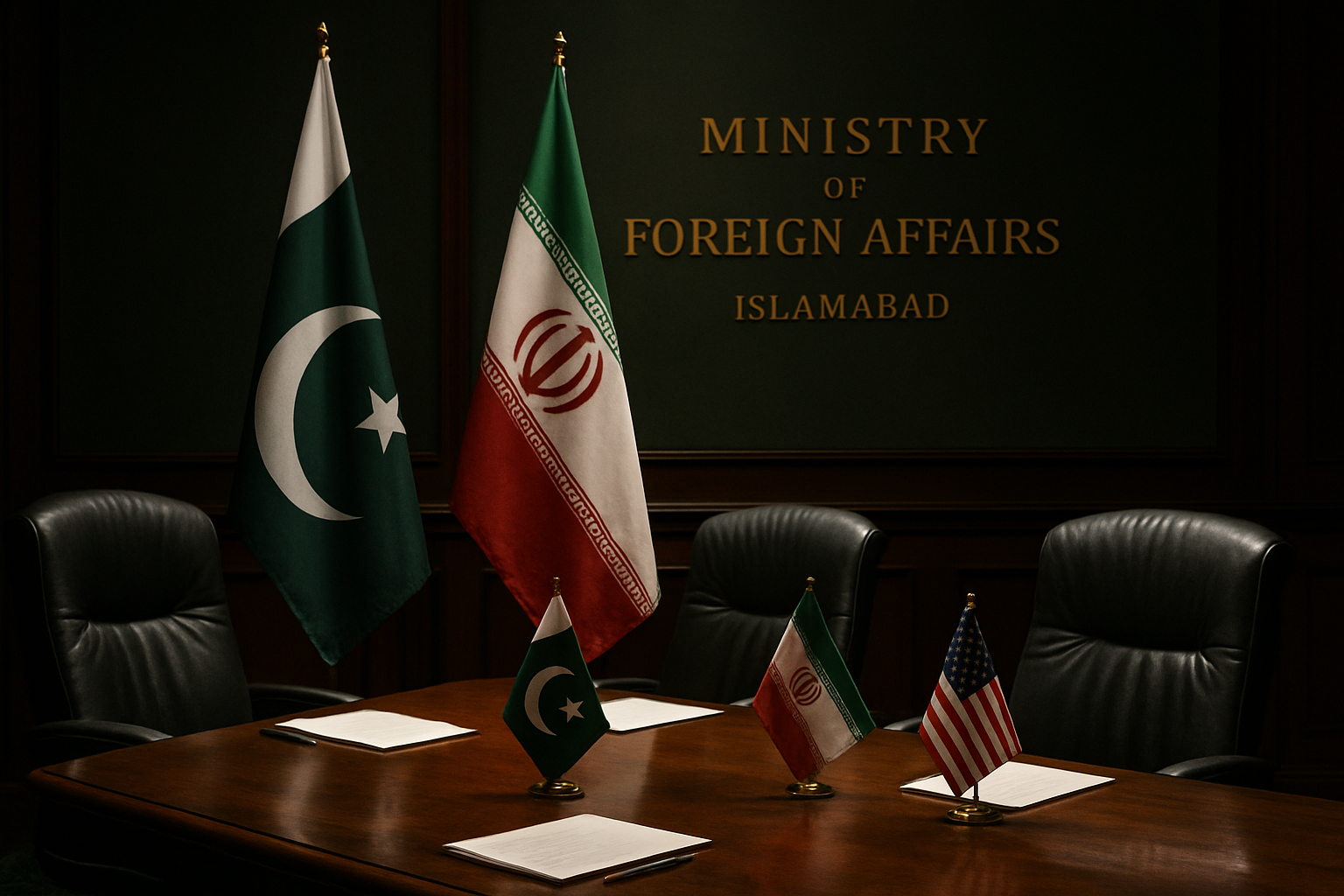
President Donald Trump has cancelled a planned trip by U.S. envoys Steve Witkoff and Jared Kushner to Pakistan for negotiations with Iran, dealing a significant blow to diplomatic efforts that had previously brought the world back from the brink of catastrophic conflict. Iranian Foreign Minister Abbas Araghchi departed Islamabad without holding direct talks with American representatives.
The cancellation marks a critical juncture in U.S.-Iran relations, coming just weeks after Pakistan's unprecedented mediation success achieved what officials called the "Islamabad Accord" - a framework that prevented global catastrophe when Trump's ultimatum brought the world within 88 minutes of what he termed "whole civilization" destruction in early April.
Last-Minute Diplomatic Breakdown
Trump announced the cancellation hours after reports indicated both sides were preparing for substantive discussions in Islamabad. The President stated that it was not worthwhile to send his delegation on an 18-hour journey, adding that Iranian officials could contact Washington "at any time."
Iranian sources suggest Araghchi had traveled to the Pakistani capital with expectations of meaningful engagement, but the abrupt U.S. withdrawal has left diplomatic channels severely strained. Pakistan's Prime Minister Shehbaz Sharif spoke with Iranian President Masoud Pezeshkian by phone, reaffirming Islamabad's commitment to serving as an "honest and sincere facilitator" in future negotiations.
"Iran offered them an improved proposal, but they offered many things, but not enough"
— Donald Trump, U.S. President
According to Trump, Iran submitted a "better proposal" minutes after he cancelled the envoys' trip, though he characterized it as insufficient. The President claimed Iran had offered substantial concessions but maintained they fell short of American demands.
Pakistan's Continued Mediation Efforts
Despite the setback, Pakistani officials have maintained their commitment to facilitating dialogue between the two adversaries. Prime Minister Sharif's conversation with President Pezeshkian underscored Pakistan's determination to continue its mediating role, which had previously achieved remarkable success.
Iranian media reports indicate that Foreign Minister Araghchi plans to return to Pakistan after completing his visit to Oman, suggesting that diplomatic channels remain open despite the current impasse. Pakistan's innovative "message relay system," developed by PM Sharif and Field Marshal Asim Munir, had proven crucial when direct U.S.-Iran communication was impossible.
Historical Context and Stakes
The diplomatic breakdown comes against the backdrop of one of the most dangerous international crises since the Cuban Missile Crisis. In early April, the world witnessed unprecedented tensions when Trump issued an ultimatum threatening massive retaliation if Iran did not comply with U.S. demands within a specific timeframe.
The crisis had global implications:
- Oil prices crashed 20% from $119.50 to $100 per barrel following the initial ceasefire
- Over 18,000 flights were cancelled during the peak tension period
- The Strait of Hormuz, carrying 40% of global oil transit, was effectively closed
- Major economies implemented emergency energy rationing measures
Nuclear Program Impasse
At the heart of the diplomatic crisis lies Iran's nuclear program. Iran continues enriching uranium at 60% purity - significantly above the 3.67% limit established in the 2015 nuclear deal and approaching the 90% threshold considered weapons-grade. Intelligence assessments indicate Iran possesses over 400 kilograms of enriched uranium, sufficient for multiple nuclear weapons if weaponized.
The fundamental scope disagreement that has plagued negotiations for over a decade remains unchanged. Iran maintains that its ballistic missile program and support for regional proxies are "red lines" that must be excluded from nuclear-only discussions. The United States, under Secretary of State Marco Rubio's guidance, insists that any comprehensive agreement must address missiles, armed groups, and human rights issues.

Regional Coalition Under Strain
The diplomatic setback threatens to undermine the unprecedented regional coalition that had supported the peace process. Saudi Arabia, the United Arab Emirates, Qatar, and Egypt had maintained extraordinary consensus in backing diplomatic solutions, even after suffering casualties during Iranian attacks in the April crisis.
During the height of tensions, Iranian forces conducted "Operation True Promise 4," which resulted in casualties across the region: one killed in the UAE, 32 injured at Kuwaiti airports, and eight wounded in Qatar while intercepting Iranian missiles. Despite these attacks, the regional powers maintained their support for diplomatic resolution.
Economic and Global Implications
The failure to advance negotiations threatens to reverse economic relief that began following April's ceasefire. The International Energy Agency had initiated the largest strategic petroleum reserve release in 50 years - 400 million barrels - to stabilize global markets during the crisis.
Key economic indicators at risk include:
- Oil market volatility, with prices already above $100 per barrel
- Shipping disruptions affecting global supply chains
- Aviation industry recovery from the April crisis
- Consumer relief measures in affected countries
Iran has implemented a cryptocurrency payment system charging $1 per barrel for oil tankers transiting the Strait of Hormuz, effectively circumventing international sanctions while maintaining leverage over global energy markets.
Trump's Assessment and Iranian Response
President Trump's characterization of Iran's latest proposal as "not enough" suggests significant gaps remain between the two sides' positions. Iranian officials, meanwhile, have questioned the "seriousness" of U.S. diplomatic efforts, pointing to continued military pressure and sanctions as evidence of American insincerity.
Iran's Foreign Ministry has emphasized that the Islamic Republic has yet to see concrete evidence that the United States is committed to genuine diplomatic engagement rather than seeking Iranian capitulation.
"We have yet to see if the U.S. is serious about diplomacy"
— Iranian Foreign Ministry Spokesman
Military Dimensions Continue
Despite diplomatic efforts, military tensions persist. The United States maintains an unprecedented naval presence in the Middle East with dual aircraft carriers - the USS Gerald R. Ford and USS Abraham Lincoln - representing approximately one-third of the active U.S. Navy fleet positioned 800 kilometers from Iran's coast.
Recent military incidents include the downing of Iranian Shahed-139 drones by U.S. F-35C fighters and continued harassment of commercial tankers in the Strait of Hormuz by Iran's Revolutionary Guard Corps naval forces.
International Concerns and Nuclear Governance
The diplomatic breakdown occurs amid a broader nuclear governance crisis. The New START treaty between the United States and Russia expired in February 2026, marking the first time in over 50 years without nuclear constraints between the superpowers. China's nuclear expansion and Iran's advancing program have created what UN Secretary-General António Guterres describes as nuclear risks at their "highest levels in decades."
Success in U.S.-Iran negotiations could provide a template for 21st-century nuclear crisis resolution, while failure may accelerate military solutions and encourage nuclear proliferation elsewhere, undermining diplomatic credibility for territorial and security disputes worldwide.
Looking Ahead: Diplomatic Pathways
Despite the immediate setback, diplomatic channels remain theoretically open. Iran's plan for Foreign Minister Araghchi to return to Pakistan after his Oman visit suggests continued interest in mediated negotiations. Pakistan's proven track record in facilitating communication when direct dialogue was impossible provides a foundation for future efforts.
The success or failure of renewed diplomatic initiatives will likely determine whether the April crisis represents a watershed moment in 21st-century international relations or merely a temporary pause before returning to the most dangerous global confrontation since the Cold War's end.
Key factors that will influence future negotiations include:
- Iran's willingness to consider nuclear program modifications
- U.S. flexibility on the scope of discussions
- Regional powers' continued support for diplomatic solutions
- Pakistan's capacity to maintain its mediating role
- International pressure for peaceful resolution
Conclusion: Critical Diplomatic Moment
The cancellation of the U.S. envoys' Pakistan trip represents more than a diplomatic scheduling change - it symbolizes the fragility of international efforts to prevent potentially catastrophic conflict through negotiated solutions. With nuclear risks at historic levels and regional stability hanging in the balance, the international community faces a defining test of multilateral cooperation.
The stakes extend far beyond U.S.-Iran relations, encompassing global energy security, nuclear governance credibility, and the precedent for resolving international disputes in an increasingly multipolar world. Whether diplomatic innovation can ultimately bridge decades-old challenges or whether military confrontation becomes inevitable will likely determine the trajectory of international relations for years to come.
As the world watches these developments unfold, the template-setting significance of this moment cannot be overstated. The choice between diplomatic solutions and military escalation will influence not only the immediate crisis but also establish precedents for how the international community addresses existential threats in the 21st century.