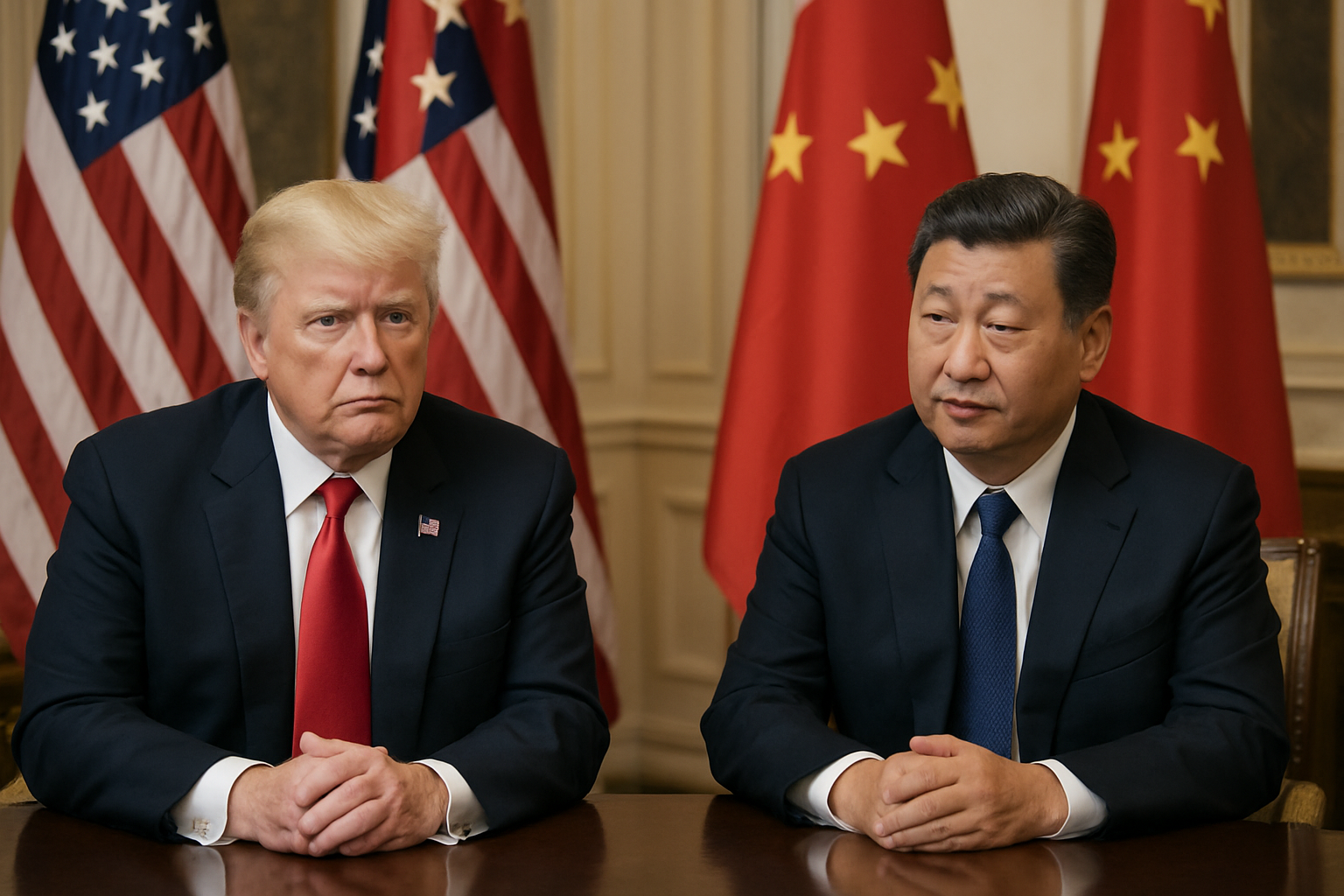
President Donald Trump will make his first official visit to China during his second term from March 31 to April 2, traveling to Beijing for crucial talks with Chinese President Xi Jinping amid dramatically shifted circumstances following the Supreme Court's historic ruling striking down his global tariff authority.
The three-day summit, confirmed by White House officials Friday, comes as the highest U.S. court dealt Trump a stinging constitutional defeat by overturning many of the sweeping tariffs he has wielded in his global trade war, including key measures against China. The 6-3 Supreme Court decision, authored by Chief Justice John Roberts, declared that the 1977 International Emergency Economic Powers Act "does not authorize the president to impose tariffs" without clear congressional authorization.
Supreme Court Ruling Transforms Trade Leverage
The Court's application of the "major questions doctrine" fundamentally alters the dynamics heading into the Beijing summit. Trump had previously imposed 34% tariffs on Chinese goods as part of his "maximum pressure" campaign, but the constitutional ruling removes this key leverage tool just weeks before he sits down with Xi Jinping.
"This ruling changes everything," said a senior administration official who requested anonymity. "We're going into Beijing without the same economic weapons we had before, but the president believes this creates space for more conventional diplomatic solutions."
Trump responded defiantly to the Court decision, calling it "incorrect, terrible, deeply disappointing" and immediately announcing a new 10% global tariff using alternative legal authorities. However, this replacement measure faces its own legal challenges and provides less targeted pressure than the China-specific tariffs previously in place.
Summit Built on February Diplomatic Foundation
The March visit builds on the substantial diplomatic groundwork laid during Trump and Xi's February 4 "lengthy and detailed" phone conversation, which covered Taiwan tensions, trade relations, the Iran nuclear situation, and the Ukraine war. Trump described that call as "excellent" and first confirmed plans for the April China visit, marking a significant warming in bilateral relations.
"We had an extraordinary conversation covering many important topics. President Xi and I agreed that 2026 should be a year of peaceful coexistence and cooperation between our great nations."
— President Trump, following February phone call
The diplomatic thaw represents a stark contrast to the trade war escalation that characterized much of the relationship. The February call came hours after Xi's video conference with Russian President Putin, demonstrating the complex trilateral dynamics among major powers that will influence the Beijing discussions.
China's Strengthened Position Entering Talks
Beijing welcomed the Supreme Court ruling as vindication of its criticism of unilateral trade measures. China has simultaneously strengthened its global economic position through strategic initiatives, including announcing zero-tariff access for 53 African countries starting May 1, 2026 – the most comprehensive China-Africa trade expansion in modern history.
Chinese officials have also secured sector-specific victories, such as reducing EU dairy import tariffs to 7.4%-11.7% from previous rates of 21.9%-42.7%, affecting over $500 million in trade. These moves demonstrate China's sophisticated economic diplomacy while the U.S. grappled with internal constitutional constraints on trade policy.
Taiwan: The Most Critical Issue
During their February phone conversation, Xi called Taiwan "the most important issue" in China-U.S. relations and urged "prudence" regarding American weapons supplies to the island. Chinese military pressure on Taiwan has intensified significantly, with aircraft activity up 23% in 2025 and daily deployments designed to "exhaust" the Taiwanese population according to Defense Minister Wellington Koo.
Taiwan's President Lai Ching-te has warned that if China seizes Taiwan, "the next countries under threat would be Japan, the Philippines, and others in the Indo-Pacific region," highlighting the broader regional security implications that will feature prominently in the Trump-Xi discussions.
The Taiwan issue has become more complex following Trump's recent completion of a historic U.S.-Taiwan trade agreement eliminating tariffs up to 26% on American agricultural imports while securing $85 billion in Taiwanese purchases of U.S. energy, aircraft, and equipment.
Economic Reality Check
Despite extensive tariff policies during Trump's previous term and early second term, the fundamental trade imbalance remains largely unchanged. The U.S. trade deficit reached $901.5 billion annually as of December 2025, demonstrating the structural nature of trade relationships that transcend tariff adjustments.
China controls approximately 60% of global critical minerals production and 90% of refining capacity, providing significant leverage in any trade negotiations. This reality, combined with the Supreme Court's constitutional constraints on presidential trade authority, suggests the Beijing summit will focus more on managed competition and cooperation mechanisms rather than the aggressive tariff threats that previously characterized the relationship.
Congressional Dynamics and Domestic Pressure
The constitutional landscape has shifted further following the House of Representatives' unprecedented 219-211 vote to end Trump's Canada tariffs, with six Republicans defecting to join Democrats in the first significant bipartisan rebuke of Trump's trade policy during his second term. This congressional pushback demonstrates growing anxiety about unpredictable trade approaches and could influence Trump's negotiating position in Beijing.
House Speaker Mike Johnson unsuccessfully attempted to prevent the Canada tariff vote from reaching the floor, highlighting Republican concerns about the broader implications of aggressive trade policies on traditional allies and economic partners.
Global Context and Strategic Competition
The Trump-Xi summit occurs amid broader global tensions and diplomatic initiatives. The recent expiration of the New START nuclear treaty between the U.S. and Russia – the first time in over 50 years without superpower nuclear arms control – has created additional urgency for managing strategic competition between major powers.
Trump's simultaneous engagement with multiple global challenges, including Iran nuclear negotiations, Venezuela energy cooperation, and Greenland territorial discussions, demonstrates an administration pursuing bilateral solutions to complex international problems rather than relying on traditional multilateral frameworks.
Economic Cooperation Potential
Despite tensions, both sides recognize substantial economic opportunities. Iran's Deputy Foreign Minister has emphasized potential "trillion-dollar opportunities" in energy and mining sectors for bilateral cooperation, while Chinese officials have indicated willingness to expand agricultural purchases and technology cooperation frameworks.
The success of recent bilateral trade agreements – including the comprehensive India framework reducing U.S. tariffs from 25% to 18% and the Argentina agreement eliminating 1,600+ tariff categories – provides templates for productive U.S.-China economic engagement.
Expectations and Stakes
The March 31-April 2 Beijing visit represents Trump's first trip to China's capital during his second term and potentially the most consequential diplomatic engagement between the world's two largest economies since the JCPOA Iran nuclear agreement collapsed in 2018.
Success will likely be measured by establishing mechanisms for managing strategic competition rather than achieving breakthrough agreements on fundamental issues. Both leaders face domestic pressures – Trump from businesses and Congress regarding trade uncertainty, Xi from balancing international cooperation with nationalist expectations at home.
Agricultural purchases, technology cooperation frameworks, and financial services access are expected to feature prominently, alongside discussions of critical minerals partnerships and infrastructure cooperation. The absence of aggressive tariff threats may paradoxically create space for more substantive long-term economic arrangements.
Regional and Global Implications
The summit's outcomes will influence far more than bilateral U.S.-China relations. Regional allies including Japan, South Korea, and ASEAN nations are monitoring developments for implications on trade relationships, security cooperation, and broader Indo-Pacific stability.
European officials have expressed cautious optimism about potential trade policy stability following the Supreme Court ruling, while also maintaining concern about the precedent-setting nature of how major powers manage economic competition in an increasingly multipolar world.
The Beijing meetings will serve as a critical test of whether diplomatic engagement backed by constitutional constraints rather than aggressive economic threats can produce sustainable frameworks for managing the defining geopolitical relationship of the 21st century.
As both leaders prepare for this high-stakes diplomatic encounter, the international community will be watching closely to see whether the shifted dynamics following the Supreme Court ruling open new pathways for U.S.-China cooperation or merely represent a temporary pause in an ongoing strategic competition that continues to reshape the global order.