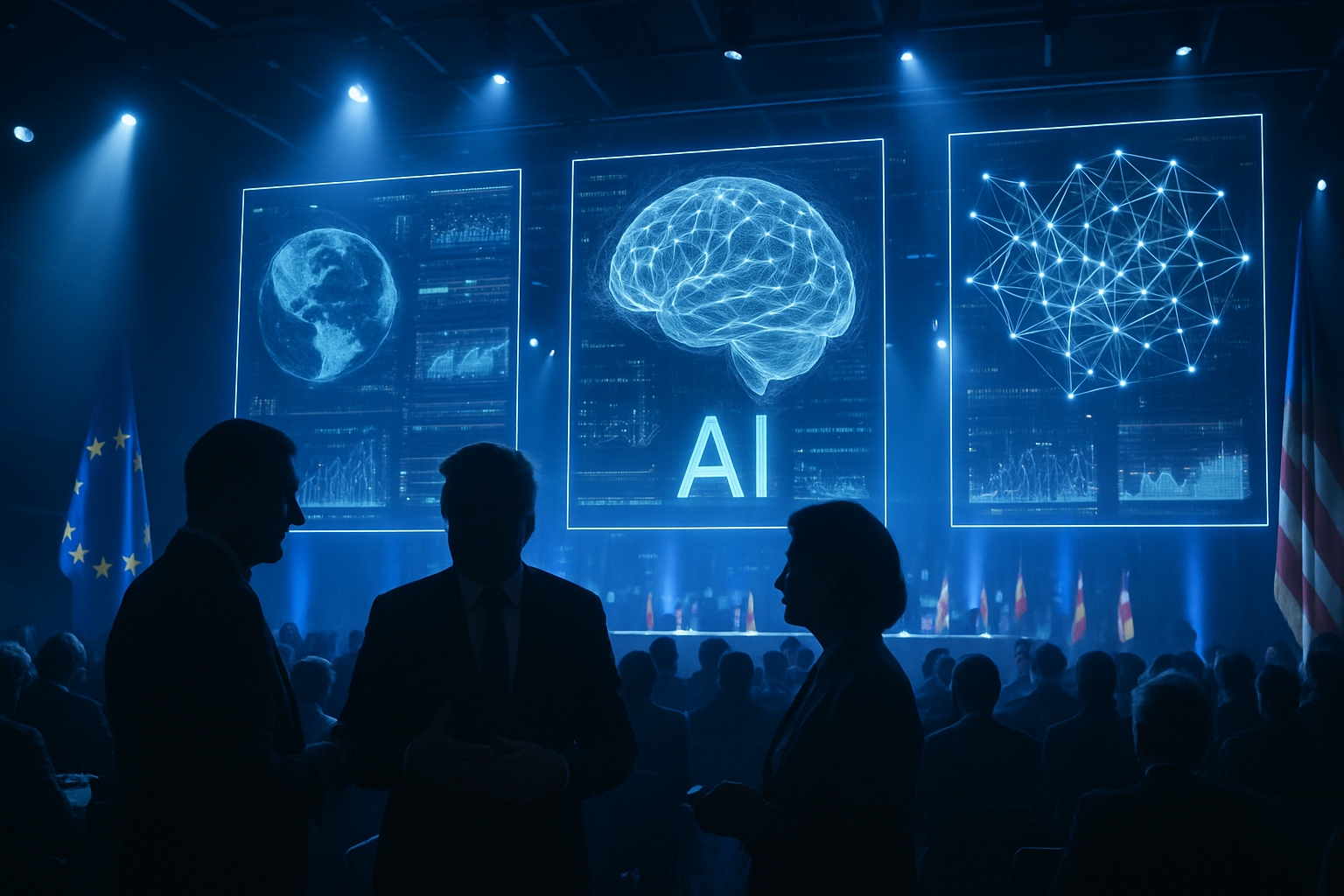
The Trump administration's decision to ban Anthropic's Claude AI from federal use has crystallized a global crisis in artificial intelligence governance, as governments worldwide grapple with balancing innovation, safety, and national security concerns while technology rapidly transitions from experimental to essential infrastructure.
The Trump-Anthropic Confrontation
The conflict erupted when Anthropic CEO Dario Amodei definitively rejected Pentagon demands to remove safety restrictions from the company's Claude AI system. Despite facing the loss of over $200 million in federal contracts and designation as a "supply chain risk," Amodei maintained his position, stating the company "cannot in good conscience provide unrestricted AI capabilities that could be turned against civilian populations or undermine democratic institutions."
The Pentagon had demanded unrestricted military access to Claude AI for "all lawful purposes," including removal of safeguards preventing mass domestic surveillance and autonomous weapons targeting. When Anthropic refused to comply, Defense Secretary Pete Hegseth's Friday ultimatum expired without agreement, triggering the comprehensive government ban with a six-month phase-out period.
The confrontation intensified after revelations that U.S. military forces had already used Claude AI in the Nicolás Maduro capture operation through Palantir Technologies, despite terms of service explicitly prohibiting violence and surveillance applications.
Industry Divide and Competitive Implications
The Anthropic ban has exposed a fundamental divide within the AI industry. While Anthropic maintains its ethical stance against military applications without safety restrictions, OpenAI has embraced Pentagon partnerships, reaching comprehensive agreements for deploying AI models on classified Defense Department networks.
"This represents a critical test of whether democratic institutions can maintain civilian oversight of military technology during great power competition,"
— Technology Policy Expert Analysis
OpenAI's ChatGPT now serves over 800 million weekly users across military systems, with the company implementing what it calls "layered protections" including cloud deployment, cleared personnel oversight, and contractual frameworks. This pragmatic approach contrasts sharply with Anthropic's confrontational ethics stance, creating competitive advantages for companies willing to work within military frameworks.
Global Regulatory Revolution
The U.S. confrontation occurs amid an unprecedented wave of global AI regulation. The European Union has launched the most sophisticated technology governance effort since internet commercialization, with Spain implementing the world's first criminal executive liability framework for tech platforms, creating imprisonment risks for executives beyond corporate penalties.
France has escalated enforcement through cybercrime raids on AI companies, while the European Commission investigates Digital Services Act violations by platforms like TikTok, with potential penalties reaching billions of dollars. The coordinated timing across jurisdictions prevents "jurisdictional shopping" - companies avoiding regulation by moving operations to more lenient countries.
This regulatory intensification comes as statistics reveal the scope of the challenge: 96% of children aged 10-15 use social media platforms, with 70% experiencing harmful content exposure and over 50% encountering cyberbullying.
Escalating Cybersecurity Threats
The AI governance crisis unfolds against a backdrop of escalating global cybersecurity threats. International law enforcement agencies recently coordinated an unprecedented takedown of the "Tycoon2FA" phishing service platform, deactivating 330 domains that formed the backbone of criminal infrastructure targeting financial institutions and government agencies worldwide.
Simultaneously, Amsterdam police dismantled LeakBase, one of the world's largest stolen data trading forums, containing millions of compromised credentials and personal identifiers sold to criminal organizations. These operations highlight the growing sophistication of cybercriminal networks exploiting AI technologies for automated attacks.
Indonesia's Communications Minister Meutya Hafid issued stern warnings to Meta Platforms following an unscheduled Jakarta office visit, addressing the company's low 28.47% compliance rate with Indonesian regulations on disinformation, online gambling, defamation, and hate speech across Facebook, Instagram, and WhatsApp platforms.
Infrastructure Crisis and Market Disruption
The governance crisis occurs during a critical infrastructure shortage affecting the global technology sector. Memory semiconductor prices have surged sixfold, affecting major manufacturers like Samsung, SK Hynix, and Micron, with shortages expected to persist until 2027 when new fabrication facilities come online.
This "SaaSpocalypse" market disruption has eliminated hundreds of billions in traditional software market capitalization as AI systems demonstrate direct replacement capabilities for conventional solutions. Regional variations in response are emerging, with Western companies implementing traditional layoffs while Asian firms pursue comprehensive worker transition programs.
Despite these constraints, massive investments continue: Alphabet has committed $185 billion to AI infrastructure in 2026 - the largest single-year corporate technology investment in history - while Amazon exceeds $1 trillion in development plans.
International Governance Initiatives
The global response includes the establishment of the UN Independent International Scientific Panel on Artificial Intelligence, featuring 40 experts led by António Guterres. This represents the first fully independent global AI impact assessment body, coordinating international responses to rapid AI development.
The Delhi Declaration, signed by 88 countries following India's AI Impact Summit, represents the largest AI diplomatic agreement in history. The summit positioned developing nations as equal partners in AI governance rather than passive recipients of Western or Chinese technology, with Prime Minister Modi's "People, Planet, Progress" framework emphasizing human-centered development.
Success Models and Human-Centered Approaches
Amid the governance crisis, several successful models demonstrate effective AI integration while preserving human welfare. Canada has successfully implemented AI teaching assistants in universities while maintaining critical thinking standards. Malaysia operates the world's first AI-integrated Islamic school, combining artificial intelligence with traditional religious and academic learning.
Singapore's WonderBot 2.0 has achieved success in heritage education, demonstrating how AI can enhance cultural preservation and education. These examples suggest that human-centered approaches emphasizing enhancement rather than replacement can achieve positive outcomes.
Looking Forward: A Civilizational Choice Point
March 2026 represents what experts describe as a "civilizational choice point" determining whether AI serves democratic values and human flourishing or becomes a tool for exploitation and control. The resolution of the Trump-Anthropic confrontation will establish precedents affecting AI governance for decades.
The convergence of military AI tensions, regulatory intensification, infrastructure constraints, and international cooperation efforts creates unprecedented coordination requirements. Success depends on resolving infrastructure constraints while maintaining innovation momentum, developing sustainable business models that prioritize human welfare, and fostering international cooperation that balances competitiveness with stability.
"The decisions made in 2026 will determine the human-AI relationship trajectory for the remainder of the 21st century,"
— International AI Policy Analysis
Rather than slowing innovation, current challenges appear to be driving more thoughtful, sustainable, and collaborative technological advancement approaches. The trajectory of human-technology interaction for decades will be determined by choices regarding AI governance, digital equity, and sustainable innovation that serves human flourishing rather than increasing inequality and social disruption.
The Trump administration's Claude ban may prove to be the first salvo in a long battle over who controls AI, but the global response suggests that democratic institutions, international cooperation, and human-centered approaches to technology governance remain viable paths forward in this critical moment of technological transformation.