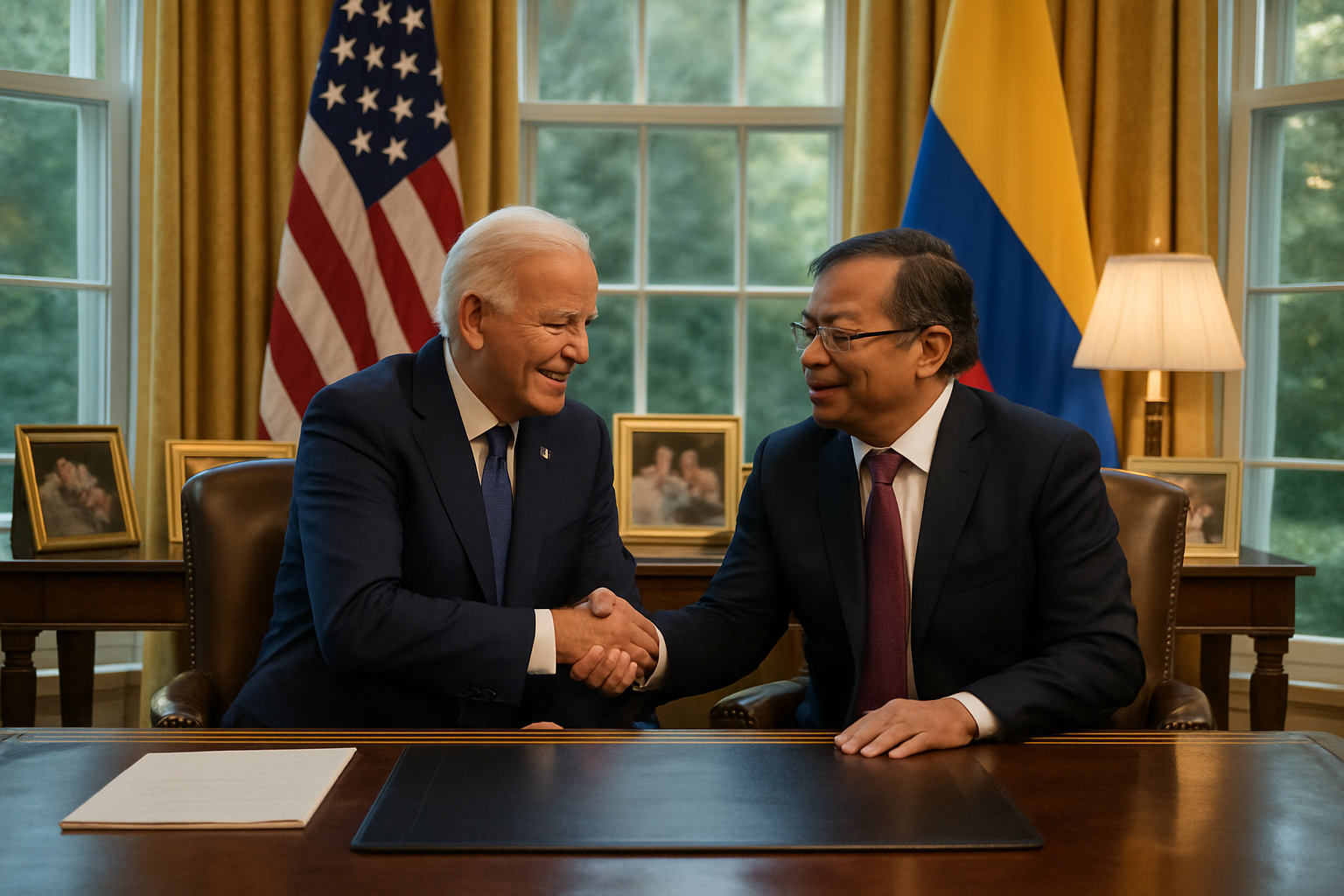
President Donald Trump signed a sweeping $1.2 trillion government funding package on Tuesday, ending a four-day partial federal shutdown, hours after hosting Colombian President Gustavo Petro for their first face-to-face meeting at the White House in a dramatic diplomatic reset.
The dual developments on February 3, 2026, marked a significant day for Trump's foreign and domestic agenda, as he simultaneously resolved a budget crisis while repairing one of the most strained bilateral relationships in Latin America.
Historic White House Meeting Breaks Year of Tensions
The two-hour meeting in the Oval Office between Trump and Petro, lasting from 11:05 AM to approximately 1:03 PM, represented a remarkable diplomatic turnaround after nearly a year of public feuding over immigration, drug policy, and trade. The Colombian president described the encounter as "positive" but sometimes "confusing," while Trump told reporters separately that "we got along very well."
According to multiple international sources, the meeting focused heavily on counter-narcotics cooperation, with Colombian aides carrying pamphlets reading "COLOMBIA: America's Ally against Narcoterrorists." Petro reportedly handed Trump a list of drug cartel leaders operating outside Colombia, seeking international assistance in pursuing them.
"We're working on some other things, too, including sanctions," Trump said following the meeting, suggesting progress on economic measures that had strained the relationship.
— Donald Trump, US President
The meeting symbolized a pragmatic approach to diplomacy, with both leaders setting aside ideological differences to focus on strategic cooperation. Trump even signed his book "The Art of the Deal" for Petro with the inscription "Gustavo: Un gran Honor. Amo a Colombia" (A great honor. I love Colombia), according to Colombian officials.
Venezuela Mediation and Regional Cooperation
Beyond bilateral issues, the leaders discussed broader regional cooperation, including Trump's potential mediation role in Colombia's ongoing dispute with Ecuador. Petro told reporters that Trump agreed to help mediate the conflict, marking an expansion of US diplomatic involvement in South American affairs.
The Colombian president also revealed discussions about exporting Venezuelan gas via Colombia, suggesting a pragmatic approach to energy cooperation despite ongoing US sanctions on Venezuela. This proposal aligns with broader efforts to stabilize regional energy markets while maintaining pressure on the Maduro government.
The meeting came amid significant developments in US-Venezuela relations, with Acting President Delcy Rodríguez recently meeting US Chargé d'Affaires Laura Dogu in Caracas to discuss Secretary of State Marco Rubio's three-phase plan for Venezuelan recovery.
Government Shutdown Resolution
Hours after the diplomatic breakthrough, Trump signed the $1.2 trillion funding bill passed by the House of Representatives in a narrow 217-214 bipartisan vote. The legislation ended a partial government shutdown that had paralyzed several federal agencies since January 30, 2026.
The shutdown was triggered by Democratic demands for immigration enforcement reforms following the fatal shootings of two US citizens—Alex Pretti and Renee Nicole Good—by ICE agents in Minneapolis. Democrats had insisted on accountability measures including mandatory body cameras and visible identification badges for federal agents.
"We have managed to pass a fiscally responsible package that truly cuts unnecessary federal spending, while supporting crucial programs for the security and prosperity of the American people."
— Donald Trump, signing statement
While the legislation funds most government operations through September 2026, the Department of Homeland Security received only temporary funding through February 13, setting up another potential budget battle in two weeks.
Congressional Dynamics and Bipartisan Deal
House Speaker Mike Johnson successfully navigated the complex political dynamics, losing 21 Republican votes while gaining 21 Democratic votes for passage. The deal represented a compromise between Trump's immigration enforcement priorities and Democratic accountability demands.
As part of the resolution, DHS Secretary Kristi Noem announced that ICE agents would be required to wear body cameras during field operations in Minneapolis, effective immediately. Johnson also scheduled two weeks of debates on broader ICE reform measures.
International Implications
The Trump-Petro meeting has broader implications for US-Latin American relations as the administration seeks to counter Chinese influence in the region. Colombia, as America's closest South American ally, plays a crucial role in regional security cooperation and economic partnerships.
International observers noted the contrast between this diplomatic engagement and Trump's previous harsh rhetoric, including occasions when he called Petro a "narcotraficante" and imposed sanctions. The reset suggests a more pragmatic approach to regional partnerships in Trump's second term.
European media coverage highlighted the meeting as evidence of America's continued engagement in Latin America, despite growing Chinese economic influence. German sources particularly noted the emphasis on counter-narcotics cooperation as a foundation for broader partnership.
Economic and Security Cooperation
The leaders discussed expanding economic cooperation beyond traditional security partnerships. Colombia's strategic position as a US ally in South America makes it crucial for regional trade and energy initiatives, particularly as Washington seeks alternatives to Chinese Belt and Road projects.
The timing proves significant for both leaders: Petro faces his final months in office before Colombia's August 2026 transition, while Trump seeks early foreign policy victories to demonstrate effective leadership in his second term.
Counter-Narcotics Partnership
Drug trafficking cooperation dominated the substantive discussions, with both countries recognizing the need for improved coordination against transnational criminal organizations. Colombia's role as a major cocaine producer requires sustained US cooperation in interdiction and alternative development programs.
The meeting established frameworks for intelligence sharing and joint operations targeting cartels operating across borders. This represents a shift from previous tensions over differing approaches to drug policy enforcement.
Looking Forward
The successful resolution of both the government shutdown and US-Colombia tensions provides Trump with momentum heading into other challenging diplomatic initiatives, including upcoming nuclear talks with Iran scheduled for February 7 in Turkey and continued negotiations on Ukraine peace talks in Abu Dhabi.
For Colombia, the reset offers opportunities to advance regional leadership roles while maintaining crucial US partnership in security and economic development. The meeting may serve as a model for Trump's engagement with other Latin American leaders seeking to balance relationships with Washington and Beijing.
The dual achievements on February 3 demonstrate Trump's ability to simultaneously manage domestic political pressures and international diplomatic challenges, setting the tone for a potentially more stable period in both US domestic governance and hemispheric relations.