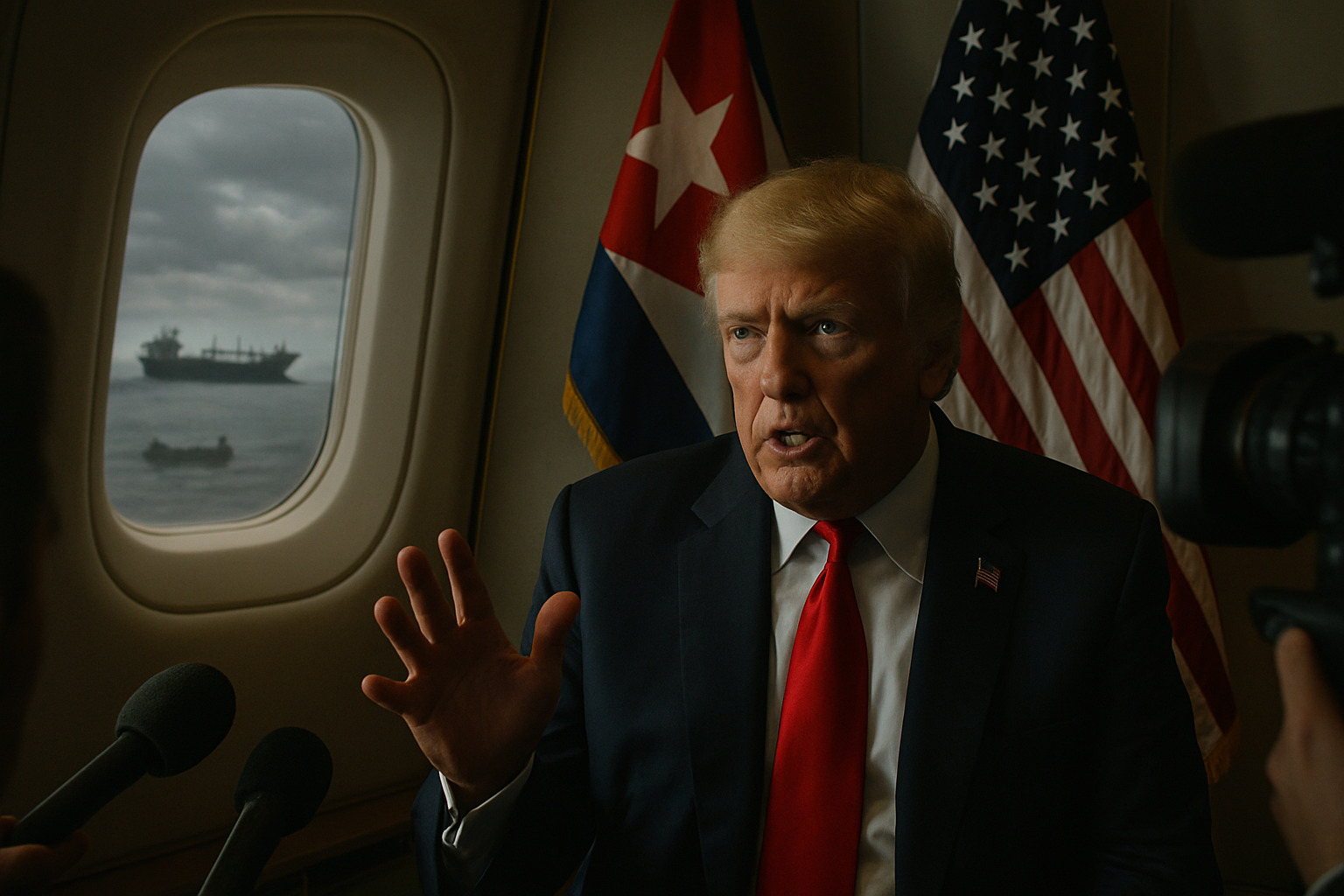
President Donald Trump expressed willingness to negotiate a deal with Cuba while simultaneously intensifying economic pressure on the island through threats of tariffs against countries supplying oil to Havana, creating a complex diplomatic strategy of engagement coupled with coercion.
Speaking to reporters aboard Air Force One on February 1, 2026, Trump indicated he believes Cuba will seek negotiations with the United States, stating that "the island will return to being free." The comments came as the administration escalates pressure through an executive order signed on January 30 that opens the door to imposing tariffs on imports from countries deemed to be supplying crude oil to Cuba.
Diplomatic Carrot and Economic Stick
Trump's dual approach represents a classic diplomatic strategy of combining potential incentives with immediate pressure. The president's optimistic assessment of Cuba's willingness to negotiate comes amid what Cuban officials describe as an attempt at "total asphyxiation" of their economy through U.S. sanctions and pressure on oil suppliers.
The Cuban president has responded to the warnings by accusing the United States of advancing toward complete economic strangulation of the country. This escalation occurs as Cuba faces deep strains in its energy system, including fuel shortages, recurring blackouts, and constraints on transportation and production.
"There doesn't have to be a humanitarian crisis," Trump said when asked about warnings from Mexican President Claudia Sheinbaum.
— Donald Trump, U.S. President
Mexico in the Crosshairs
The new executive order specifically targets Mexico and other nations that have been providing energy lifelines to Cuba. Mexican President Claudia Sheinbaum had warned that cutting off crude oil supplies to Cuba would provoke a humanitarian crisis, directly challenging the Trump administration's pressure campaign.
Trump's response to these warnings suggests he believes economic pressure will force Cuba to the negotiating table without necessarily creating the humanitarian disaster that Mexico and other regional leaders fear. The measure is designed to raise the external cost of keeping Havana's energy lifeline open and further constrain fuel flows to the island.
Regional Impact and Responses
The Trump administration's approach has drawn criticism from regional leaders who warn of the humanitarian implications of cutting off Cuba's energy supplies. The island's energy infrastructure has been struggling with chronic fuel shortages and widespread blackouts that have affected daily life for millions of Cubans.
Venezuela, another traditional oil supplier to Cuba, has also found itself under increased scrutiny as part of this broader pressure campaign. The targeting of oil supplies represents a significant escalation in the economic pressure being applied to force political change in Cuba.
Historical Context
This marks a return to the maximum pressure tactics that characterized Trump's first presidency regarding Cuba policy. The approach reverses the diplomatic opening that had been pursued during the Obama administration and represents a significant hardening of U.S. policy toward the island nation.
The executive order gives the Trump administration broad authority to impose tariffs on countries that continue to supply oil to Cuba, potentially affecting trade relationships with key partners in Latin America and beyond. This could have far-reaching economic implications for regional trade dynamics.
Cuba's Energy Crisis Deepens
Cuba's energy sector has been under severe strain, with the island experiencing regular power outages that have lasted hours or even days in some areas. The country's aging infrastructure and limited domestic energy production have made it heavily dependent on oil imports from allies like Venezuela and Mexico.
The Trump administration's strategy appears designed to leverage this vulnerability to force political concessions from the Cuban government. By targeting the island's energy lifeline, the policy aims to create sufficient economic pressure to bring Cuba to the negotiating table on U.S. terms.
International Implications
The policy has broader implications for U.S. relationships in Latin America, as it effectively forces regional partners to choose between their trade relationships with the United States and their energy cooperation with Cuba. This could strain diplomatic relationships with countries that have maintained more neutral positions on Cuba policy.
The threat of tariffs also represents a significant escalation in the use of economic coercion as a diplomatic tool, potentially setting precedents for how the Trump administration might handle other international disputes involving energy supplies and economic leverage.
Looking Forward
Trump's expression of optimism about potential negotiations suggests the administration believes its pressure campaign will be effective in bringing Cuba to the negotiating table. However, the Cuban government's response indicates a determination to resist what it characterizes as an attempt at economic strangulation.
The success of this strategy will likely depend on whether the economic pressure proves sufficient to force meaningful concessions from Cuba without creating the humanitarian crisis that regional leaders have warned about. The coming weeks and months will be critical in determining whether Trump's bet on Cuba seeking a deal will prove accurate.
As the situation develops, the international community will be watching closely to see whether this combination of diplomatic overtures and economic pressure produces the breakthrough that has eluded U.S.-Cuba relations for decades, or whether it leads to further entrenchment and regional instability.