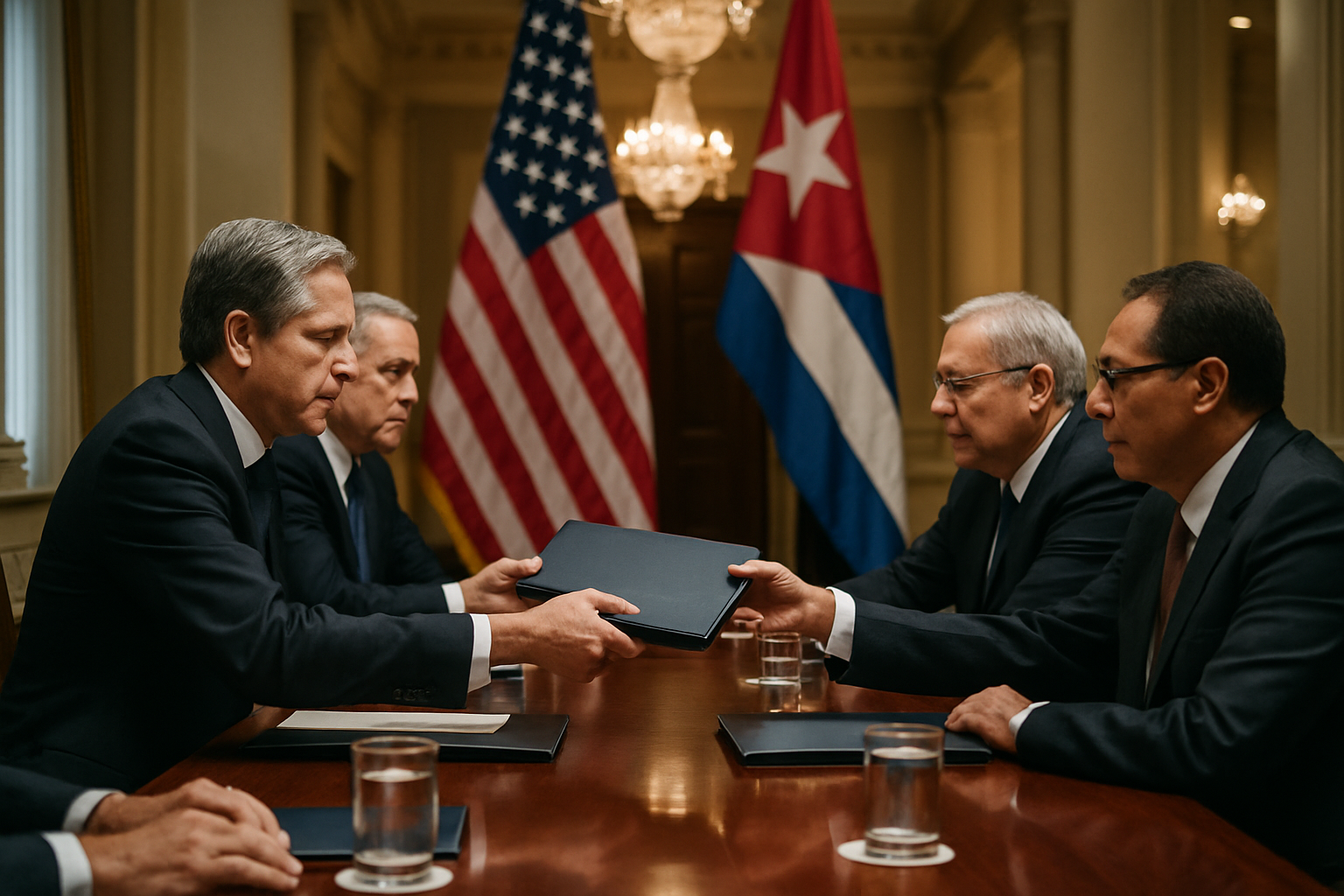
President Donald Trump has confirmed ongoing negotiations with Cuba are taking place at the highest levels, with reports emerging that Raul Castro's grandson is playing a pivotal role in facilitating diplomatic discussions as the Caribbean nation endures its most severe economic and energy crisis since the 1990s Special Period.
The diplomatic breakthrough comes as Cuba grapples with an unprecedented humanitarian emergency that has seen complete aviation isolation, nationwide blackouts affecting over 5.5 million people, and the collapse of critical infrastructure systems across the island of 11 million inhabitants.
Cuba's Humanitarian Emergency Reaches Critical Levels
Cuba is experiencing what international observers are calling the most comprehensive economic isolation in modern history. All nine major airports, including José Martí International in Havana, have maintained zero jet fuel availability from February 10 through March 11, 2026, creating the most severe aviation blockade since the 1962 Cuban Missile Crisis.
The energy crisis has cascaded across every sector of Cuban society. The Antonio Guiteras thermoelectric power plant, the nation's largest, suffered a catastrophic boiler malfunction in early March, plunging two-thirds of the island into darkness and affecting approximately 8 million people. This represented the fifth major system-wide blackout since late 2024, highlighting the precarious state of Cuba's aging electrical grid.
"Not even in the hardest years of the Special Period had we seen anything like this," Cuban officials acknowledged, referring to the economic collapse following the Soviet Union's dissolution in the 1990s. The current crisis exceeds that period's severity because it results from deliberate policy rather than external collapse.
Maximum Pressure Campaign Achieves Total Isolation
The crisis stems directly from President Trump's maximum pressure campaign, initiated with his January 30, 2026 executive order threatening 25% tariffs on any country supplying oil to Cuba. This unprecedented economic coercion successfully forced Venezuela's interim government and Mexico to halt crude oil shipments despite humanitarian concerns.
Cuba's oil reserves have dwindled to a critical 15-20 day supply, while domestic production has collapsed from 3 million to just 700,000 barrels daily. The Cuban peso has reached a historic low of 500 units per dollar, representing a 15% weekly decline and effectively destroying the currency's value.
The aviation fuel shortage has forced major international carriers including Air Canada, WestJet, Air Transat, Rossiya Airlines, and Nordwind to suspend all operations. Emergency evacuations have removed over 25,000 tourists, including 21,000 Canadians and 4,000 Russians, representing nearly half of Cuba's foreign visitor base.
Raul Castro's Grandson Facilitates Diplomatic Channels
According to multiple diplomatic sources, Raul Castro's grandson has emerged as a crucial intermediary in facilitating talks between Washington and Havana. The young Castro family member, whose involvement represents a new generation of Cuban leadership engaging with the United States, has reportedly been instrumental in maintaining communication channels despite the escalating crisis.
German diplomatic sources suggest that Cuba's leadership recognizes the need for fundamental changes to survive the current isolation. The involvement of Raul Castro's grandson signals potential flexibility within the Cuban power structure that previous administrations have been unable to achieve.
Secretary of State Marco Rubio, a Cuban-American from Miami, has been positioned as the lead negotiator on the U.S. side. Trump has indicated that discussions are ongoing "at very high levels," though specifics about the negotiation framework remain classified.
Infrastructure Collapse and Social Unrest
The economic crisis has precipitated unprecedented social upheaval across Cuba. In the most dramatic incident, protesters in Morón, Ciego de Ávila province, stormed and ransacked the local Communist Party headquarters, chanting "¡Libertad!" while dragging furniture, computers, and propaganda materials into the streets to create bonfires.
This represented the first successful storming of a major Communist Party facility since the 1959 revolution, marking a historic challenge to the government's authority. At least five people were detained in the confrontations, according to state media reports.
The transportation system has experienced complete collapse, with crowds waiting indefinitely at major transit hubs like Viaducto in Havana, carrying backpacks and water bottles as essential services break down. Medical staff cannot reach hospitals, students cannot access schools, and workers are unable to reach their jobs.
International Response and Humanitarian Aid
The international community has responded with a mixture of humanitarian assistance and diplomatic pressure. Mexico has deployed its largest humanitarian operation in recent memory, with naval vessels Papaloapan and Isla Holbox delivering 814 tons of supplies while carefully avoiding oil shipments to prevent U.S. retaliation.
Russia has condemned what it terms "economic strangulation" and pledged oil aid as humanitarian assistance, directly challenging Trump's pressure campaign. Jeremy Corbyn, the former UK Labour leader, has announced plans for an international flotilla to challenge the oil blockade, while China has demanded the United States immediately cease its pressure campaign.
European media outlets have characterized the situation as a "deliberately engineered humanitarian emergency," raising questions about the ethics of economic warfare targeting civilian populations. Ireland has issued its second-highest travel warning, classifying Cuba under "serious and potentially life-threatening risks."
Trump's Strategic Sequencing and Regional Implications
President Trump has indicated that Cuba policy intensification follows his broader foreign policy priorities, stating the administration is "really focused on this one right now" regarding Iran negotiations but suggesting Cuba attention will increase "after 50 years" of stalemate once other crises are resolved.
The Cuba crisis represents a key component of what analysts term the "Corolario Trump" – a 21st-century update to the Monroe Doctrine combining military pressure, economic coercion, and selective engagement to reassert American hemispheric dominance.
The success of this approach in Venezuela, where maximum pressure transformed into strategic partnership after Nicolás Maduro's capture in January 2026, provides a template that the Trump administration appears eager to replicate with Cuba.
Healthcare System on the Brink
Cuba's healthcare system, long a source of national pride, faces unprecedented challenges. Hospitals have suspended non-emergency surgeries, medical equipment is threatened by power outages, and medicine storage has been compromised by the lack of reliable electricity.
Medical evacuation capacity has been completely eliminated due to the aviation fuel crisis, severing Cuban-American family connections for the first time in decades. The eastern provinces, home to 3.4 million people, have been without power for extended periods following the failure of the Holguín electrical substation.
The Ñico López oil refinery in Havana suffered a major fire in February, eliminating the island's remaining domestic petroleum processing capacity and compounding the crisis indefinitely without diplomatic intervention.
Tourism Industry Devastation
Cuba's tourism industry, a crucial source of foreign currency, has experienced complete devastation. Major Spanish hotel chains including Meliá, Iberostar, and Blue Diamond have closed their Varadero and northern coast facilities. Canada has issued a "high degree of caution" advisory that effectively ended the winter tourism season.
The Festival del Habano, Cuba's premier cigar festival, was cancelled, while Cuban bishops postponed their Vatican meetings with Pope Leo XIV, citing concerns about return travel. These cultural and diplomatic cancellations reflect the comprehensive nature of Cuba's isolation.
Historical Precedent and Future Implications
The current crisis exceeds the 1990s Special Period through systematic targeting rather than external collapse. Complete aviation connectivity severance is unprecedented in modern Cuban history, creating what experts describe as the most comprehensive test of economic coercion in the 21st century.
The success or failure of Trump's Cuba policy will influence global approaches to territorial disputes, democratic transitions, and great power competition management. The template being established affects international law implications for territorial sovereignty and humanitarian protection principles in the multipolar era.
As negotiations continue behind closed doors, the involvement of Raul Castro's grandson suggests that Cuba's leadership recognizes the need for fundamental changes to survive the current crisis. Whether these talks produce a breakthrough comparable to the Venezuela model remains to be seen, but the stakes for both Cuban civilians and regional stability could not be higher.
Looking Forward
The diplomatic talks represent a critical juncture for U.S.-Cuba relations after more than six decades of antagonism. The humanitarian crisis has created urgent pressure for resolution, while the involvement of new generational leadership on both sides offers potential pathways that previous administrations could not explore.
However, any agreement will need to address fundamental questions about Cuba's political system, economic structure, and international relationships that have remained unresolved since 1959. The success of these negotiations may ultimately determine whether economic pressure can achieve political transformation or whether it merely prolongs human suffering without strategic gains.