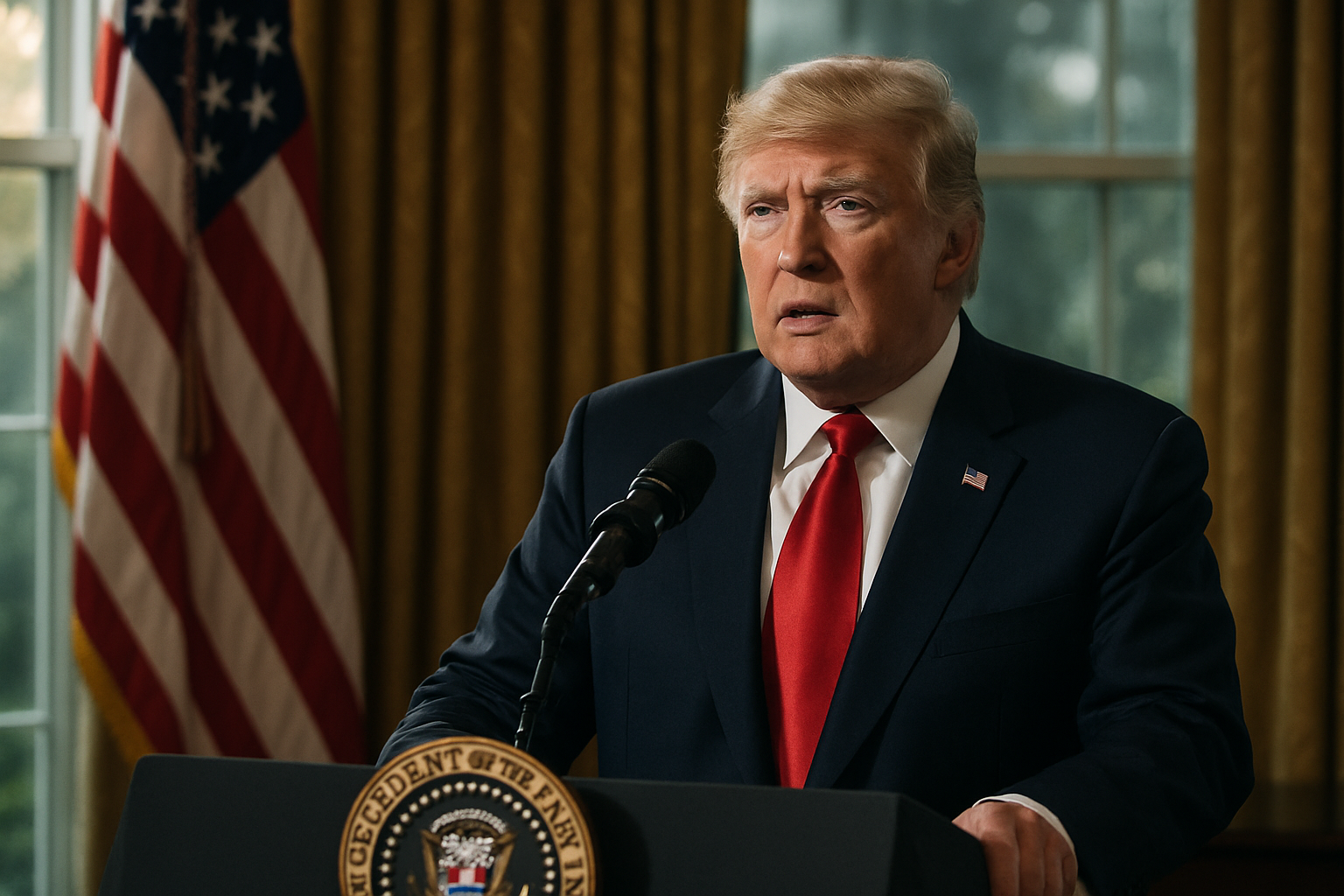
President Donald Trump declared Saturday that the Cuban communist regime is experiencing its "final moments" and expressed willingness to negotiate with Havana, marking a significant escalation in U.S.-Cuba policy rhetoric during the inaugural Shield of the Americas summit in Miami.
Speaking at his Doral golf club to an alliance of thirteen right-wing Latin American governments, Trump announced that Cuba "wants to make a deal" and revealed that negotiations are currently underway with Secretary of State Marco Rubio. The dramatic statements represent the most explicit U.S. discussion of potential Cuban regime change since the 1960s.
Summit Announces Regional Military Coalition
The Shield of the Americas summit, described as a new alliance of conservative governments across the continent, saw Trump launch a coalition military initiative to combat drug cartels throughout the region. The gathering included leaders from thirteen countries aligned with Trump's hemispheric strategy, dubbed the "Corolario Trump" - a 21st-century update to the Monroe Doctrine.
Trump's Cuba announcements came alongside confirmation that Washington has formally recognized the government of Acting President Delcy Rodríguez in Venezuela, demonstrating his administration's broader regional realignment strategy.
"Cuba is living its final moments of life and wants an agreement with the United States"
— President Donald Trump, Shield of the Americas Summit
Unprecedented Economic Pressure Campaign
The declarations come as Cuba faces its worst economic crisis since the 1990s "Special Period," driven by what Trump administration officials describe as a successful "maximum pressure" campaign. The island nation is experiencing complete aviation isolation, with zero jet fuel at all nine major airports, stranding thousands of foreign tourists and cutting off international connectivity.
Current Cuban conditions include:
- 51% of the population (5.5 million people) experiencing scheduled blackouts
- Oil reserves down to a critical 15-20 day supply
- Complete suspension of flights by major airlines including Air Canada and WestJet
- Closure of major hotel chains including Meliá and Iberostar in tourist areas
- Healthcare system compromised with surgery suspensions and medical evacuation eliminated
Historical Context and Regional Impact
The current crisis exceeds the severity of Cuba's 1990s Special Period, but unlike that earlier emergency caused by the Soviet Union's collapse, this situation results from deliberate U.S. policy implementation. Trump's January 30 executive order threatening 25% tariffs on countries supplying oil to Cuba successfully forced Mexico and Venezuela to halt petroleum shipments despite previous solidarity commitments.
The policy represents a systematic evolution of economic coercion, with European analysts characterizing it as a "deliberately engineered humanitarian emergency." The Cuban peso has fallen to historic lows of 500 units per dollar, while domestic oil production has collapsed from 3 million to 700,000 barrels daily.
International Reactions and Implications
The announcements have triggered varied international responses. Russia has condemned what it terms "economic strangulation" and pledged crude oil and petroleum products as humanitarian aid to Cuba. China has demanded the U.S. "immediately" cease its pressure campaign, while European officials express concern about collective punishment affecting civilian populations.
Former UK Labour leader Jeremy Corbyn has announced an international flotilla to challenge the U.S. oil blockade, representing the most significant international solidarity effort since Cuba's isolation began.
Marco Rubio's Central Role
Secretary of State Marco Rubio, the Miami-born son of Cuban immigrants, has emerged as the key architect of Trump's Cuba policy. His positioning as lead negotiator reflects the administration's emphasis on Cuban-American perspectives in policy formulation. The revelation of ongoing negotiations suggests a potential diplomatic track alongside the economic pressure campaign.
Rubio's broader regional strategy includes a three-phase approach successfully applied to Venezuela: stabilization, economic recovery, and democratic transition. The Venezuela model saw rapid transformation from maximum pressure to strategic partnership following President Nicolás Maduro's capture in January 2026.
Strategic Context and Future Implications
Trump's Cuba policy operates within his broader "Corolario Trump" hemispheric strategy, combining military deployment, economic coercion, and selective diplomatic engagement. The approach has transformed the Caribbean into a geopolitical laboratory for testing reimagined American dominance in the Western Hemisphere.
The policy's success with Venezuela - where oil exports surged 60% and the U.S. displaced China as the top customer - provides a template that the administration appears ready to apply to Cuba. However, Cuba's different political structure and longer history of U.S. confrontation present unique challenges.
Humanitarian and Legal Concerns
The comprehensive nature of the current isolation has raised questions about international law and humanitarian protection principles. The complete aviation blockade represents the most comprehensive since the 1962 Cuban Missile Crisis, affecting medical evacuations and family connections for Cuba's 11 million inhabitants.
The crisis has eliminated Cuba's tourism industry, with Canada issuing "high degree of caution" travel advisories and major hotel chains closing facilities. The broader implications extend beyond Cuba to test economic coercion limits as a diplomatic tool in the 21st century.
Looking Ahead
Trump's statements suggest Cuba policy will intensify following resolution of the administration's Iran nuclear crisis, with the president indicating "We've got plenty of time, but Cuba's ready — after 50 years." This sequencing demonstrates the administration's systematic approach to multiple foreign policy priorities.
The outcome of current U.S.-Cuba tensions will establish precedents for territorial sovereignty, humanitarian protection, and great power competition management. Success could provide an international crisis resolution template, while failure might accelerate more confrontational approaches to similar challenges globally.
As Cuba faces its most severe isolation in modern history, Trump's declarations of the regime's "final moments" represent either the prelude to a dramatic diplomatic breakthrough or the escalation toward an unprecedented humanitarian crisis affecting millions of Cuban citizens.