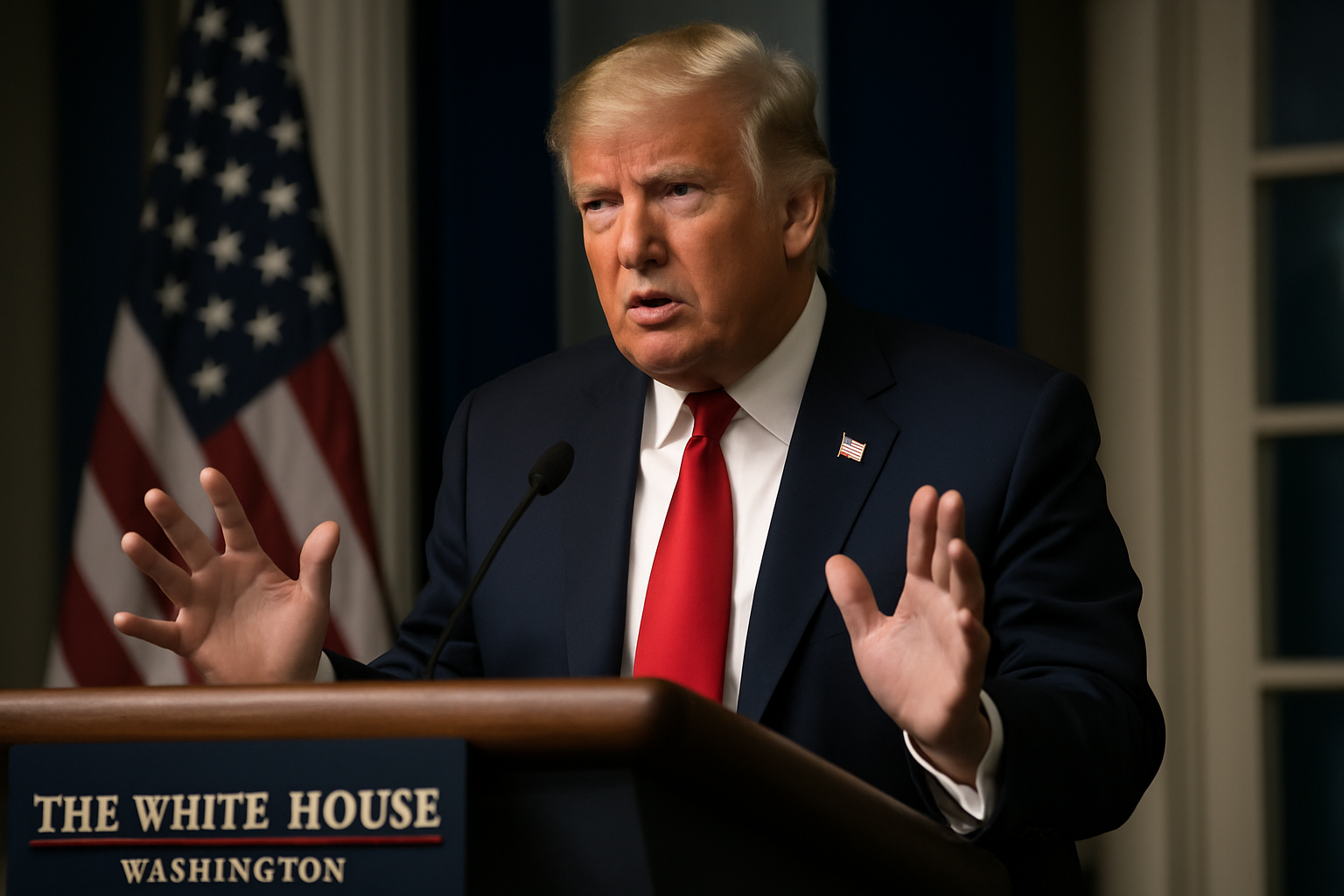
President Donald Trump suggested the possibility of a "friendly takeover" of Cuba during White House departure remarks on February 27, 2026, making the most explicit U.S. discussion of Cuban control since the 1960s as the island nation faces its worst economic crisis in modern history.
Speaking to reporters before boarding Air Force One, Trump stated: "The Cuban government is talking with us, and they're in a big deal of trouble. Maybe we'll have a friendly takeover of Cuba." The president claimed Secretary of State Marco Rubio is handling negotiations "at a very high level," though Cuba has not publicly confirmed such high-level diplomatic talks.
Trump's comments come as Cuba endures an unprecedented energy emergency that exceeds the severity of the 1990s "Special Period" through what observers characterize as systematic U.S. economic pressure rather than external collapse.
Cuba's Unprecedented Crisis
The island is experiencing complete aviation isolation through March 11, 2026, with zero jet fuel available at all nine major airports. Over 25,000 tourists have been evacuated, including 21,000 Canadians and 4,000 Russians, as major airlines including Air Canada, WestJet, and Russian carriers suspended all operations.
Currently, 51% of Cuba's population—approximately 5.5 million people—are experiencing scheduled blackouts during peak hours, according to state electricity company Unión Eléctrica. The government has implemented emergency measures including four-day work weeks, hospital surgery suspensions, and the closure of 90% of gas stations.
Oil reserves have fallen to a critical 15-20 day supply after Venezuelan crude shipments completely halted and Mexico suspended deliveries following Trump's January 30 executive order threatening 25% tariffs on countries supplying oil to Cuba. Domestic oil production has collapsed from 3 million to 700,000 barrels daily.
Maximum Pressure Campaign Success
Trump's strategy has achieved what administration officials describe as "total energy supply severance." The January 30 executive order forced both Venezuela's interim government, which prioritizes U.S. relations following Nicolás Maduro's removal, and Mexico under President Claudia Sheinbaum to halt oil shipments despite humanitarian concerns.
The tourism industry has collapsed entirely, with major Spanish chains Meliá and Iberostar closing Varadero facilities, while Canada issued a "high degree of caution" travel advisory effectively ending the winter tourism season. The Cuban peso has hit a historic low of 500 units per dollar, representing a 15% weekly decline.
Healthcare systems are severely compromised, with medical evacuation capacity eliminated and power outages threatening critical equipment and medicine storage. Eastern provinces housing 3.4 million residents have been particularly affected by power grid failures.
High-Level Diplomatic Activity
Trump referenced people "expelled, or worse, from Cuba that live here" and those "that want to go back to Cuba," indicating consideration of Cuban-American perspectives in potential arrangements. The Florida Cuban-American community represents a crucial Trump political base that has supported the maximum pressure campaign.
However, the nature and scope of alleged negotiations remain unclear. Cuban President Miguel Díaz-Canel has called the situation "total asphyxiation" while publicly appealing for U.S. dialogue, but Cuban authorities have not confirmed high-level diplomatic contacts matching Trump's claims.
The comments follow a deadly February 25 maritime confrontation in which Cuban coast guards killed four people aboard a Florida-registered speedboat in Cuban territorial waters—the most serious bilateral incident in years.
International Response and Regional Implications
Russia has condemned what it calls "economic strangulation" and pledged oil aid to Cuba as humanitarian assistance, directly challenging the U.S. campaign. Former UK Labour leader Jeremy Corbyn announced an international flotilla to challenge the oil blockade, while China has demanded the U.S. immediately cease pressure on Cuba.
European media have characterized the crisis as a "deliberately engineered humanitarian emergency," raising questions about the effectiveness and morality of economic pressure affecting entire civilian populations.
Mexico maintains humanitarian aid shipments of 814 tons of supplies via naval vessels while avoiding oil deliveries to prevent U.S. retaliation—demonstrating the reach of American economic influence across the hemisphere despite traditional regional solidarity with Cuba.
Historical Context and Precedent
Trump's "friendly takeover" suggestion represents the most explicit U.S. discussion of Cuban control since the 1960s. The current crisis surpasses the 1990s Special Period through deliberate policy targeting rather than external economic collapse, marking the first time since 1962 that Cuba faces complete international isolation.
The campaign has created a template for 21st-century economic siege warfare, demonstrating how systematic targeting of energy and transportation infrastructure can affect entire populations. The success has forced regional powers to choose between maintaining traditional solidarity with Cuba and preserving economic relationships with the United States.
Aviation connectivity has been completely severed for the first time in modern Cuban history, eliminating not only tourism revenue but also medical evacuation capabilities and Cuban-American family connections for the island's 11 million inhabitants.
Cuban Exile Community Considerations
Trump's mention of Cuban exiles wanting to "go back to Cuba" suggests potential involvement of the Cuban-American community in any arrangement. This community has been instrumental in supporting the maximum pressure approach and would likely play a significant role in any transition scenario.
The reference to people "expelled, or worse" from Cuba acknowledges the historical grievances that have shaped U.S.-Cuba relations for over six decades, indicating that any "friendly takeover" would need to address these long-standing issues.
Strategic Implications
The crisis represents a critical test of economic coercion as a diplomatic tool in the 21st century. Success could provide a template for similar approaches to other international challenges, while failure might demonstrate the limits of economic pressure in forcing political change.
The situation has broader implications for territorial sovereignty principles, humanitarian protection standards, and international law enforcement in an era of great power competition. The Caribbean has effectively become a laboratory for testing American economic dominance in the Western Hemisphere.
As Cuba enters its second month of unprecedented isolation, the international community faces decisions about responding to what many characterize as collective punishment of civilian populations. The crisis outcome will likely influence future approaches to territorial disputes, democratic transitions, and regional stability challenges worldwide.
With no clear timeline for resolution and Cuba's infrastructure continuing to deteriorate, Trump's suggestion of a "friendly takeover" introduces a new dimension to a crisis that has already exceeded all previous benchmarks for comprehensive economic isolation in the modern era.