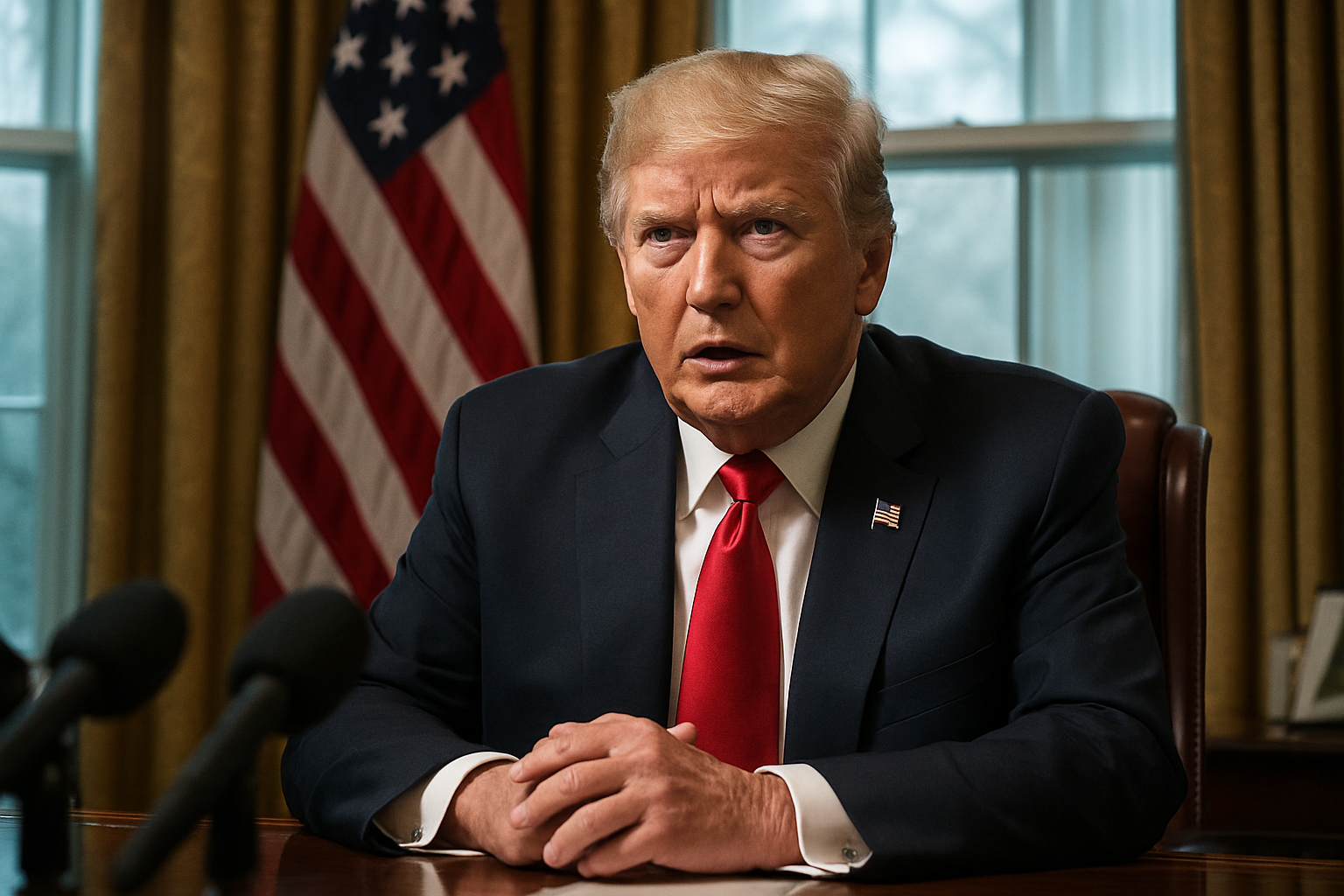
President Donald Trump declared Monday he believes he will have the "honor" of "taking Cuba in some form," marking the most explicit discussion of US control over the Caribbean island since the 1960s as Cuba reels from an unprecedented energy crisis that has left millions without power.
Speaking from the Oval Office, Trump told reporters he could "do anything I want" with Cuba, describing the communist nation as "very weakened" and a "failed nation" with a "nice landscape." The comments represent a dramatic escalation in rhetoric from his February statements about a potential "friendly takeover" of the island.
"You know, all my life I've been hearing about the United States and Cuba. When will the United States do it?" Trump said. "I think I'm going to have the honor of taking Cuba. That's a big honor. Taking Cuba in some form."
Cuba's Unprecedented Crisis
Trump's statements come as Cuba faces its worst economic and energy emergency since the 1990s "Special Period," with the island experiencing complete aviation isolation and systematic infrastructure collapse. Over 5.5 million Cubans—51% of the population—are experiencing scheduled blackouts as oil reserves have dwindled to a critical 15-20 day supply.
The crisis reached a new peak with the complete failure of the Antonio Guiteras power plant in March, which plunged two-thirds of the island into darkness for 72 hours in the fifth major blackout since late 2024. All nine major airports, including José Martí International in Havana, have confirmed zero jet fuel availability through March 11, forcing the evacuation of over 25,000 foreign tourists, including 21,000 Canadians and 4,000 Russians.
Major hotel chains including Meliá, Iberostar, and Blue Diamond have closed their Varadero and northern coast facilities, while Canada has issued a "high degree of caution" travel advisory, effectively ending the winter tourism season.
Maximum Pressure Campaign Success
The energy crisis has been deliberately engineered through Trump's "maximum pressure" campaign, which has achieved what analysts describe as "total energy supply severance." His January 30 executive order threatening 25% tariffs on countries supplying oil to Cuba forced both Venezuela and Mexico to halt crude shipments despite longstanding solidarity commitments.
The campaign has proven devastatingly effective, with Cuba's domestic oil production having collapsed from 3 million to just 700,000 barrels daily. The Cuban peso has hit a historic low of 500 units to the dollar, and the healthcare system is in crisis with surgery suspensions, medical equipment threatened by power outages, and transportation difficulties preventing staff from reaching hospitals.
In an unprecedented development, protesters in the city of Morón, Ciego de Ávila province, stormed and ransacked the local Communist Party headquarters in March, chanting "¡Libertad!" (Freedom) while burning party materials and dragging out furniture and computers. This marked the first successful attack on a major party facility since the 1959 revolution.
International Response
The international community has responded with sharp divisions over the humanitarian crisis. Russia has condemned what it calls "economic strangulation" and pledged oil aid to Cuba, directly challenging the Trump administration's blockade. China has demanded the US immediately cease pressure on the island, while former UK Labour leader Jeremy Corbyn has announced plans for an international flotilla to challenge the blockade.
European media has characterized the situation as a "deliberately engineered humanitarian emergency" that exceeds the severity of the 1990s Special Period through systematic policy rather than external collapse. The crisis has completely severed aviation connectivity for the first time since the 1962 Cuban Missile Crisis.
Mexico has attempted to maintain a humanitarian balance, deploying naval vessels carrying 814 tons of aid while suspending oil shipments to avoid US economic retaliation. President Claudia Sheinbaum has faced intense pressure to choose between traditional solidarity with Cuba and economic relations with the United States.
Strategic Context and Regional Implications
Trump's Cuba statements are part of what analysts call the "Corolario Trump"—a 21st-century update to the Monroe Doctrine that combines military pressure, economic coercion, and selective engagement to assert American hemispheric dominance. The approach has already proven successful in Venezuela, where the administration transformed from maximum pressure to strategic partnership following the removal of Nicolás Maduro in January 2026.
The Venezuelan model has created a template for "bilateral energy diplomacy" that counters Chinese influence through economic incentives and cooperation frameworks. Venezuelan oil exports have surged 60% to 800,000 barrels daily, with the US displacing China as the top customer following comprehensive energy agreements signed at Miraflores Palace.
Secretary of State Marco Rubio, whose family fled Cuba during the revolution, has been positioned as the lead negotiator for Cuba policy. Trump has indicated the Cuban-American community in Florida—a crucial political base—would play a significant role in any future arrangements.
Maritime Tensions and Security Concerns
The escalating tensions have been complicated by a deadly maritime confrontation on February 25, when Cuban coast guard forces killed four people and wounded six others aboard a Florida-registered speedboat in Cuban territorial waters. Cuban authorities claimed the vessel carried Cuban-American residents with "terrorist intentions," equipped with assault rifles and explosives, while the US has called for an independent investigation.
The incident, occurring within the broader context of Operation Southern Spear—which has resulted in over 145 deaths across the Caribbean since September 2025—has added a lethal dimension to what was primarily an economic and diplomatic standoff. Maritime law experts have questioned the proportional response and raised concerns about enforcement precedents during periods of regional militarization.
Historical Significance
Trump's statements represent the most direct assertion of potential American control over Cuba since the 1960s, exceeding even the rhetoric of previous Republican administrations that maintained official policies of isolation without explicit takeover discussions. The complete aviation isolation achieved through the blockade is unprecedented in modern Cuban history and demonstrates the reach of US economic influence over global energy markets.
The crisis has created a template for 21st-century economic warfare capabilities that affect entire civilian populations, raising questions about the limits of economic coercion as a diplomatic tool and the enforcement of territorial sovereignty principles in a multipolar era.
Path Forward
Cuban officials have provided no timeline for resolution of the crisis, which has now entered its second month. Any solution would require either a diplomatic breakthrough, alternative supply arrangements that circumvent US pressure, or fundamental changes to Cuban governance and energy infrastructure.
The success or failure of the Cuba pressure campaign will have implications far beyond bilateral relations, potentially influencing American approaches to territorial disputes, democratic transitions, and great power competition management globally. For Trump, the Caribbean serves as a laboratory for testing whether systematic economic dominance can be reconfigured for an era of multipolar competition.
As Trump noted in his Monday comments, the administration is "really focused" on the Iran nuclear crisis "right now" but indicated Cuba would be a priority "after 50 years" of confrontation. The sequencing suggests a coordinated foreign policy approach that combines multiple pressure campaigns to achieve comprehensive regional realignment under American leadership.
With Cuba's infrastructure continuing to collapse and no clear resolution pathway identified, the island faces the possibility of extended isolation that could reshape not only its own future but also set precedents for international economic coercion capabilities in the 21st century.