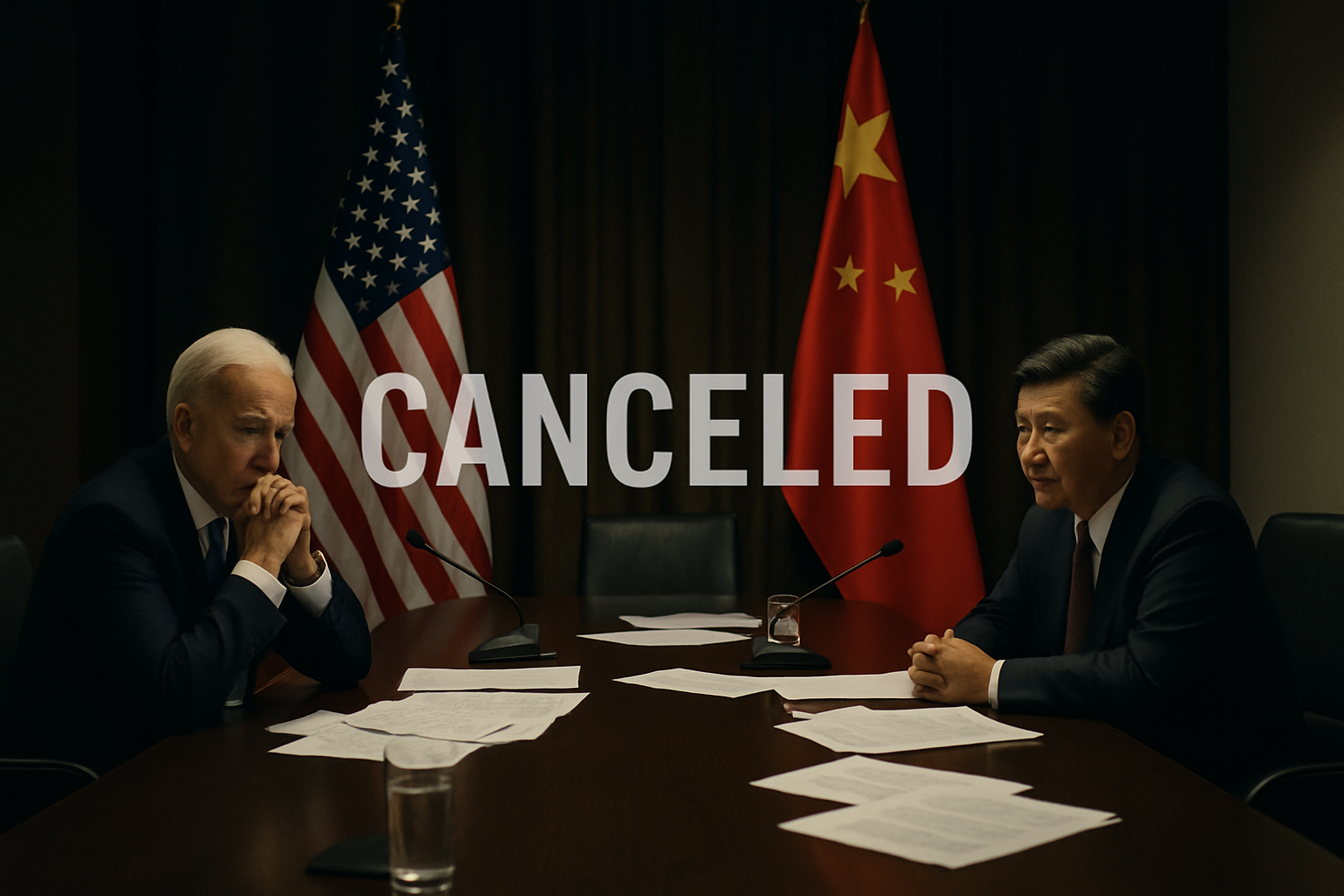
President Donald Trump has postponed his highly anticipated summit with Chinese President Xi Jinping by approximately one month, shifting his diplomatic focus to the escalating Iran war that has emerged as the most dangerous international crisis since the Cold War.
The decision to delay the March 31-April 2 Beijing summit comes as Trump demands an unprecedented international naval coalition to secure the Strait of Hormuz, while Iranian forces have deployed thousands of naval mines effectively blockading 40% of global oil transit. The postponement represents a significant diplomatic setback for U.S.-China relations at a critical juncture in bilateral ties.
Iran Crisis Takes Precedence
Multiple international sources confirm that Trump's decision stems from the urgent need to coordinate the international response to Iran's "Operation True Promise 4" - a systematic campaign targeting regional allies that has caused casualties across Gulf states and shut down global aviation networks.
The Iran conflict has reached unprecedented scope, with 18,000+ flights cancelled worldwide - the most extensive disruption since COVID-19. Eight countries have simultaneously closed their airspace, while Dubai International Airport, the world's busiest with 86 million passengers annually, remains shuttered due to missile damage.
"The situation around Iran requires immediate attention from the international community. We cannot proceed with routine diplomatic meetings while our allies face direct attacks,"
— Senior White House Official
Oil prices have surged past $106 per barrel as Iran has effectively closed the Strait of Hormuz, with the International Energy Agency releasing a record 400 million barrels from strategic reserves - the largest intervention in the agency's 50-year history.
China Summit Originally Scheduled Despite Tensions
The now-postponed Beijing summit was originally planned as Trump's first official visit to China during his second term, intended to address critical issues including trade relations, Taiwan tensions, and technology cooperation. The meeting was built on the foundation of a February 4 Trump-Xi phone call that both leaders described as "excellent."
However, the summit was already proceeding under dramatically altered circumstances following the Supreme Court's February ruling that struck down Trump's global tariff authority. The constitutional constraints had paradoxically created opportunities for more substantive long-term economic arrangements requiring congressional backing rather than executive emergency powers.
China had welcomed the Supreme Court ruling as vindication and had been strengthening its global position, announcing zero-tariff access for 53 African countries and securing EU dairy tariff reductions worth over $500 million in trade.
Iran War Reaches Global Scale
The Iran conflict that has captured Trump's attention began following the death of Supreme Leader Ali Khamenei on March 1, triggering the largest U.S. military operation in the Middle East since 2003. Operation Epic Fury has involved a dual-carrier deployment representing approximately one-third of the active U.S. Navy fleet.
Iranian retaliation has extended far beyond the Middle East, marking the first attack on European territory since World War II when Iranian drones struck RAF Akrotiri in Cyprus. This unprecedented escalation prompted a naval coalition response from Britain, Spain, Italy, France, the Netherlands, and Greece.
The regional coalition that had supported diplomatic efforts - comprising Saudi Arabia, UAE, Qatar, and Egypt - has been severely strained as Iranian attacks directly targeted member territories. The UAE reported one civilian killed in Abu Dhabi, while Kuwait suffered 32 injuries from airport strikes.
Nuclear Diplomacy Collapse
The Iran crisis represents a dramatic turn from what had appeared to be promising diplomatic progress. Geneva nuclear talks in February had achieved what Iranian Foreign Minister Abbas Araghchi called "broad agreement on guiding principles" - the most significant progress since the JCPOA collapse in 2018.
However, the fundamental scope disagreement proved insurmountable, with Iran excluding ballistic missiles and regional proxies as "red lines" while demanding nuclear-only talks, versus U.S. Secretary Marco Rubio's insistence on comprehensive agreements addressing missiles, armed groups, and human rights.
The diplomatic breakdown occurred despite an unprecedented regional coalition backing the negotiations and Switzerland-Oman mediation that had established a framework for continued dialogue.
Congressional and International Response
Trump's postponement of the China summit has drawn bipartisan congressional scrutiny, with lawmakers demanding detailed strategy briefings on both the Iran conflict and its impact on broader foreign policy priorities. Senator Richard Blumenthal expressed being "more concerned than ever" about potential ground troop deployments in Iran.
The conflict's unpopularity - with only 25% of Americans supporting the strikes according to recent polling - has created additional pressure on the administration to demonstrate clear strategic objectives and exit plans.
International reactions have been mixed, with European allies supporting the coalition response to Iranian attacks while expressing concerns about escalation. UN Secretary-General António Guterres called the situation "the greatest test of multilateral cooperation in the modern era."
Economic and Strategic Implications
The postponement comes at a critical economic moment, with global supply chains severely disrupted by the Persian Gulf crisis. Manufacturing in automotive, electronics, and textiles sectors has been impacted due to dependence on Gulf logistics networks. Natural gas prices have surged 24% in Europe and 78% in the United States.
The delay also affects broader strategic competition with China, as Beijing continues to expand its global influence through economic diplomacy while the U.S. remains focused on military crisis management in the Middle East.
European officials have expressed concerns about American policy predictability during multiple simultaneous crises, including ongoing Ukraine negotiations and the broader nuclear governance crisis following the expiration of the New START treaty with Russia.
Looking Ahead
The rescheduling of the Trump-Xi summit will likely occur in late April or early May, depending on the resolution of the Iran crisis. White House officials indicate that any future meeting will need to address the changed global landscape created by the Middle East conflict and its economic ramifications.
The postponement highlights the challenging reality of conducting great power diplomacy amid regional conflicts that have global implications. As the Iran crisis continues to unfold with unprecedented humanitarian, economic, and strategic consequences, Trump's decision reflects the urgent need to prioritize immediate crisis management over longer-term diplomatic engagement.
The stakes for both the Iran situation and U.S.-China relations remain enormous, with implications extending decades beyond current events and determining precedents for 21st-century conflict resolution and great power competition management.