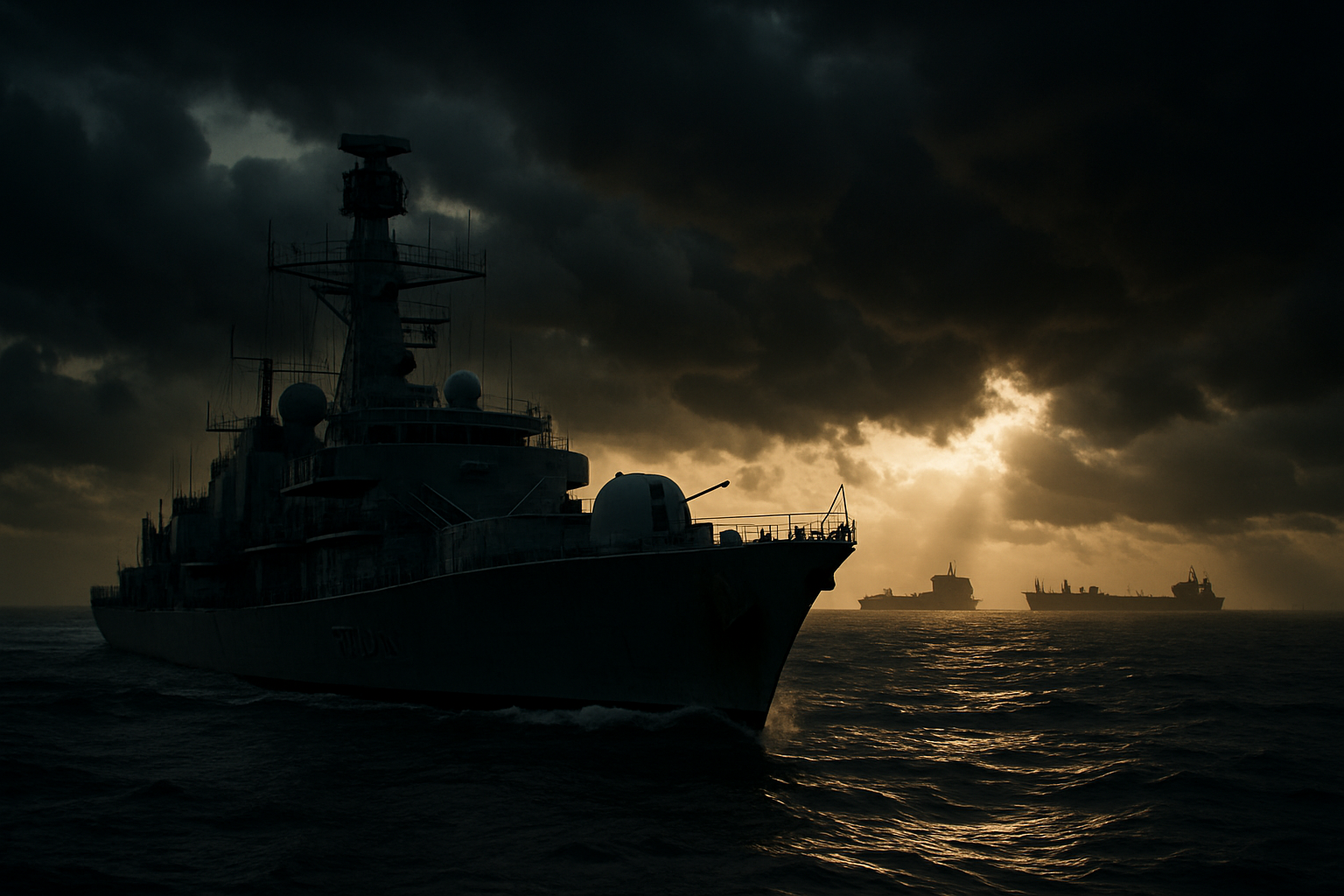
The Iran-US war entered its most dangerous phase on Day 21 as President Donald Trump demanded Iran's "unconditional surrender" and launched an unprecedented diplomatic attack on NATO allies, calling them "cowards" for refusing to join America's military campaign in the Middle East.
Trump's explosive declaration on Truth Social marked a dramatic escalation from earlier hints at negotiations, as he declared "Without the USA, NATO IS A PAPER TIGER!" while demanding major allies send warships to help secure the Strait of Hormuz, which carries 40% of global oil transit.
NATO Alliance Under Unprecedented Strain
The President's attack on NATO represents the most severe transatlantic crisis during an active military conflict, as European allies have steadfastly refused to support what they view as an aggressive war. Trump warned of "very bad consequences" if NATO fails to assist in reopening the strategic waterway, creating unprecedented pressure on alliance structures.
Several key allies have explicitly rejected Trump's demands. Japan and Australia have refused requests to send warships, while European leaders maintain their position that diplomacy, not military action, should resolve the crisis.
"NATO members are showing cowardice in the face of Iranian aggression," Trump declared in a series of Truth Social posts. "They complain about high oil prices but won't lift a finger to help secure the shipping lanes."
— Donald Trump, President of the United States
Iran's Hereditary Succession Under Fire
The conflict began on March 1 with the confirmed death of Supreme Leader Ali Khamenei in Operation Epic Fury, the largest US-Israeli military operation since the 2003 Iraq invasion. In an unprecedented move, Khamenei's son Mojtaba has assumed power, marking the first hereditary succession in the Islamic Republic's 47-year history.
Trump has categorically rejected this succession, calling the new Supreme Leader a "lightweight" and claiming the right to "personally choose" Iran's next leader. This represents the most direct assertion of American control over Iranian internal affairs since the 1979 revolution.
Intelligence sources suggest the Revolutionary Guards now have unprecedented control over Iran's governance, marking a fundamental shift from clerical to military leadership during active warfare.
Global Energy Crisis Reaches Critical Point
The economic implications have reached crisis proportions as Iran continues mining the Strait of Hormuz with an estimated 2,000-6,000 naval mines. Oil prices have surged past $80 per barrel with warnings they could reach $200, while natural gas prices have increased 24% in Europe and 78% in the United States.
The International Energy Agency has taken the unprecedented step of releasing 400 million barrels from strategic reserves - the largest intervention in the agency's 50-year history. Major shipping companies Maersk and MSC have suspended Persian Gulf operations, leaving over 150 tankers stranded with billions in cargo.
Qatar has halted LNG production at its Ras Laffan facility, which supplies approximately 20% of global liquefied natural gas, threatening European energy supplies as the continent struggles with ongoing energy security challenges.
Aviation Networks Paralyzed
The conflict has created the most severe aviation crisis since COVID-19, with over 18,000 flights cancelled worldwide. Eight Middle Eastern countries maintain simultaneous airspace closures, effectively severing critical Europe-Asia flight corridors.
Dubai International Airport, the world's busiest with 86 million passengers annually, remains completely shut down due to missile damage. Major carriers including Emirates, Air France-KLM, and Wizz Air have suspended Middle Eastern operations indefinitely, affecting hundreds of thousands of passengers globally.
European Territory Attacked for First Time Since WWII
In a dramatic escalation, Iranian drones struck RAF Akrotiri in Cyprus - marking the first attack on European territory since World War II. This unprecedented development has prompted an extraordinary naval coalition response, with HMS Dragon, Spanish frigates, and vessels from Italy, France, Netherlands, and Greece deploying to protect European interests.
The European Union activated its ESTIA evacuation plan for Cyprus for the first time in the bloc's history, demonstrating how the conflict has expanded far beyond traditional Middle Eastern boundaries.
Congressional Opposition Mounts
Bipartisan pressure is intensifying on Capitol Hill as lawmakers demand answers about strategy, costs, and the possibility of ground troop deployment. Senator Richard Blumenthal stated he is "more concerned than ever" about boots on the ground, while conflict approval ratings have dropped to just 25% - historically low for early-stage military operations.
Operation Epic Fury has cost $11.3 billion in just the first week, with Pentagon sources indicating operations could continue through September, far beyond the administration's initial 4-6 week timeline.
The financial markets are emerging as what analysts call the "ultimate constraint" on further escalation, with Pakistan's stock exchange recording its largest single-day decline in history at -8.97%.
Humanitarian Crisis Deepens
The Iran Red Crescent reports over 787 civilian casualties from US-Israeli strikes, including a devastating attack on an elementary school that killed 165-185 students due to what Pentagon officials acknowledge was "outdated targeting data."
International evacuations have reached the largest scale since the Arab Spring of 2011, with Australia reporting 115,000 nationals trapped in the region and Germany struggling to evacuate 30,000 stranded tourists.
Nuclear Diplomacy Lies in Ruins
The current military confrontation emerged from the complete breakdown of what had been the most promising diplomatic opening in years. Geneva talks had achieved a "broad agreement on guiding principles" - the most significant progress since the JCPOA collapse in 2018.
However, fundamental disagreements proved insurmountable, with Iran insisting on nuclear-only discussions while excluding ballistic missiles and regional proxies as "red lines," while the US demanded comprehensive agreements covering missiles, armed groups, and human rights.
Iran continues enriching uranium at 60% purity with over 400kg of weapons-grade material - sufficient for multiple nuclear weapons if weaponized. The diplomatic collapse comes amid a broader nuclear governance crisis following the February 5 expiration of the New START treaty, leaving the world without US-Russia nuclear constraints for the first time in over 50 years.
Regional Coalition Under Severe Strain
The unprecedented coalition of Saudi Arabia, UAE, Qatar, and Egypt that had supported diplomatic resolution is now severely threatened as Iranian retaliation has directly targeted member territories. Egyptian President Sisi condemned attacks on "sisterly Arab countries" and warned of "comprehensive chaos" spreading across the region.
Gulf states find themselves caught between their alliance with the United States and mounting Iranian pressure, fundamentally altering decades-old security arrangements in the region.
Template-Setting Crisis for 21st Century
UN Secretary-General António Guterres has called this "the greatest test of multilateral cooperation in crisis management of the modern era." The rapid transition from diplomatic breakthrough to military confrontation demonstrates the fragility of crisis management mechanisms in the multipolar era.
The stakes extend far beyond the Middle East, encompassing regional war prevention, global energy security, nuclear governance credibility, and international law enforcement. Success in containing the crisis could provide a framework for future nuclear dispute resolution, while failure may accelerate military solutions over diplomatic ones for decades to come.
"This represents a watershed moment in international relations that will determine whether diplomatic or military solutions become the preferred precedent for 21st-century territorial and nuclear disputes worldwide."
— António Guterres, UN Secretary-General
Looking Ahead: Critical Decisions Loom
As the conflict enters its fourth week, Trump's demands for "unconditional surrender" and his claims to personally choose Iran's next leader have eliminated any prospect for negotiated solutions. The Iranian leadership, now under Revolutionary Guard control, shows no signs of capitulation despite the massive military pressure.
With global supply chains severely disrupted, energy markets in crisis, and aviation networks paralyzed, the international community faces what may be the most consequential geopolitical crisis since the Cold War's end. The decisions made in the coming days and weeks will reverberate through international relations for decades, determining whether the post-WWII international order can survive the challenges of the 21st century.
The world watches as two nuclear-capable powers remain locked in an escalating conflict that threatens to reshape the global order permanently, with no diplomatic resolution in sight and the specter of broader regional war looming ever larger.